
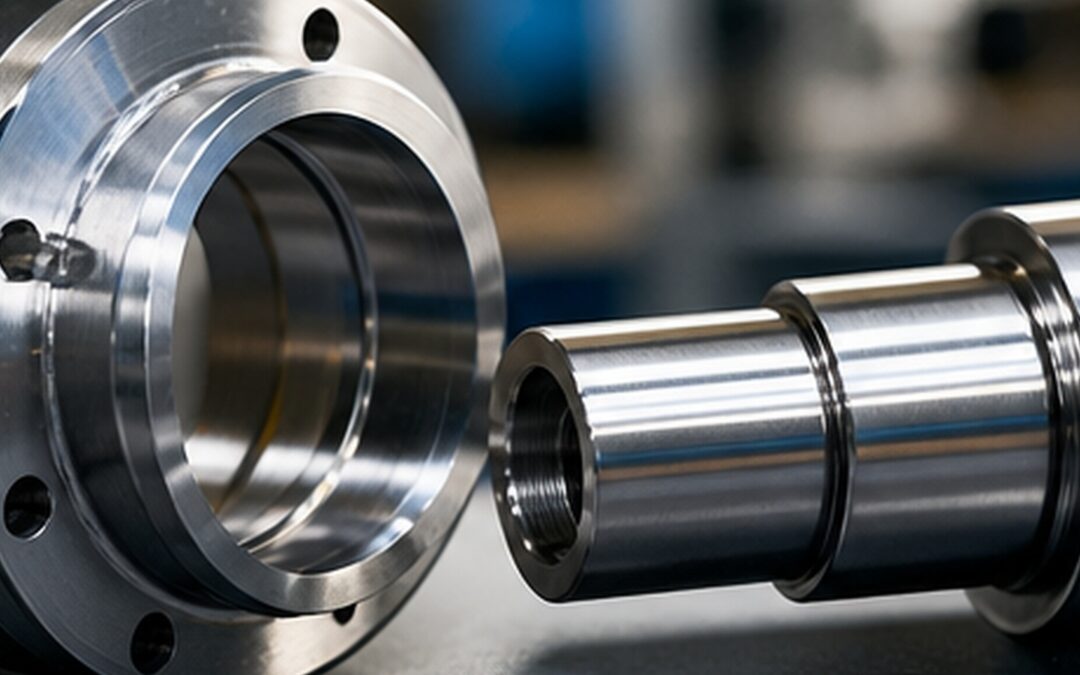
Clearance, Transition and Interference Fits: A Guide for CNC Machined Parts
When two precision-machined components are designed to fit together, their nominal dimensions only tell part of the story. What really determines how the parts assemble is the relationship between the tolerances applied to the mating features. A shaft nominally...
CNC Machined Threaded Holes: Depth, Fit and Inspection Explained
Threaded holes are among the most common features found on CNC-machined components. They may be used to attach covers, secure assemblies, locate brackets, mount electronic equipment or connect one precision-machined part to another. Although a tapped hole can look...
CNC Machining Internal Corner Radius: Why Cutter Size Matters to Cost and Lead Time
Internal corner radii can appear to be a relatively minor detail on a CNC-machined component. In practice, they can influence tool selection, machining strategy, cycle time, surface finish and manufacturing cost. The reason is simple: a rotating milling cutter is...
Thin Wall CNC Machining Components: How to Control Distortion and Maintain Tolerances
Thin-walled components can look relatively straightforward on an engineering drawing. In practice, however, removing material from a component until only thin sections remain can create some of the more challenging conditions encountered in precision CNC machining. As...

Tarvin Precision Supports Achievement at Hawarden High School
Tarvin Precision was proud to continue its support for Hawarden High School by sponsoring the school’s 2026 Recognition of Achievement Governors’ Presentation Event, held on Friday 10 July 2026. The presentation event provides an important opportunity to recognise the...
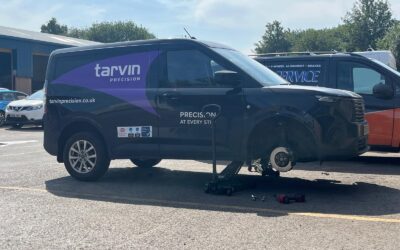
Supporting Local Businesses That Help Keep Us Moving
At Tarvin Precision, our work takes us across the UK. Every week our vehicles travel hundreds of miles delivering precision-machined components to customers and suppliers, from North Wales to Scotland and beyond. But while our reach is national, our roots remain...
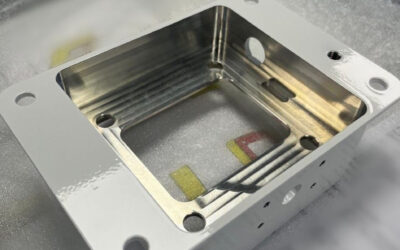
Inside the Part: CNC Machined Aerospace Actuation Components
Aerospace actuation applications rely on components that are accurate, stable and produced through a controlled manufacturing route. Parts may need to support movement, alignment, housing, mounting or mechanical interface requirements, while also meeting strict...
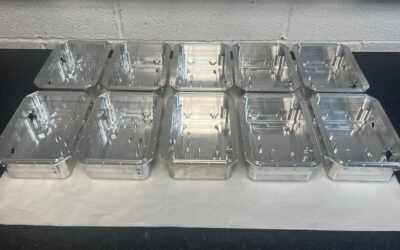
Inside the Part: CNC Machined Aluminium Box for Marine Safety Applications
Marine safety equipment often depends on robust, reliable and carefully controlled components. Housings, boxes and enclosures may look straightforward from the outside, but when they are used in demanding environments, the manufacturing requirements can be much more...

Aerospace Supply Chain Resilience: How to Reduce Manufacturing Risk with a Qualified Second Source
Aerospace supply chain resilience is no longer simply a matter of keeping additional stock on the shelf. For aerospace manufacturers, Tier 1 suppliers and procurement teams, resilience increasingly depends on having access to sufficient machining capacity, reliable...
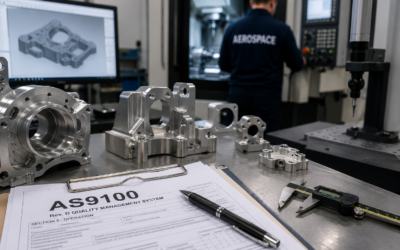
Aerospace Component Manufacturer: How to Choose the Right Supplier
Choosing an aerospace component manufacturer is not simply a matter of finding a machine shop with available capacity. Aerospace buyers must assess whether a supplier can manufacture the required components consistently, control materials and revisions, verify...
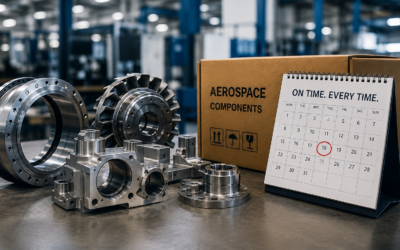
Aerospace Component Lead Times: A Practical Guide to Reducing Manufacturing Delays
Aerospace component lead times can have a significant effect on production schedules, maintenance programmes, new product introductions and wider supply-chain performance. When a machined part arrives late, the disruption is rarely limited to one purchase order. It...