
Precision engineering is used in some very different environments, and this latest component takes us inside an area of industry that many people outside the pipeline sector may never have encountered: pipeline pigging.
For this project, Tarvin Precision manufactured a large cylindrical component from 7075 aluminium for use within pipeline pigging equipment. The finished part combines a substantial hollow cylindrical form with repeated machined openings, internal and external features, circumferential grooves and threaded/interface areas.
It is a visually distinctive component, but the interesting part from a manufacturing perspective is the amount of machining contained within what initially appears to be a relatively simple cylindrical shape.
As always, customer confidentiality is important. We are not sharing the specific equipment, customer or detailed function of the component. However, its use within pipeline pigging gives us an opportunity to look at the engineering behind this specialist area and at some of the considerations involved in machining a large, feature-rich component from 7075 aluminium.
What Is Pipeline Pigging?
Despite the unusual name, pipeline pigging is a well-established process used by pipeline operators around the world.
A device known as a “pig” is introduced into a pipeline and travels through the pipe. Different types of pigging equipment can be used for different purposes, including pipeline cleaning, gauging, product separation and inspection.
More sophisticated in-line inspection tools can collect information about the condition of a pipeline, helping operators assess integrity and identify areas that may require further investigation or maintenance.
Pigging and pipeline isolation technology can also form part of wider maintenance and repair operations, allowing operators to better understand the condition of pipelines and, in some applications, isolate sections so that work can be carried out.
For a precision engineering company, the important point is that these systems depend on accurately manufactured mechanical components capable of forming part of equipment designed to travel through or interact with pipeline infrastructure. This 7075 aluminium cylinder is one such component.
CNC Machined 7075 Aluminium Pipeline Pigging Component
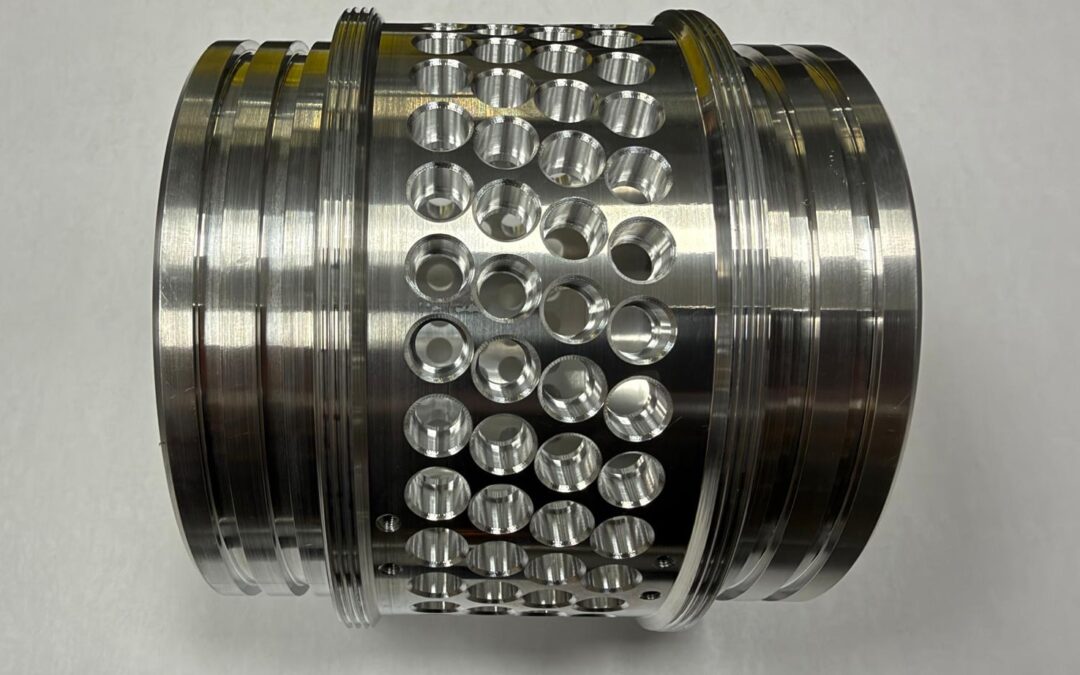
The photographs immediately show the scale and complexity of the part. At its simplest, the component could be described as a hollow aluminium cylinder. Look more closely and there is considerably more going on.
The outside diameter includes a series of machined circumferential features and grooves, together with threaded areas and defined interface sections. Across the central body is an extensive repeating pattern of circular machined openings.
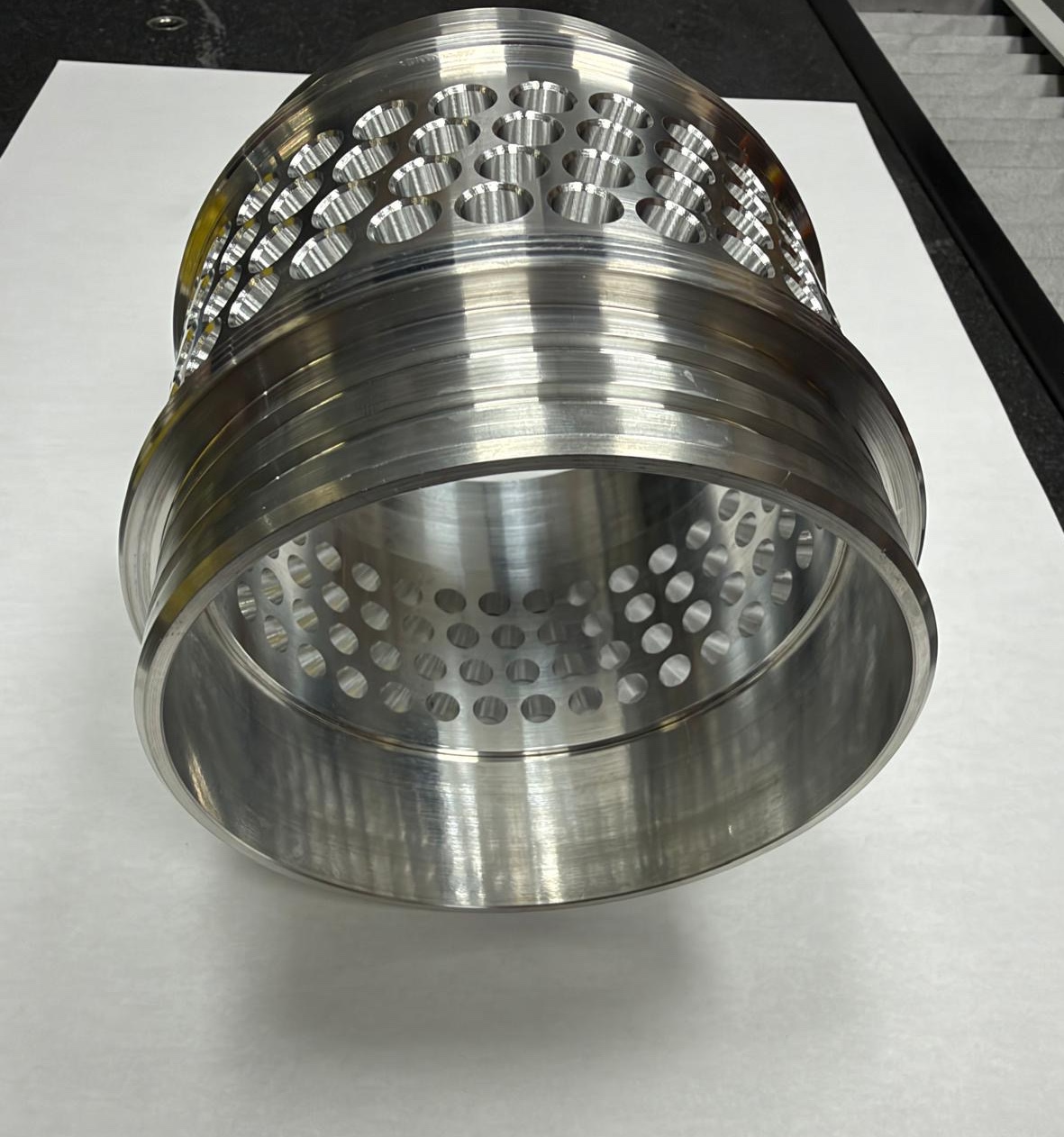
The inside of the cylinder is equally important. Internal diameters, shoulders and machined surfaces need to relate correctly to the external geometry and to the repeated openings running through the wall of the component.
This combination makes the part a good example of why cylindrical components are not necessarily simple turned parts. The basic form may be rotational, but the completed component contains geometry that requires machining across several different orientations and surfaces.
For the customer, all of these features ultimately need to work together as one component.
Why Use 7075 Aluminium?
This cylinder was manufactured from aluminium 7075.
7075 is one of the higher-strength aluminium alloys used in engineering applications. Its strength-to-weight characteristics make it particularly useful where a component needs significant mechanical strength without the weight associated with many steel alternatives. That combination can be valuable in equipment where the overall mass of an assembly matters.
The material can also be precision machined to produce detailed features, holes, bores, grooves and profiles. However, selecting a high-performance material is only one part of the manufacturing process.
The machining strategy still needs to take account of the size of the component, the amount of material being removed and the relationship between its different features. For a large hollow component like this, maintaining control throughout the machining sequence is particularly important. Removing material changes the structure of the part, while further operations continue to introduce additional geometry.
The aim is therefore not simply to machine each feature individually. It is to produce the complete component in a controlled sequence so that the finished geometry meets the drawing requirements.
Combining Cylindrical and Multi-Axis Features
One of the most striking elements of this component is the relationship between its rotational shape and the features machined around the body.
The main cylindrical geometry includes large internal and external diameters together with shoulders, grooves and interface areas. These types of features lend themselves naturally to turning operations.
The repeated openings across the centre of the component introduce a very different machining requirement. Rather than producing one or two holes, the design incorporates a large number of openings distributed around the circumference and along the length of the cylinder.
From a machining perspective, that means controlling feature position repeatedly around a curved component while maintaining consistency from one opening to the next.
The result is a part that demonstrates how modern precision machining often involves more than categorising something simply as a “turned part” or a “milled part”. Complex components frequently combine different types of geometry within the same finished item.
The Repeated Machined Hole Pattern
The extensive pattern of openings is probably the first feature most people notice in the photographs.
Rows of circular holes extend around the central section of the cylinder, producing a distinctive perforated appearance. The precise function and design intent of these openings remain part of the customer’s confidential application. From a manufacturing perspective, however, they create several important considerations.
Each feature needs to be positioned relative to the rest of the pattern and to the main cylindrical geometry. Repeating a feature many times means that even small inconsistencies can become increasingly noticeable across the finished component. Tool access also changes as machining progresses around a cylindrical surface. The component must be presented correctly so that the individual features can be produced in the positions defined by the customer’s drawing.
There is also edge condition to consider. Every opening creates additional edges on both the external and internal surfaces of the cylinder. Producing a clean finished component therefore involves considering not only the machining of the holes themselves, but the condition of the features once machining is complete.
This is one of the reasons visually repetitive parts can require considerable manufacturing attention. Repetition does not remove complexity; in many cases it increases the need for consistency.
Internal Machining on a Large Hollow Component
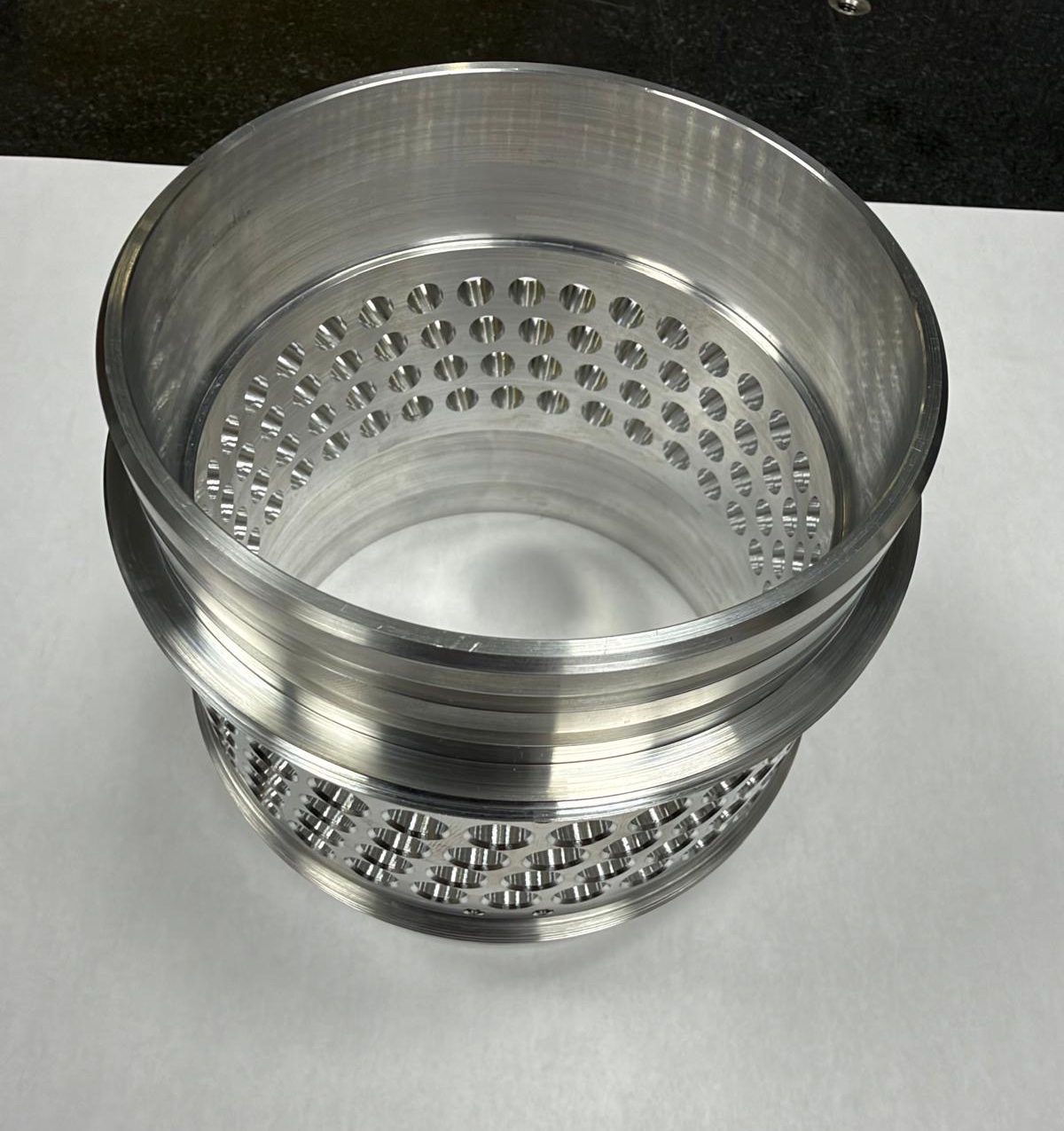
The photographs looking through the component also reveal the amount of internal machining involved. Large internal diameters and shoulders create the main hollow form, while the holes machined through the central section break through onto the internal surface.
Working with a large hollow component creates different considerations from machining a solid block or a smaller turned part.
Workholding needs to support the component correctly without interfering with the areas being machined. Tool access has to be considered for both internal and external features, and the machining sequence needs to allow the part to be repositioned while maintaining the required relationships between features.
Material removal also changes the stiffness of a component as machining progresses. As the wall section becomes established and additional material is removed, the part no longer behaves in exactly the same way as the original stock material. A considered machining route helps control that change while the remaining features are produced.
For buyers, this is an important reminder that the finished drawing only shows the destination. The machining supplier also has to plan the route required to get there.
External Grooves, Threads and Interface Features
The repeated hole pattern attracts attention, but the external cylindrical features are equally significant.
A series of circumferential grooves and stepped diameters can be seen around both ends of the component, together with threaded or interface areas. These are the types of features that may be required to locate, connect or interact with other elements of an assembly.
Where several cylindrical features sit close together, their relationship becomes important. Diameters, shoulders, grooves and threads cannot be treated entirely independently if the final component needs to assemble correctly with adjoining parts. This is where precision turning and careful process control become particularly valuable.
Producing a clean cylindrical surface is one thing. Producing several interacting features across a large component, and then maintaining their relationship with extensive secondary machining around the body, requires a much more complete manufacturing approach.
Controlling a Feature-Rich Aluminium Component
The photographs provide a useful illustration of what we mean by a feature-rich component. There is very little unused geometry. The internal diameter, external diameters, repeated holes, grooves, shoulders and interface features all form part of one manufactured item.
Each machining operation also influences the operations that follow it. The location chosen for workholding during one stage may become a finished surface during another. Material removed during an early operation can affect the stiffness available for later machining. Features created externally need to remain correctly positioned relative to features machined internally.
Planning therefore becomes an important part of the job before the first cut is made. For low-volume, high-variety precision engineering, this is particularly relevant. A component may be very different from the job that preceded it, so the machining route, tooling and workholding strategy need to be considered around the individual design rather than relying purely on repetitive mass-production methods.
Inspection Across Multiple Types of Feature
A component containing this amount of geometry also illustrates why dimensional inspection cannot focus on a single type of measurement.
There are cylindrical features, internal and external diameters, hole positions, lengths, shoulders and other defined characteristics that may all contribute to the finished assembly. Inspection therefore needs to reflect the engineering drawing and the functional requirements specified by the customer.
Repeated features are particularly useful in demonstrating this point. It is not enough for one opening to be correct if the drawing requires an entire pattern to maintain a specified relationship. Likewise, a large diameter may be correct in isolation while still needing the correct relationship with a shoulder, groove, internal bore or adjoining feature.
For precision components, quality comes from controlling the complete geometry rather than focusing solely on the most visually obvious features.
What Buyers Can Learn from This Type of Component
This 7075 aluminium pipeline pigging component highlights several useful points for engineering and procurement teams sourcing complex machined parts.
First, a component that appears primarily cylindrical may require substantially more than straightforward CNC turning. Repeated radial features, internal geometry and multiple interfaces can turn a rotational component into a much more involved machining project.
Second, material choice and machining strategy need to be considered together. 7075 aluminium provides high strength while retaining the weight advantages associated with aluminium, but complex material removal still requires a controlled machining route.
Third, repeated geometry demands consistency. The large number of openings around this component means positioning, machining and finishing need to remain controlled throughout the pattern.
Finally, the manufacturing route matters just as much as the final photograph. Workholding, operation sequence, tool access, material removal and inspection all contribute to producing the finished component successfully.
Precision Machining for Specialist Pipeline Equipment
This CNC machined 7075 aluminium cylinder is a good example of the variety found within precision engineering.
From the outside, it is a striking aluminium component with an unusual pattern of machined openings. Behind that appearance is a combination of large-diameter cylindrical machining, extensive repeated features, internal machining, grooves, interface geometry and careful process planning.
Its eventual role within pipeline pigging equipment also shows how precision-machined components support industries far beyond the more familiar aerospace, automotive or general manufacturing applications. Pipeline inspection and maintenance equipment operates in a specialist environment where dependable mechanical components form part of larger engineered systems.
At Tarvin Precision, our low-volume, high-variety approach means exactly this type of unusual project is part of what we do.
From straightforward turned components through to large, feature-rich aluminium parts such as this one, we support customers requiring precision machining for specialist engineering applications.
If you have a complex component, unusual geometry or a low-volume machining requirement that needs a capable UK manufacturing partner, contact the Tarvin Precision team to discuss your project.