
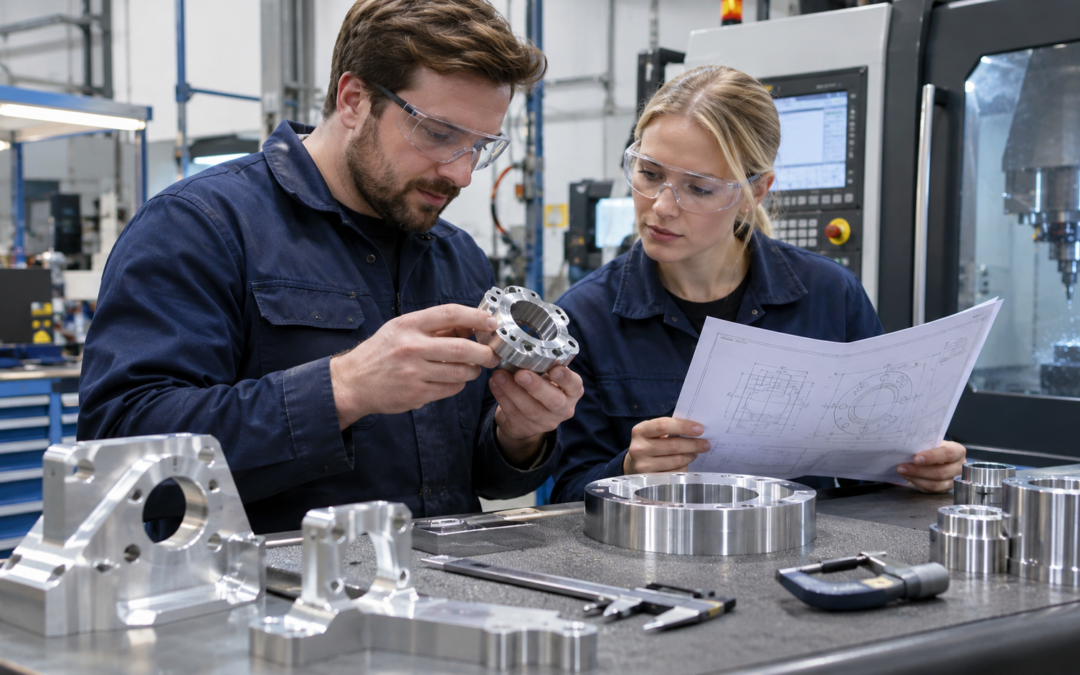
Selecting a CNC machining supplier for defence projects involves more than comparing component prices and manufacturing lead times. Procurement teams must consider technical capability, quality management, traceability and the reliability of the wider supply chain. Where components are intended for demanding applications, confidence in the supplier’s processes can be just as important as the finished parts.
Working with a JOSCAR-registered CNC machining supplier can form part of this evaluation. JOSCAR is widely used within the British defence, aerospace and security sectors to support supplier pre-qualification, helping procurement organisations assess businesses against relevant commercial, compliance and assurance requirements.
However, JOSCAR registration is only one consideration. Manufacturing capability, recognised quality standards such as AS9100, inspection procedures and the ability to maintain consistent production all contribute to an informed purchasing decision.
This guide examines the main factors defence procurement teams should consider when evaluating CNC machining suppliers and explains how supplier assurance and engineering capability work together.
Why Supplier Selection Matters in Defence Manufacturing
Defence manufacturing operates in an environment where component quality, documentation and dependable delivery can have significant implications for equipment performance and programme schedules. Even relatively straightforward machined parts may form part of larger assemblies where dimensional accuracy, material properties and manufacturing consistency are essential.
For procurement teams, the challenge is therefore not simply to identify a company capable of manufacturing a component. It is to establish whether that company has the appropriate systems, equipment and experience to manufacture it repeatedly while meeting the specified requirements.
A supplier might demonstrate excellent machining capabilities but lack the documentation processes needed for a particular contract. Alternatively, a business may hold relevant certifications but have limited experience with the materials, geometries or production volumes involved.
Successful supplier selection requires a combination of technical and organisational assessment. Drawing requirements, inspection expectations, subcontracted processes, production capacity and delivery arrangements should all be considered before awarding work.
This becomes particularly important when sourcing complex components, small production batches or parts requiring specialist manufacturing operations. In these situations, clear communication between engineering, quality and procurement teams can help identify potential difficulties before production begins.
What JOSCAR Registration Means for Defence Procurement
The Joint Supply Chain Accreditation Register, commonly known as JOSCAR, provides a shared approach to supplier pre-qualification within the aerospace, defence and security sectors. Managed by Hellios, the system allows participating purchasing organisations to access supplier information through a common platform rather than repeatedly requesting similar information from individual businesses.
The registration process includes information relating to areas such as organisational governance, quality management, financial standing, business policies and regulatory compliance. Depending on the supplier’s activities and associated risks, additional qualification requirements may apply.
For procurement teams, the principal benefit is access to structured supplier information that can support initial due diligence.
JOSCAR registration does not automatically mean that a supplier is technically approved for every defence programme or manufacturing requirement. Individual customers may still need to complete technical assessments, review manufacturing capabilities or conduct their own supplier approval procedures.
Nevertheless, JOSCAR can provide a useful starting point when identifying potential subcontract manufacturers.
When considering a JOSCAR-registered machining business, buyers should establish whether its manufacturing capabilities align with the intended work. Registration supports supplier assurance, while technical suitability must be assessed against the specific component and contractual requirements.
Why AS9100 Matters Alongside JOSCAR Registration
Although JOSCAR supports broader supplier assessment, AS9100 addresses the quality management systems used by organisations operating within aviation, space and defence supply chains.
The AS9100 standard builds upon ISO 9001 and incorporates additional requirements relevant to industries where product conformity, traceability and risk management are particularly important.
For a CNC machining supplier, an AS9100-certified quality management system provides a structured framework for controlling manufacturing activities. This can involve contract review, production planning, configuration control, purchasing controls, inspection and management of nonconforming products.
The distinction between JOSCAR and AS9100 is important. JOSCAR helps participating organisations review information about a potential supplier, while AS9100 provides requirements for the quality management system through which products and services are delivered.
Neither removes the need to assess whether a supplier is capable of producing a particular component. Instead, both can contribute to a more comprehensive understanding of the organisation. Procurement teams may therefore wish to verify the scope and validity of relevant certifications, alongside reviewing the supplier’s manufacturing processes and inspection capabilities.
For a closer look at how these requirements affect manufacturing, inspection and documentation, read our guide to AS9100-certified CNC machining for defence components.
Practical Benefits of Controlled Manufacturing Processes
A structured quality management system can help ensure that production activities are planned, documented and monitored consistently.
For example, when manufacturing a component to a customer drawing, the supplier should have suitable arrangements for confirming the required material specification, identifying relevant drawing revisions and determining the inspection activities needed to demonstrate conformity.
Where a design change is introduced, effective configuration control helps ensure that manufacturing and inspection processes are updated appropriately. Similarly, documented procedures for identifying and managing nonconforming components help prevent unsuitable parts from being released without the required authorisation.
These controls are particularly relevant when components are manufactured over multiple batches or supplied to programmes with extended production lifecycles.
Assessing CNC Machining Capabilities for Defence Components
Technical capability remains one of the most significant factors when choosing a defence machining supplier. Although many subcontract engineering companies offer CNC milling and turning, their equipment, experience and manufacturing approaches can differ considerably.
An assessment should begin with the component itself. Its size, geometry, material, tolerances, surface finish and production quantity will influence which manufacturing processes are appropriate.
CNC Milling, Turning and Multi-Axis Machining
CNC milling is commonly used for components containing pockets, slots, mounting features and complex external geometries. CNC turning is generally suited to rotational parts such as shafts, sleeves, bushes and cylindrical housings.
For more complicated precision CNC machined defence components, multi-axis machining may provide additional advantages. Five-axis CNC machining, for example, can allow tools to approach a workpiece from multiple orientations, potentially reducing the number of separate setups required.
Reducing setups may improve manufacturing efficiency and help maintain relationships between features that would otherwise require repeated repositioning.
However, more advanced equipment is not automatically the best solution for every component. A relatively simple part may be manufactured more economically using conventional three-axis milling or CNC turning.
The important consideration is whether the supplier can select and control a suitable machining method for the specified requirements.
Material Experience and Manufacturing Knowledge
Defence-related engineering applications can involve a wide range of materials, including aluminium alloys, stainless steels and specialist engineering metals.
Each material presents different considerations for machining, including cutting forces, tool wear, heat generation and dimensional stability.
For example, certain stainless steel grades can present difficulties associated with work hardening and heat management. Thin-walled aluminium components, meanwhile, may require careful workholding and machining strategies to minimise distortion.
Procurement teams should consider whether a supplier has relevant experience with the specified material and component features, particularly where tolerances are demanding or the geometry is difficult to manufacture.
Early discussions between the supplier and the customer’s engineering team can help identify potential production challenges, allowing suitable approaches to be considered before manufacturing begins.
Traceability and Documentation Requirements
Traceability is an important consideration when sourcing CNC machined parts for defence applications. Depending on contractual requirements, customers may need evidence of the materials used, manufacturing activities completed and inspections performed.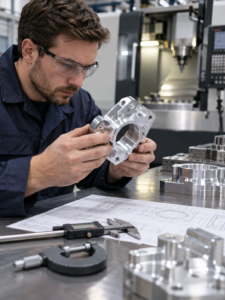
Material traceability can involve retaining certificates that identify the material grade, specification and relevant batch or heat information. Where components undergo additional processes, such as heat treatment or protective finishing, associated records may also need to be retained.
Inspection documentation provides further evidence that specified requirements have been checked. The level of documentation required will vary between contracts. Some projects may require standard inspection records and certificates of conformity, while others involve more detailed inspection reports, first article inspection requirements or additional customer-specific records.
A suitable supplier should be able to explain its documentation processes and establish which records can be provided before manufacturing begins.
The Importance of Drawing and Revision Control
Engineering drawings and digital models provide the technical foundation for manufacturing. However, ensuring that the correct information is used throughout production is equally important.
When specifications or designs change, manufacturing instructions, CNC programmes and inspection plans may need to be reviewed.
Effective revision control helps reduce the possibility of components being manufactured against superseded information.
This is particularly relevant for repeat orders, where an apparently familiar component may have been subject to engineering changes since its previous production run.
Procurement teams should establish how drawing revisions are communicated, recorded and incorporated into the manufacturing process.
Evaluating Manufacturing Capacity and Delivery Reliability
A supplier’s ability to manufacture components accurately is essential, but delivery performance and available capacity also influence supply chain reliability.
Defence projects may involve prototype components, pre-production quantities, replacement parts or recurring manufacturing requirements. These different types of work can place different demands on the subcontract manufacturer.
A supplier suited to high-volume production may not necessarily be the most practical choice for small quantities of complex parts. Similarly, a workshop specialising in prototypes may require additional planning or investment to accommodate substantial repeat production.
Understanding the intended production profile is therefore important during supplier selection.
Buyers should consider how a potential supplier plans its work, manages capacity and responds to changes in delivery requirements. It may also be useful to discuss arrangements for externally sourced processes, as these can affect overall lead times.
Where components require several stages of manufacture and inspection, an achievable production schedule should account for the complete process rather than machining time alone.
Clear expectations surrounding delivery dates, documentation and communication can help reduce misunderstandings once an order has been placed.
Questions to Ask a Potential Defence CNC Machining Supplier
A structured discussion can help procurement teams compare potential suppliers and identify areas that may require further evaluation.
Useful questions include:
- Does the supplier hold relevant registrations and quality certifications, including JOSCAR and AS9100 where applicable?
- What CNC milling, turning and multi-axis capabilities are available?
- Has the supplier manufactured components using the specified materials and tolerances?
- How are material certificates, inspection records and drawing revisions controlled?
- What inspection equipment and verification methods are used?
- Can the supplier support the required prototype, small-batch or repeat production quantities?
- How are changes, nonconformances and externally subcontracted processes managed?
- What manufacturing capacity and delivery arrangements are available for the proposed work?
These questions are not intended to replace a formal supplier audit or technical approval process. Instead, they provide a practical starting point for identifying whether a machining company may be suitable for further evaluation.
The Value of British Defence Manufacturing Suppliers
For UK defence procurement organisations, working with domestic suppliers offering precision CNC machining for defence applications can provide practical advantages where close engineering collaboration, communication and delivery flexibility are important.
Geographical proximity may make it easier to arrange technical discussions, review manufacturing processes or address issues that arise during development. UK-based production can also reduce some of the logistical complexity associated with international shipments.
However, location alone does not determine supplier suitability. Technical capability, compliance requirements, manufacturing performance and commercial considerations must still be assessed.
The objective is to establish a supply chain that is capable of supporting the programme throughout its intended lifecycle.
For specialist machined components, particularly those manufactured in smaller quantities, an appropriately qualified British engineering supplier can provide a useful combination of manufacturing expertise and accessible technical support.
A Practical Approach to Defence Supplier Selection
Selecting a JOSCAR-registered CNC machining supplier involves considering both organisational assurance and practical manufacturing capability.
JOSCAR registration can support supplier pre-qualification, while AS9100 certification provides evidence that a recognised quality management system is in place. Technical expertise, inspection processes, material control and production capacity remain essential parts of the overall assessment.
For procurement teams, the most effective approach is to consider these factors together rather than relying on any single certification, capability or commercial measure.
Taking time to establish the suitability of a supplier at the beginning of a project can help support consistent manufacturing, clearer communication and more dependable component supply.
Tarvin Precision is a JOSCAR-registered British precision engineering company operating an AS9100D-certified quality management system. From its Deeside facility, the company provides CNC milling, turning and multi-axis machining services, supporting customers with precision components for demanding engineering applications.
Further information about its manufacturing capabilities and quality systems can be found on the Tarvin Precision defence machining page.
Frequently Asked Questions
What is a JOSCAR-registered CNC machining supplier?
A JOSCAR-registered CNC machining supplier is an engineering company included within the Joint Supply Chain Accreditation Register. The register enables participating aerospace, defence and security organisations to access supplier pre-qualification and compliance information through a shared system.
Is JOSCAR registration mandatory for all defence machining suppliers?
Not every defence machining contract requires JOSCAR registration. Requirements depend on the purchasing organisation, the programme and the applicable supplier approval procedures. Some major defence buyers use JOSCAR as part of their supplier qualification process.
What is the difference between JOSCAR and AS9100?
JOSCAR is a supplier pre-qualification system covering broader organisational and compliance information. AS9100 is a quality management system standard used within aviation, space and defence industries. They address different areas of supplier assurance and can complement one another.
Does AS9100 certification guarantee that a CNC machined component meets its specification?
No. AS9100 certification demonstrates that a supplier operates a quality management system assessed against the standard. Individual components must still be manufactured, inspected and verified against their applicable specifications and customer requirements.
What should defence procurement teams look for in a CNC machining supplier?
Important considerations include technical capability, relevant manufacturing experience, quality management systems, traceability, inspection arrangements, delivery reliability and the supplier’s ability to meet the specific requirements of the contract.
Can smaller British CNC machining companies support defence supply chains?
Yes. Specialist subcontract manufacturers can support defence programmes through prototype development, low-volume manufacturing, repeat component production and technical collaboration. Their suitability depends on the programme’s technical, quality, security and commercial requirements.