
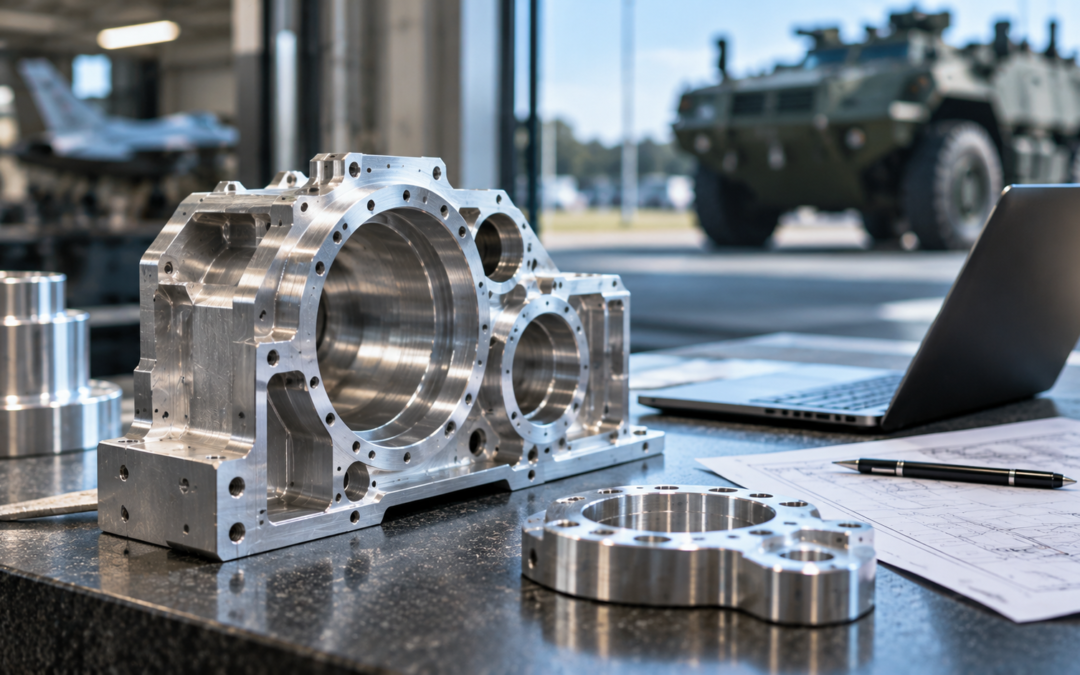
Defence procurement involves more than purchasing components that meet an engineering specification. Buyers must also consider the reliability of their suppliers, the effectiveness of manufacturing controls and the ability of the wider supply chain to meet contractual requirements consistently. For organisations sourcing precision CNC machined components, these considerations can be particularly important when supporting complex equipment and long-term manufacturing programmes.
Understanding defence machining supplier requirements involves considering technical capability alongside quality management, traceability, information security and commercial risk. A component may be manufactured accurately and delivered on time, but procurement teams also need confidence that the processes and documentation supporting its manufacture are appropriate for the intended application.
Supplier assurance frameworks such as JOSCAR and recognised quality management standards including AS9100 can support this assessment. Each addresses different aspects of supplier performance and organisational control, helping purchasing teams develop a more complete picture of potential manufacturing partners.
This article examines the wider assurance considerations involved in defence procurement, particularly how registration, certification, risk management and manufacturing documentation contribute to more dependable supply chains.
Understanding Supplier Assurance in Defence Procurement
Supplier assurance is the process of establishing and maintaining confidence that an organisation can meet the requirements placed upon it. Within defence manufacturing, this can extend beyond the immediate characteristics of the components being purchased.
Procurement teams may need to understand whether a supplier has suitable quality systems, sufficient manufacturing resources, appropriate commercial arrangements and the ability to handle information and documentation responsibly.
The significance of these factors depends on the nature of the contract. Manufacturing a relatively straightforward mechanical bracket may involve different risks from producing a complex precision housing containing critical interfaces and tightly controlled features. Similarly, supplying a single prototype can create different procurement considerations from supporting repeat production over several years.
A structured approach to supplier assurance helps purchasing organisations evaluate these differences and apply proportionate controls.
Supplier Approval Is Not a One-Time Exercise
Although initial supplier assessment is important, ongoing performance can be equally significant.
Manufacturing capacity, personnel, processes and business circumstances may change over time. New equipment may be introduced, materials may become difficult to obtain or subcontracted processes may move to different providers.
For this reason, supplier assurance should be considered an ongoing activity rather than simply a qualification exercise completed before the first purchase order. Depending on the contract, organisations may review delivery performance, product conformity, certification status and responses to quality issues throughout the commercial relationship.
This continuing assessment helps identify developing risks and supports informed decisions about future orders.
The Role of JOSCAR in Defence Supply Chain Assurance
The Joint Supply Chain Accreditation Register, commonly known as JOSCAR, is a supplier assurance system used by participating organisations in the aerospace, defence and security sectors.
Managed by Hellios, JOSCAR provides a shared approach to collecting and reviewing supplier information. Rather than requiring suppliers to complete entirely separate assessments for every participating customer, the system allows relevant information to be maintained through a common platform.
This can reduce duplicated administrative work while giving purchasing organisations access to structured information for their supplier assurance activities. The information collected can include organisational details, business policies and compliance-related information, with further assessment depending on the supplier’s circumstances and the requirements of the scheme.
What JOSCAR Registration Means for Buyers
For procurement teams, JOSCAR registration provides a useful source of supplier information during initial assessment and ongoing assurance activities. However, the precise significance of registration should be understood correctly.
JOSCAR is not a universal approval authorising an engineering company to manufacture every category of defence component. Nor does registration remove the need for buyers to establish technical suitability or assess specific contractual requirements.
A supplier may be appropriately registered while still needing to demonstrate experience with a particular machining process, material or inspection specification. Nevertheless, the shared assurance framework can support more efficient procurement activity, particularly when dealing with multiple suppliers across complex manufacturing programmes.
For British CNC machining businesses seeking to participate in defence supply chains, maintaining relevant supplier information through JOSCAR can contribute to transparency and communication with participating purchasing organisations.
How AS9100 Supports Manufacturing Quality Assurance
Where JOSCAR addresses broader supplier information, AS9100 provides a recognised quality management framework for organisations operating within aviation, space and defence supply chains.
Based on ISO 9001, AS9100 includes additional requirements addressing areas such as operational risk management, product safety, configuration management and control of manufacturing activities.
For CNC machining companies, these principles influence how work is reviewed, planned, produced and inspected, making AS9100 defence machining quality requirements particularly relevant to manufacturers supplying precision components.
The standard provides a structured approach to controlling quality-related processes rather than prescribing a single manufacturing method or inspection technique.
An AS9100-certified organisation should have established arrangements for managing relevant quality requirements within the scope of its certification.
Understanding Certification Scope
One important consideration for procurement teams is that certification applies to an organisation’s defined quality management system and its stated scope.
It should not be assumed that every activity, facility or externally provided process is covered in the same way. Buyers may therefore wish to review the current certificate, its validity and the activities included within its scope.
AS9100 certification also does not guarantee that every component manufactured will automatically conform to its specification. Product acceptance still depends on suitable inspection, verification and compliance with the customer’s technical requirements.
However, recognised quality management certification can provide assurance that an organisation has established processes intended to manage manufacturing quality consistently.
JOSCAR and AS9100 Serve Different Purposes
Although the two are often discussed together in defence procurement, they should not be treated as interchangeable.
JOSCAR supports broader organisational supplier assurance and information sharing, while AS9100 focuses on requirements for a quality management system.
Together, they can help procurement teams consider both the capabilities of a manufacturing organisation and the arrangements used to control its operations. Neither replaces the need to assess individual contractual requirements, technical capability or supplier performance.
Managing Risk Within the Defence Manufacturing Supply Chain
Risk management is an important element of defence procurement because manufacturing activities often involve several interconnected organisations and processes. 
A precision machined component may begin as certified raw material, undergo several CNC operations and then require external finishing, treatment or specialist inspection before delivery. Each stage introduces dependencies that may affect manufacturing quality, cost and schedule.
A disruption to material availability, for example, can affect production even when the machining supplier has sufficient capacity. Similarly, delays involving an external finishing contractor may prevent a completed component from being delivered on time. Procurement teams therefore benefit from understanding how suppliers identify and manage such dependencies.
Assessing Material Availability
Material selection can influence both manufacturing suitability and supply-chain resilience.
Some common engineering alloys are available through established distribution networks, while more specialised grades may involve longer lead times or additional sourcing requirements.
Where a particular material specification is essential, buyers should establish whether suitable stock can be obtained and whether the required supporting documentation is available.
Substituting an alternative grade should not be treated as a routine purchasing decision where the design specifies a particular material. Any proposed change may require technical review and formal customer approval. Planning material availability before production begins can help reduce avoidable delays and minimise uncertainty during manufacturing.
Understanding Subcontracted Processes
CNC machining companies may use external providers for processes such as heat treatment, anodising, plating or specialist surface finishing. These arrangements are common within precision engineering, but responsibility for managing applicable requirements remains important.
Where a subcontracted process is specified, procurement teams may need to establish how the machining supplier selects and controls external providers. Considerations can include process specifications, approval requirements, traceability, inspection and the documentation accompanying completed work.
Appropriate oversight helps maintain continuity between the original purchase requirements and the work undertaken throughout the manufacturing chain.
Documentation, Traceability and Contractual Requirements
Manufacturing documentation provides evidence that specified activities have been completed and that relevant requirements have been addressed.
For defence CNC machined components, the documentation required can vary considerably according to the customer, component and contractual conditions.
Some orders may require conventional inspection records and a certificate of conformity. Others may involve detailed dimensional reports, first article inspection documentation, material certificates or records associated with specialist manufacturing processes. These requirements should ideally be established before work begins.
Agreeing Documentation Requirements in Advance
Unclear documentation expectations can create difficulties even when manufactured components meet their dimensional specifications. For example, a customer might require material traceability to a particular batch or a formal inspection report identifying individual drawing characteristics.
If these requirements are not communicated until production is complete, the necessary records may be difficult or impossible to reconstruct reliably. A clear purchase order and supporting technical documentation should therefore identify the applicable requirements. Where necessary, suppliers should seek clarification before accepting work or commencing production.
This approach helps reduce the possibility of completed components being delayed because the expected evidence of conformity is unavailable.
Flowing Requirements Down the Supply Chain
Defence manufacturing contracts may contain requirements that must also be communicated to external providers.
These are often referred to as flowed-down requirements. They can include material specifications, process controls, document retention arrangements, customer approval conditions or restrictions concerning changes to manufacturing methods.
A machining company using subcontracted processes needs to understand which contractual requirements apply to those activities. Effective communication helps ensure that the original customer’s requirements are not lost as work passes between organisations. For procurement teams, this is an important consideration when reviewing how suppliers manage their own supply chains.
Information Security and Controlled Technical Data
Defence procurement can involve sensitive commercial information, technical drawings and manufacturing data. The level of protection required depends on the classification of the information, the contractual terms and any relevant regulatory obligations.
Even where information is not formally classified, suppliers may need appropriate arrangements for controlling access, managing electronic records and protecting customer information. Cybersecurity is therefore an important consideration alongside conventional manufacturing quality.
The UK Ministry of Defence’s Cyber Security Model sets out its approach to managing cybersecurity requirements within defence contracts and their supply chains, highlighting the importance of protecting sensitive information throughout the procurement process.
Cyber Essentials and Supplier Security
Cyber Essentials is a UK government-backed certification scheme designed to help organisations protect themselves against common cyber threats.
Cyber Essentials Plus includes additional independent technical verification of relevant security controls.
For defence procurement teams, certification can provide useful evidence when considering a supplier’s general cybersecurity arrangements.
However, Cyber Essentials certification should not be interpreted as authorisation to receive or handle every category of sensitive defence information.
Additional security requirements may apply depending on the contract and nature of the work.
Where technical data is subject to export controls, contractual restrictions or other legal requirements, those obligations must also be considered separately.
Suppliers and customers should establish their respective responsibilities for secure information handling before exchanging relevant material.
Evaluating Delivery Reliability and Business Continuity
Supply-chain assurance is not limited to product quality and documentation. The ability to maintain production and respond to disruption also influences procurement risk.
A manufacturing supplier may have suitable CNC equipment and quality systems but still experience constraints involving capacity, workforce availability, maintenance or externally sourced processes.
For programmes requiring recurring component supply, these factors can affect the reliability of delivery schedules. Procurement teams may therefore consider how suppliers plan workloads, maintain critical equipment and communicate changes that could affect agreed delivery dates.
Capacity Planning and Production Scheduling
Manufacturing capacity is not simply a measure of how many CNC machines a business operates.
Available capacity also depends on machine suitability, programming time, setup requirements, inspection resources and the complexity of existing work. A component requiring extensive milling, several machining setups and specialist verification may occupy substantially more resources than a simpler part.
For this reason, realistic delivery planning should consider the full manufacturing process. Clear communication between customer and supplier can help establish achievable schedules and identify potential constraints before they cause disruption.
Managing Repeat Orders and Long-Term Supply
Defence equipment may remain in service for extended periods, creating ongoing demand for replacement components and additional production batches. Repeat manufacturing can introduce challenges where original personnel, tooling, materials or equipment are no longer available.
Retaining appropriate production information helps support continuity. Controlled CNC programmes, setup instructions, technical documentation and inspection records can provide a foundation for reproducing components consistently.
Where changes are necessary, suitable review and approval processes help ensure that the revised manufacturing approach remains compatible with the original requirements. These arrangements can be particularly valuable when supporting low-volume components manufactured intermittently over several years.
Why Procurement Decisions Should Consider More Than Unit Price
Price remains an important part of manufacturing procurement, but the lowest quoted component cost does not necessarily represent the lowest overall purchasing cost. A quotation may exclude certain inspection activities, material certification, external processes or specialist documentation.
Similarly, a component produced at a lower initial price may involve additional costs if quality problems, delivery delays or incomplete records disrupt the wider manufacturing programme. For this reason, procurement decisions should consider the complete requirements of the order.
Understanding Total Manufacturing Cost
Total manufacturing cost can be influenced by several factors beyond the machining operation itself. These may include material procurement, programming, tooling, setup time, inspection, subcontracted treatments, packaging and documentation.
Production quantity also affects the relationship between setup costs and individual component prices. A supplier quoting for a small batch may need to recover substantial programming and setup effort across relatively few components. Comparing quotations fairly therefore requires an understanding of what each supplier has included.
Where possible, buyers should ensure that technical and quality requirements are communicated consistently to all potential suppliers. This helps distinguish genuine differences in manufacturing cost from variations in quotation scope.
The Value of Early Technical Communication
Early discussions between design engineers, procurement teams and machining suppliers can help identify unnecessary manufacturing complexity. For example, a component may contain tolerances that are tighter than its intended function requires. Alternatively, a difficult-to-access feature might be redesigned without compromising performance.
Such changes must remain subject to appropriate engineering review and approval. The purpose of these discussions is not to reduce essential quality requirements, but to establish whether a more practical manufacturing approach can achieve the intended result.
For precision-machined components, effective technical communication can contribute to more predictable production costs and delivery schedules.
Monitoring Supplier Performance Over Time
Once a manufacturing relationship has been established, ongoing monitoring helps procurement teams determine whether the supplier continues to meet expectations.
Performance measures may include delivery reliability, component conformity, responsiveness to technical enquiries and the handling of identified quality issues. The appropriate level of monitoring should reflect the significance of the supplied components and the risks associated with the contract.
For some low-risk purchases, relatively straightforward performance reviews may be sufficient. More demanding programmes may involve formal supplier scorecards, periodic assessments or additional quality reporting.
Responding to Quality and Delivery Issues
Occasional manufacturing difficulties can arise even within established quality management systems. When problems occur, the supplier’s response can be as important as the initial issue.
Clear communication, appropriate containment of affected products and systematic investigation can help prevent a local problem from affecting the wider manufacturing programme. Where necessary, corrective actions should address the underlying causes rather than simply replacing a nonconforming component.
Procurement teams can use this information to assess how effectively a supplier manages problems and whether suitable improvements have been implemented. A constructive approach to supplier performance management can support continuous improvement while maintaining appropriate accountability.
Supporting Resilient British Defence Supply Chains
British precision engineering companies providing CNC machining for the defence sector contribute specialist manufacturing capabilities to demanding supply chains, supporting the production of components requiring consistent quality, traceability and reliable delivery.
Domestic subcontract manufacturing can offer practical advantages where projects benefit from accessible technical communication, shorter logistical routes or close collaboration during component development. However, the suitability of a British supplier still depends on its ability to satisfy the applicable technical, quality, security and commercial requirements.
Effective defence procurement should therefore combine appropriate supplier assurance with an informed understanding of manufacturing capability.
JOSCAR registration, AS9100 certification and relevant cybersecurity arrangements can provide supporting evidence, while reliable delivery, technical competence and clear documentation remain essential in practice.
Tarvin Precision, based in Deeside, North Wales, provides precision CNC machining services and holds JOSCAR registration, AS9100D certification and Cyber Essentials Plus certification. These form part of the company’s wider arrangements for supporting customers in demanding engineering supply chains.
Further information about our manufacturing capabilities and certifications is available on the defence machining and accreditation pages.
Frequently Asked Questions About Defence Machining Supplier Requirements
Defence procurement requirements can vary between organisations and contracts. The following answers address common questions concerning supplier assurance, certification and supply-chain management.
What are the main supplier requirements for defence CNC machining?
Requirements may include suitable manufacturing capabilities, quality management systems, material traceability, inspection documentation, information security and delivery reliability. The specific conditions depend on the customer and the intended component.
Is JOSCAR registration compulsory for all UK defence suppliers?
No. JOSCAR registration is used by participating organisations as part of supplier assurance and pre-qualification. Individual buyers may establish their own requirements, and registration is not universally mandatory for every defence manufacturing contract.
Why is AS9100 important in defence procurement?
AS9100 provides recognised quality management system requirements for aviation, space and defence organisations. It supports structured control of manufacturing processes, product conformity, risk and relevant documentation.
What is the difference between supplier assurance and quality certification?
Supplier assurance considers a broader range of organisational, commercial, compliance and operational factors. Quality certification assesses whether a defined management system meets the requirements of a particular standard.
Why is cybersecurity relevant when purchasing machined defence components?
Manufacturing suppliers may receive technical drawings, models and commercially sensitive information. Appropriate cybersecurity arrangements help protect this information, while contracts involving classified or controlled material may impose additional requirements.
What documentation might be required with CNC machined defence components?
Depending on contractual requirements, documentation may include certificates of conformity, material certificates, dimensional inspection reports, first article inspection records and evidence relating to specialist manufacturing processes.
How can procurement teams reduce risk when sourcing precision-machined components?
Risk can be reduced through clear technical specifications, suitable supplier assurance, early identification of material and manufacturing constraints, agreed documentation requirements and ongoing monitoring of supplier performance.
Does JOSCAR registration or AS9100 certification guarantee defence contract approval?
No. Registration and certification provide relevant assurance information, but individual customers may require additional technical assessments, contractual checks and supplier approval activities before placing work.