
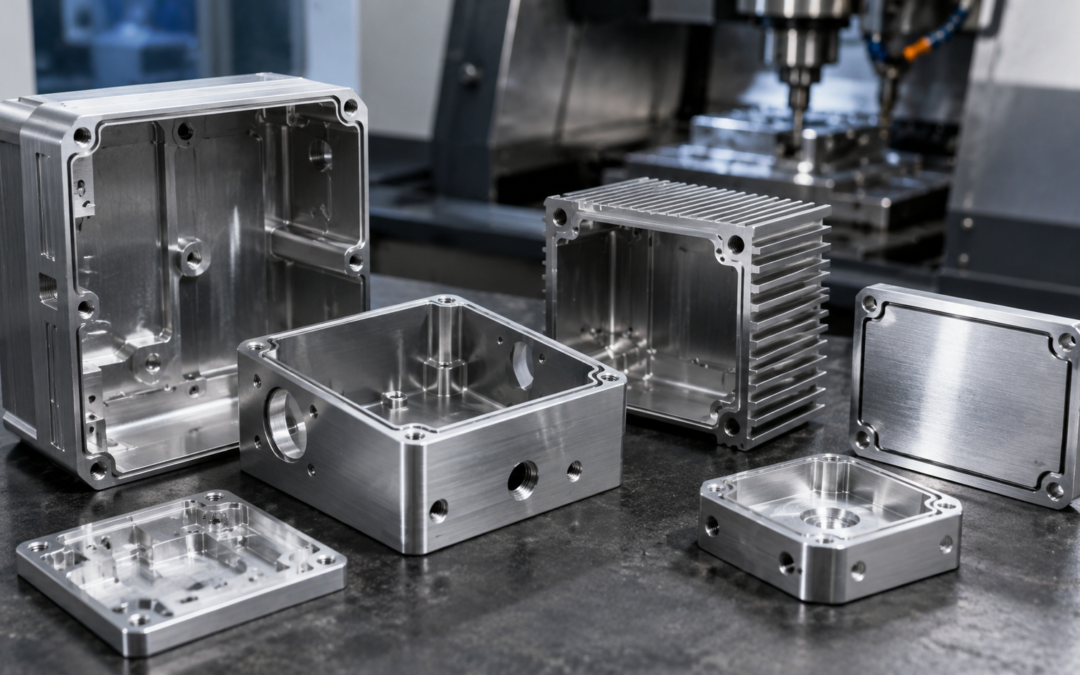
CNC machined housings are used wherever a component needs reliable protection, accurate location, controlled access or a high-quality engineered finish. From electronic enclosures and instrument cases to precision covers, sensor bodies, valve housings and small mechanical assemblies, the housing is often more than a simple outer shell. It can be a functional part of the product, carrying threads, mounting faces, sealing features, connector ports, inserts, bearing locations and inspection-critical dimensions.
For buyers, engineers and procurement teams, understanding how CNC machined housings are designed, specified and manufactured can help reduce cost, improve lead times and avoid common production problems. A well-designed housing can make assembly easier, protect internal components and support repeatable performance in demanding environments. A poorly specified one can create issues with tolerance stack-up, distortion, sealing, surface finish or unnecessary machining time.
This guide explains what CNC machined housings are, when to use them, which materials are common, and what buyers should consider when ordering enclosures, covers and precision cases.
What Are CNC Machined Housings?
CNC machined housings are precision-engineered parts manufactured using computer-controlled milling, turning or a combination of machining processes. They are typically designed to contain, protect, align or support other components. Unlike fabricated sheet metal boxes or moulded plastic cases, CNC machined housings are produced from solid billet, bar, plate or casting stock, allowing much tighter control over geometry, wall thickness, flatness, thread quality and critical interfaces.
These housings can be simple or complex depending on the application. Some are compact covers with a few fixing holes, while others include multiple internal pockets, sealing grooves, stepped bores, connector cut-outs and mounting features. CNC machining is especially useful where the housing must combine strength, accuracy and repeatability. Common CNC machined housing applications include:
- Electronic enclosures for control units, sensors and instrumentation
- Precision cases for test equipment and specialist devices
- Mechanical covers for moving or sensitive components
- Aluminium housings for aerospace, motorsport and industrial assemblies
- Stainless steel housings for harsh or corrosive environments
- Machined bodies for valves, pumps, actuators and fluid control systems
The main advantage of CNC machined housings is design freedom with precision. Features can be machined exactly where they are needed, with tight control over dimensions, surface finish and alignment.
Enclosures, Covers and Precision Cases
CNC machined housings are often chosen when a standard off-the-shelf enclosure is not suitable. Many projects need a housing that fits around a specific PCB, sensor, connector layout, cable entry or mechanical interface. In these cases, a custom machined enclosure can be designed around the product rather than forcing the product to fit inside a generic case.
Enclosures, covers and precision cases may look similar, but their functions can differ. An enclosure usually protects internal electronics or components. A cover may provide access, shielding or guarding. A precision case may form part of a higher-value assembly where appearance, fit and repeatability are important. Typical reasons to specify CNC machined housings include:
- A need for accurate internal pockets or component locations
- Specialist mounting points or threaded inserts
- Tight sealing requirements using O-rings or gaskets
- Small batch or prototype production before scaling up
- Higher strength than plastic or sheet metal alternatives
- A professional finish for visible end-use parts
- Compatibility with demanding industrial or technical environments
For low to medium volumes, CNC machining is often more practical than investing in tooling for casting, moulding or pressing. It allows design changes to be made more easily, which is particularly useful during product development.
Benefits of CNC Machined Housings
The benefits of CNC machined housings go beyond dimensional accuracy. They can improve how a product performs, how easily it is assembled and how reliably it operates over time. Because the housing can be machined from a single piece of material, it can provide excellent rigidity, clean geometry and consistent quality across batches.
Machined housings are especially useful where internal and external features must relate accurately to each other. For example, a connector cut-out on one face may need to align with a PCB, while fixing holes on another face must match a customer’s assembly. CNC machining allows these relationships to be controlled in one or more carefully planned setups. Key benefits include:
- High dimensional accuracy and repeatability
- Stronger construction than many fabricated alternatives
- Excellent control of threaded holes, bores and sealing features
- Good surface finish for visible or functional areas
- Suitable for prototypes, small batches and repeat production
- Flexible design options without dedicated mould tooling
- Compatible with finishing processes such as anodising, plating or passivation
For buyers, the result is a component that can be specified closely around the requirements of the final assembly. This makes CNC machined housings a practical choice for technical, commercial and safety-critical applications.
CNC Machined Aluminium Housings
CNC machined aluminium housings are among the most common choices for enclosures, covers and precision cases. Aluminium offers a useful balance of low weight, good strength, corrosion resistance and machinability. It can also be anodised to improve durability and appearance, making it suitable for both functional and visible components.
Aluminium is often selected for electronic enclosures, aerospace parts, automotive components, test equipment, control systems and instrumentation. It is light enough for weight-sensitive assemblies but strong enough for many demanding mechanical applications. It also dissipates heat well, which can be valuable where electronics or power components need thermal management. Common reasons to choose aluminium CNC machining for housings include:
- Low weight compared with steel or stainless steel
- Good machinability for complex pockets and profiles
- Excellent thermal conductivity
- Compatibility with anodising and other finishes
- Good corrosion resistance in many environments
- Cost-effective machining for small and medium batches
Material grade matters. Some aluminium grades are easier to machine and finish than others, while higher-strength grades may be required for demanding applications. Buyers should specify the material grade where it is important, or work with the machining supplier to choose a suitable option based on strength, finish, cost and availability.
Stainless Steel and Other Materials for Precision Machined Cases
While aluminium is widely used, it is not always the right material. Stainless steel may be preferred where corrosion resistance, hygiene, wear resistance or strength are more important than weight. Precision machined cases made from stainless steel are common in harsh environments, food and pharmaceutical equipment, marine applications, specialist instrumentation and some fluid control systems.
Other materials may also be suitable depending on the housing’s purpose. Mild steel, brass, engineering plastics and specialist alloys can all be machined into housings, covers or cases. The choice should be guided by operating environment, load, temperature, chemical exposure, weight, conductivity and finishing requirements. Typical material considerations include:
- Aluminium for lightweight, cost-effective and corrosion-resistant housings
- Stainless steel for strength, hygiene and harsh environments
- Mild steel for robust industrial covers where weight is less critical
- Brass for electrical, decorative or specialist mechanical applications
- Engineering plastics for insulation, low weight or non-metallic requirements
The best material is not always the most expensive one, with machined plastic parts often proving an example of this. A housing should be specified to meet the actual performance requirement without adding unnecessary machining difficulty, material cost or lead time.
Design Considerations for Custom Machined Enclosures
Good design is essential for custom machined enclosures. Small changes to wall thickness, corner radii, pocket depth or fixing positions can have a significant impact on machining time, cost and quality. The earlier manufacturing input is considered, the easier it is to produce a housing that works well and remains cost-effective.
One common issue is designing internal corners that are too sharp. Milling cutters are round, so internal corners need a radius unless specialist operations are added. Deep narrow pockets can also increase the machining time of CNC components because they require longer tools, lighter cuts and more careful control to avoid vibration or deflection. Useful design points include:
- Allow internal radii where possible rather than sharp square corners
- Avoid unnecessarily deep pockets with thin walls
- Keep wall thickness consistent to reduce distortion risk
- Provide clear access for cutting tools
- Use standard thread sizes where practical
- Consider how the part will be held during machining
- Avoid over-tolerancing non-critical features
A good CNC machining supplier can review drawings and models before manufacture. This can help identify opportunities to simplify the design, reduce machining time and improve consistency without compromising function.
Tolerances for CNC Machined Housings
Tolerances are a major consideration when specifying CNC machined housings. Not every dimension needs to be held tightly, and applying very tight tolerances across an entire part can increase cost unnecessarily. The best approach is to identify which features are truly critical to function, assembly, sealing or alignment.
Critical housing features may include bearing bores, sealing grooves, mating faces, connector positions, threaded interfaces and mounting hole patterns. Other external profiles or clearance areas may allow more general tolerances. Clear drawings help the machinist understand which dimensions need the most attention. Tolerance planning should consider:
- Mating faces that must sit flat against another component
- Hole positions that align with assemblies or fixtures
- Internal pockets that locate electronics or mechanical parts
- O-ring grooves, gasket faces or sealing lands
- Thread depths and thread engagement requirements
- Datum structures used for inspection and assembly
Geometric tolerances may also be needed for flatness, perpendicularity, concentricity or true position. Where these are important, they should be specified clearly on the engineering drawing rather than assumed.
Surface Finishes for CNC Machined Enclosures and Covers
Surface finish can be functional, cosmetic or both. CNC machined enclosures and covers may require a smooth appearance for customer-facing products, or a controlled finish for sealing, sliding, coating or inspection. The required finish should be matched to the application rather than applied universally.
A machined finish may be acceptable for many internal or non-visible features. External surfaces may require bead blasting, anodising, polishing, plating, powder coating or passivation depending on the material and end use. Aluminium housings are often anodised to improve corrosion resistance and provide a clean, durable finish. Common finishing options include:
- As-machined finish for functional internal features
- Bead blasting for a uniform matte appearance
- Anodising for aluminium corrosion resistance and durability
- Hard anodising for improved wear resistance
- Passivation for stainless steel corrosion performance
- Plating or coating for specialist protection
- Powder coating for colour and external durability
Finishing should be considered at the design stage. Coatings and anodising can affect dimensions, especially on tight-fitting features, bores and threaded areas. Masking may be needed where electrical contact, tolerance or thread function must be maintained.
Sealing, Gaskets and O-Ring Features in Machined Housings
Many CNC machined housings are designed to protect internal components from dust, moisture, oil, coolant or other contaminants. Sealing performance depends on the housing design, material, surface finish, fastener layout and the gasket or O-ring selected. A machined housing can provide accurate sealing grooves and flat mating faces, but the details must be specified properly.
O-ring grooves need the correct width, depth and compression for the seal type. Gasketed covers need suitable face flatness and enough fixing points to apply even pressure. If the housing will be used outdoors or in a harsh environment, material choice and finishing become even more important. Important sealing considerations include:
- O-ring groove dimensions and compression
- Gasket material and thickness
- Face flatness and surface finish
- Screw spacing around the sealing area
- Corrosion resistance of the housing material
- Drainage, venting or pressure equalisation requirements
- Protection of connectors, cable entries and access points
Sealing should not be treated as an afterthought. If ingress protection or fluid resistance is important, it should be built into the housing design from the beginning.
CNC Machined Electronic Enclosures
CNC machined electronic enclosures are commonly used for specialist control units, sensors, instrumentation, communications equipment and testing devices. They are particularly useful when the enclosure must fit a non-standard PCB layout, include connector openings or provide robust protection in industrial environments.
Machined electronic enclosures can include internal PCB standoffs, threaded inserts, cable glands, heat sink features, ventilation slots, display windows or removable lids. The light, durable and thermally conductive qualities of aluminium machined parts make these a popular choice. It may also provide electromagnetic shielding benefits depending on the design and assembly. Typical electronic enclosure features include:
- Internal pockets for printed circuit boards
- Bosses, pillars or threaded holes for mounting
- Connector cut-outs and cable entry points
- Lid fixing holes and gasket grooves
- Heat dissipation surfaces or fins
- Engraved identification or part marking areas
- Conductive or insulated finishing requirements
For electronic applications, collaboration between the design engineer and machining supplier can help avoid clashes between fasteners, connectors, wall thicknesses and internal components.
Precision Machined Covers for Mechanical Assemblies
Precision machined covers are often used to protect moving parts, seal inspection points, retain lubricants or provide access to internal assemblies. Unlike basic guards, these covers may need accurate mating faces, dowel locations, bearing clearances, counterbores or threaded holes.
A cover may look simple, but it can still be critical to the performance of the assembly. If it does not sit flat, align correctly or maintain the required clearance, it can cause leaks, rubbing, vibration or assembly problems. CNC machining allows these features to be produced repeatably across batches. Precision machined covers may include:
- Counterbored fixing holes
- Dowel holes for accurate location
- Sealing faces and gasket grooves
- Inspection or access ports
- Clearance pockets for internal components
- Engraved labels or orientation marks
- Finished external faces for visible assemblies
Where covers are removed during maintenance, thread quality and durability are important. Inserts or alternative materials may be worth considering if the part will be assembled and disassembled frequently.
Prototypes, Small Batch CNC Machined Housings and Repeat Production
CNC machining is well suited to prototypes and small batch CNC machined housings because it does not require dedicated tooling. This makes it ideal for development projects, specialist equipment, legacy parts, low-volume assemblies and technical products where design changes are likely.
During prototyping, the first housing can prove whether the design fits, seals, assembles and performs as expected. If changes are needed, the CAD model and machining programme can be updated before the next batch. The flexibility of small batch CNC machining is a major advantage over moulded or cast alternatives where tooling changes can be expensive. CNC machining supports:
- One-off prototype housings
- Small batch production
- Design development and testing
- Low-volume specialist equipment
- Repeat batches with controlled revisions
- Replacement or obsolete housings
For repeat production, it is worth maintaining consistent drawings, revision control and inspection requirements. This helps ensure future batches match previous supply and reduces the risk of variation over time.
Quality Inspection for CNC Machined Housings
Quality inspection is essential for CNC machined housings, especially when they include sealing faces, threaded interfaces, precision bores or critical mounting features. Inspection requirements should be agreed before manufacture so that the supplier understands which dimensions and features must be checked.
A good engineering drawing should identify datums, tolerances, material, finish and any special requirements. For more critical parts, inspection reports, first article inspection or batch traceability may be required. The level of inspection should match the risk and application. Inspection may include:
- Dimensional checks against engineering drawings
- Thread gauging
- Surface finish checks
- Flatness and position checks
- Visual inspection after finishing
- Material certification where required
- Batch documentation or inspection reports
For industries such as aerospace, defence, energy, medical or scientific equipment, documentation and traceability can be as important as the machined part itself. Buyers should make these requirements clear at enquiry stage.
How to Specify CNC Machined Housings for Quotation
A clear quotation package helps suppliers price CNC machined housings accurately and reduces the need for assumptions. The more complete the information, the easier it is to assess material, machining time, finishing, inspection and lead time.
Buyers should ideally provide a 3D CAD model, a 2D engineering drawing and information about quantities, material, finish and delivery expectations. The drawing should include critical tolerances, threaded features, surface finish requirements and any notes relating to deburring, marking or certification. A strong enquiry should include:
- 3D CAD model in a suitable format
- 2D drawing with tolerances and material specification
- Required quantity or batch size
- Preferred material grade
- Surface finish or coating requirements
- Critical features clearly identified
- Inspection or certification requirements
- Target delivery date or production schedule
If the design is still being developed, it is worth saying so. A machining supplier may be able to suggest small design changes that reduce cost, improve machinability or make the housing easier to inspect.
Reducing Cost Without Compromising Function
Cost control is an important part of specifying CNC machined housings. Machining time, material choice, complexity, tolerance requirements and finishing all influence price. The goal is not to simplify the part at the expense of performance, but to avoid unnecessary features that do not add value.
One of the most effective ways to reduce cost is to apply tight tolerances only where needed. Another is to design features with standard tooling in mind. Deep cavities, very thin walls, sharp internal corners and excessive finishing requirements can all increase machining time. Cost-saving opportunities include:
- Use standard material sizes where possible
- Avoid over-tolerancing non-critical dimensions
- Add sensible radii to internal corners
- Reduce unnecessary pocket depth
- Use standard thread forms and hole sizes
- Combine setups where design allows
- Specify finishes only where required
- Review batch quantities for better production efficiency
Early supplier involvement can be valuable. A small adjustment to a corner radius, wall thickness or fixing position may make the part easier and faster to manufacture while keeping the design fully functional.
Choosing a Supplier for CNC Machined Housings
Choosing the right supplier for CNC machined housings is about more than machine capacity. The supplier should understand precision components, engineering drawings, material behaviour, finishing requirements and inspection standards. For technical housings, communication and manufacturing experience are especially important.
A capable supplier should be able to review drawings, highlight potential issues and produce parts consistently across prototype, small batch and repeat production. Leveraging the knowledge of a high mix low volume manufacturing specialist can be invaluable. They should also be transparent about what affects cost, lead time and manufacturability. When assessing suppliers, consider:
- Experience with precision machined housings and enclosures
- Ability to machine the required materials
- Understanding of tolerances and inspection
- Capacity for prototypes and repeat batches
- Access to finishing and treatment processes
- Clear communication during quotation and production
- Quality systems and documentation where required
For buyers in sectors where reliability matters, the cheapest quote is not always the best value. A housing that arrives correct, inspected and ready to assemble can save significant time downstream.
CNC Machined Housing Requirements
CNC machined housings provide a precise, flexible and reliable solution for enclosures, covers and precision cases. They are suitable for a wide range of applications, from electronic control units and instrumentation to mechanical assemblies, sensor housings and specialist industrial equipment.
The best results come from combining good design, appropriate material selection, realistic tolerances and clear communication with the machining supplier. By considering machinability, sealing, finishing, inspection and assembly requirements early, buyers can avoid unnecessary cost and improve the performance of the finished housing.
For projects that require custom geometry, high-quality finishes, accurate internal features or small batch production, CNC machined housings offer a practical route from prototype to repeat supply. Whether the requirement is a lightweight aluminium enclosure, a stainless steel protective case or a precision machined cover, the right manufacturing approach can make the housing a dependable part of the final product rather than just a box around it.