
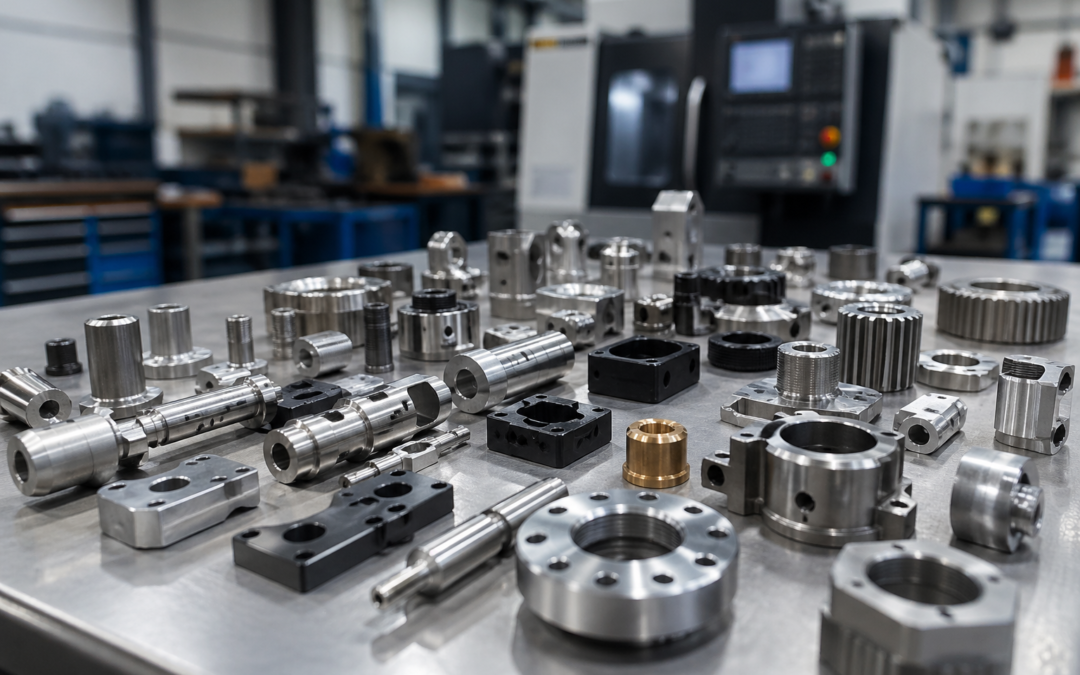
High mix low volume manufacturing is an important production model for industries that need flexibility, fast changeovers, tight quality control, and dependable delivery without the scale of mass production. For buyers in aerospace, scientific instruments, medical technology, electronics, and advanced engineering, it often offers the best route to getting complex parts made accurately and efficiently.
Instead of running one part in huge quantities, high mix low volume manufacturing focuses on producing a wide range of components in smaller batch sizes. That might mean switching between different materials, geometries, tolerances, finishes, and inspection requirements throughout the week. For the right supplier, this is not a disruption to normal operations. It is the core of how the business works.
This guide explains what high mix low volume manufacturing means, where it adds value, the benefits and challenges involved, and how to choose a subcontract machining partner that can handle this style of work well.
What Is High Mix Low Volume Manufacturing?
High mix low volume manufacturing refers to a production environment where a manufacturer makes many different part types, but in relatively small quantities of each. Rather than focusing on long, repetitive runs of the same component, the emphasis is on variety, responsiveness, and process control across multiple jobs.
This manufacturing model is common where products are specialised, technically demanding, or regularly updated. It suits companies that need prototype parts, bridge production, custom assemblies, development batches, or recurring low quantity orders for highly engineered products. In practical terms, high mix low volume manufacturing often includes:
- Small batch production runs
- Frequent machine changeovers
- Multiple materials and specifications
- Complex drawings and revision control
- Tight tolerances and detailed inspection plans
- A need for traceability and quality assurance
- Shorter planning horizons and mixed scheduling
For many modern engineering businesses, this model is now standard. Markets move quickly, product lifecycles are shorter, and customers increasingly want flexibility without sacrificing quality.
Why HMLV Manufacturing Matters in Modern Industry
High mix low volume manufacturing has become more valuable as product complexity has increased and demand patterns have become less predictable. Many businesses no longer want to commit to large production runs if design revisions, changing customer requirements, or supply chain uncertainty could leave them with unusable stock.
A flexible manufacturing approach helps reduce that risk. It allows engineers and buyers to order what they need, when they need it, while keeping room for design improvements and demand changes. This is especially useful in advanced manufacturing sectors where innovation, compliance, and technical performance matter more than simply driving the lowest possible unit price. Common reasons businesses choose this model include:
- Reducing excess inventory
- Supporting new product introduction
- Managing design changes more easily
- Improving responsiveness to customer demand
- Avoiding the cost of overproduction
- Allowing more customised or application-specific parts
- Supporting higher value, lower quantity engineering work
In precision machining, this way of working often aligns naturally with companies producing specialised components rather than commodity parts.
High Mix Low Volume Manufacturing vs Low Mix High Volume Manufacturing
Understanding the difference between high mix low volume manufacturing and high volume production helps buyers choose the right supplier and ordering strategy. These two models operate in very different ways, even when similar machines or materials are involved.
High volume manufacturing is designed for repetition. Once the process is set, the goal is to produce large quantities of the same item with maximum efficiency and minimal variation. This works well for standardised parts with steady demand.
High mix low volume manufacturing, by contrast, is designed for change. The manufacturer must be able to move between jobs smoothly, maintain consistency across different specifications, and keep quality stable despite more frequent setup activity. Key differences often include:
- Higher product variety in HMLV environments
- Lower batch sizes and shorter production runs
- More frequent programming and setup changes
- Greater emphasis on planning and scheduling flexibility
- Stronger need for drawing control and job tracking
- Higher skill requirements on the shop floor
- More complex quality documentation per batch
A business set up for mass production may not be the best fit for complex small batch work. Equally, a supplier built around high mix low volume manufacturing is often much better equipped to deal with engineering changes, mixed demand, and specialist requirements.
Industries That Rely on HMLV Manufacturing
High mix low volume manufacturing is especially important in industries where parts are complex, tolerances are critical, and order quantities are modest. In these sectors, technical capability and consistency matter far more than pure output volume.
Aerospace is a good example. Components are often produced via small batch CNC machining in controlled quantities, with strict material and traceability requirements. Scientific and analytical equipment is another strong fit, because systems are often bespoke or produced in smaller volumes for specialist applications. Other industries that frequently depend on production model include:
- Aerospace and defence
- Scientific instruments
- Medical devices and laboratory equipment
- Semiconductor and electronics equipment
- Oil and gas instrumentation
- Automation and robotics
- Motorsport and performance engineering
- Quantum and advanced technology sectors
These markets often require a manufacturing partner that can manage complexity confidently without treating every new job as an exception.
The Main Benefits of High Mix Low Volume Manufacturing
For the right application, high mix low volume manufacturing offers significant commercial and operational advantages. It gives businesses more control over stock levels, product development, and responsiveness while still allowing high standards of quality and repeatability.
One of the biggest benefits is flexibility. Buyers can source parts in smaller batches, make adjustments between releases, and avoid tying up cash in excess inventory. This is particularly helpful where demand is variable or products are still evolving. Other major benefits include:
- Lower stockholding requirements
- Better support for engineering changes
- Faster response to shifting customer demand
- Easier introduction of new or updated products
- Reduced risk of obsolete inventory
- Greater potential for customisation
- Stronger alignment with specialist engineering markets
Although the unit cost may be higher than mass production, the total commercial picture can be better when waste, storage, revisions, and working capital are taken into account.
The Challenges of High Mix Low Volume Manufacturing
High mix low volume manufacturing also brings real challenges. It is not automatically efficient just because batch sizes are small. In fact, without strong systems and good shop floor discipline, this kind of work can become difficult to control.
Frequent setup changes take time. Planning can be more complicated. Inspection requirements may vary from job to job. Material availability can have a bigger effect on lead times, and small inefficiencies can quickly add up when production is constantly switching between different parts. Typical challenges include:
- Higher setup time per batch
- More complex scheduling
- Greater administrative load
- Increased chance of planning errors
- More demanding revision and documentation control
- Pressure on programming and inspection resources
- Difficulty balancing responsiveness with machine utilisation
This is why supplier selection matters so much. A company that truly understands high mix low volume manufacturing will have systems, people, and processes designed for it.
How Precision Machining Fits HMLV Manufacturing
Precision machining is one of the most common examples of high mix low volume manufacturing in action. Many machined components are not ordered in massive quantities. Instead, they are made in prototypes, development batches, first-off trials, or repeat orders in modest volumes.
This is particularly true for turned and CNC milled parts used in specialist assemblies. A buyer may need ten components for one project, fifty for another, and perhaps a repeat call-off six months later once the next build stage begins. That kind of demand pattern suits a capable HMLV machine shop. In machining environments, success often depends on:
- Fast and accurate CNC programming
- Efficient setup practices
- Reliable tooling strategies
- Strong first-off inspection routines
- Good job routing and planning systems
- Clear drawing and revision management
- Skilled machinists and inspectors
Tarvin Precision operates in the kind of precision engineering space where this approach is familiar. In many subcontract machining businesses serving advanced sectors, small batch complexity is not unusual at all. It is a normal part of delivering accurate components for demanding customers.
Planning and Scheduling
Planning is one of the most important elements in high mix low volume manufacturing. When many different jobs are moving through the factory at once, production control can quickly become the difference between a reliable supplier and a frustrating one.
Unlike repetitive long-run production, HMLV scheduling must account for setup time, inspection bottlenecks, material arrivals, subcontract processes, and due dates across a changing mix of parts. That calls for careful coordination between sales, planning, machining, quality, and dispatch. Strong scheduling in this environment usually involves:
- Clear job prioritisation
- Accurate routing and estimated times
- Realistic setup allowances
- Live visibility of machine loading
- Coordination of outside processes such as plating or heat treatment
- Tight control of material availability
- Regular review of urgent and at-risk jobs
Buyers often notice the results quickly. A well-organised supplier communicates clearly, flags issues early, and gives more confidence in delivery performance.
Quality Control in High Mix Low Volume Manufacturing
Quality assurance is essential in any manufacturing environment, but high mix low volume manufacturing places particular demands on quality systems. With many different jobs moving through the business, each with its own specification, it is easy for errors to occur if documentation and inspection are not tightly managed. 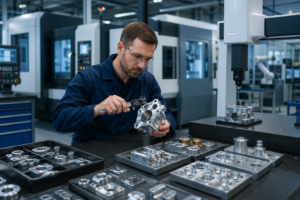
The challenge is not just measuring parts correctly. It is ensuring the right drawing, material, process, tooling, and inspection requirements are applied every time, even when batch sizes are small and setups are frequent. Good quality control in HMLV environments normally includes:
- Robust drawing and revision control
- First-off and in-process inspection
- Traceability of materials and batches
- Clear identification throughout production
- Documented quality procedures
- Suitable inspection equipment and calibration
- Skilled staff who understand the part function as well as the dimensions
For sectors such as aerospace and scientific equipment, this becomes even more important. Buyers are not simply purchasing parts. They are purchasing confidence that each component has been controlled properly from start to finish.
Reducing Costs in High Mix Low Volume Manufacturing
A common assumption is that high mix low volume manufacturing is always expensive. It can carry higher per-unit costs than long-run production, but that does not mean it is poor value. In many cases, it is the more commercially sensible model because it reduces waste and supports better decision-making.
The key is to control the hidden costs that come with complexity. That means reducing setup time where possible, improving planning accuracy, standardising tooling, and avoiding avoidable rework or delays. Ways manufacturers can improve cost efficiency include:
- Grouping similar jobs where practical
- Using common fixtures and tooling strategies
- Improving CNC programming workflows
- Standardising inspection methods
- Reducing waiting time between operations
- Training staff for flexible machine utilisation
- Investing in systems that improve job visibility
From the customer side, buyers can also help by providing stable drawings, realistic lead times, clear communication on priorities, and better forecast information where available.
How to Choose a HMLV Manufacturing Partner
Choosing the right manufacturing partner is especially important when your supply chain depends on high mix low volume manufacturing. Not every supplier is set up for this style of work, even if they claim to offer flexibility.
The best partners are usually those with proven experience handling varied part portfolios, demanding tolerances, and changing customer requirements. These precision engineering companies are comfortable with smaller batch sizes and understand that responsiveness, communication, and process control are part of the service. When assessing a supplier, it is worth looking at:
- Experience in your sector
- Ability to manage complex drawings and revisions
- Quality certifications and inspection capability
- Evidence of delivery performance
- Range of materials and machining capability
- Communication and problem-solving approach
- Comfort with repeat small batch and prototype work
A supplier that mainly wants large repetitive orders may not give smaller, mixed work the attention it needs. By contrast, a specialist precision engineering company used to supporting advanced industries is often better aligned with HMLV requirements. That is one reason businesses like Tarvin Precision can be a practical fit for customers who value consistency, traceability, and careful handling of technically varied work.
Is High Mix Low Volume Manufacturing Right for Your Business?
High mix low volume manufacturing is not just a fallback when volumes are low. For many businesses, it is the most appropriate production strategy because it supports agility, reduces inventory exposure, and makes it easier to manage technical change.
It is particularly well suited to companies developing products, serving niche markets, building complex systems, or operating in sectors where quality and compliance matter more than scale. In these situations, flexibility is not a luxury. It is part of maintaining commercial and operational control. This approach may be right for your business if you need:
- Multiple different part types across the year
- Small or medium batch sizes rather than mass production
- Regular design revisions or engineering updates
- Strong traceability and inspection
- Responsive lead times for specialist components
- A supplier that can adapt to changing priorities
For many precision engineering buyers, the real question is not whether high mix low volume manufacturing is valuable. It is whether their supply chain is properly set up to support it.
High Mix Low Volume Manufacturing Options
High mix low volume manufacturing plays a vital role in modern engineering supply chains. It allows businesses to source complex parts in manageable quantities, respond to changing requirements, and avoid the inefficiencies that come with forcing specialist work into a mass production model.
When done well, it combines flexibility with discipline. It is not about being informal or reactive. It is about having the planning, quality systems, machining capability, and communication needed to run a varied workload without losing control.
For buyers in aerospace, scientific, medical, electronics, and advanced manufacturing sectors, that can make a major difference. A capable supplier should be able to handle different jobs, tight tolerances, and smaller repeat orders as part of normal operations, while still delivering consistency and confidence.
That is why high mix low volume manufacturing remains such an important model in precision engineering. It supports innovation, reduces waste, and helps businesses stay responsive in markets where accuracy and adaptability both matter.