

For buyers, engineers and production managers, CNC machining lead times can be just as important as price, tolerance or material choice. A component may be beautifully machined, fully inspected and correctly finished, but if it arrives too late for assembly, testing or customer delivery, the wider project can still suffer. Understanding what affects delivery dates helps you plan better, reduce delays and have more productive conversations with your machining supplier.
CNC machining is often used for precision parts where accuracy, repeatability and reliability matter. These parts may be needed for aerospace, defence, medical, scientific, automotive, energy, electronics or specialist industrial applications. In many of these sectors, lead time is influenced by much more than the time spent cutting metal. Material availability, programming, tooling, inspection, subcontract processes and customer approvals can all affect the final delivery date.
This guide explains the main factors that influence CNC machining lead times, how to reduce avoidable delays, and what buyers can do to help suppliers quote and deliver precision machined components more efficiently.
What Are CNC Machining Lead Times?
CNC machining lead times refer to the period between placing an enquiry or order and receiving completed parts. In some cases, buyers think of lead time as the time from purchase order to delivery. In others, it may include the quotation stage, design review, material sourcing, machining, finishing, inspection and packing. For accurate planning, it is useful to define exactly what point the clock starts from.
A short lead time does not always mean the part is simple, and a longer lead time does not always mean the supplier is slow. Precision machining involves several linked stages. A part may only take minutes or hours to machine once set up, but the preparation, material procurement and inspection requirements may add days or weeks. Typical lead time factors include:
- Availability of raw material
- Complexity of the component
- Quantity required
- Machine capacity
- Tooling and fixture requirements
- Tolerance and inspection demands
- Surface finishing or treatment
- Customer approvals or drawing clarifications
- Existing workload at the machining company
The more information a buyer provides at the enquiry stage, the easier it is for a supplier to give a realistic delivery date. Clear drawings, material specifications, revision levels, quantities and delivery priorities all help reduce uncertainty.
CNC Machining Lead Times and Part Complexity
Part complexity is one of the biggest influences on CNC machining lead times. A simple spacer, bush or plate may be relatively quick to programme, set and machine. A complex housing, multi-face milled component or tight-tolerance turned part may require more detailed planning, multiple operations and additional inspection.
Complexity is not only about shape. It can also relate to how difficult a part is to hold, how many datums are involved, how thin the walls are, or how tight the relationship is between different features. Parts with deep pockets, fine threads, small holes, internal grooves or difficult-to-access surfaces often require more careful process planning. A complex part may need:
- CNC milling and turning operations
- Multiple setups on different machines
- Custom fixtures or soft jaws
- Specialist tooling
- Detailed inspection reports
- Trial machining or first-off approval
Designers can sometimes reduce lead time by reviewing whether every feature is essential. For example, a deep sharp internal corner may require specialist tooling, while a small radius may make the part easier and faster to machine. Similarly, applying very tight tolerances only where they are functionally required can reduce inspection and production time.
Material Availability and CNC Machining Delivery Times
Material choice has a direct impact on CNC machining delivery times. Common engineering materials are often available quickly, while specialist alloys, certified aerospace materials or unusual sizes may need to be ordered from specific stockholders. If a job requires traceable material certification, this should be stated clearly at the enquiry stage.
Aluminium, mild steel, stainless steel, brass, acetal and certain engineering plastics may be readily available in standard sizes. However, grades such as 7075 aluminium, 316 stainless steel, titanium, Inconel, specialist bronzes or certified aerospace alloys may involve longer procurement times. Lead time may also increase if the required billet, bar, tube or plate size is not commonly stocked. Material-related delays can come from:
- Non-standard grades
- Unusual bar, billet or plate sizes
- Certification requirements
- Minimum order quantities
- Supplier stock shortages
- Additional cutting or preparation
- Customer-nominated material sources
To avoid delays, buyers should confirm whether an equivalent material grade is acceptable if the preferred specification is unavailable. Where material traceability is critical, the supplier should know this before quoting, not after production has started.
How Quantity Affects Lead Times
Quantity can affect CNC machining lead times in different ways depending on whether the order is for prototypes, small batches or repeat production. A single prototype may be quick to machine but still needs programming, setup and inspection. A larger batch may take longer overall but can become more efficient per part once the process is proven.
For low-volume work, the setup time can be a significant part of the job. The machine has to be prepared, the programme generated, tools selected, material loaded and first-off checks completed. Whether the order is for one part or ten parts, many of these preparation steps are still required, so a high mix low volume manufacturing specialist is best. For higher quantities, lead time may be influenced by:
- Total machine hours required
- Tool life and tool replacement
- Batch inspection requirements
- Material procurement volume
- Operator availability
- Finishing capacity
- Packing and dispatch requirements
Repeat orders can often be delivered faster than first-time orders because the supplier may already have the programme, tooling strategy and inspection plan in place. Buyers who expect repeat demand should tell the machining company early, as this may influence how the job is quoted, tooled and scheduled.
CNC Milling Lead Times for Precision Components
CNC milling lead times depend on the size, geometry and number of setups required for the component. Milled parts can range from simple brackets and plates to complex enclosures, covers, housings and multi-face precision components. The more faces, features and tolerances involved, the more planning is usually needed.
A 3-axis milled part may be straightforward if most features are accessible from one or two sides. More complex components may need 4-axis or 5-axis machining to reduce setups, improve accuracy and reach angled features. While advanced machining can save time in production, programming and setup still need to be carefully managed. CNC milling lead times may increase when parts require:
- Multiple machining operations
- Tight positional tolerances
- Thin walls or delicate features
- Deep pockets or cavities
- Fine surface finishes
- Engraving or marking
- Inspection across several datums
Good design for manufacture can help reduce milling lead times. Clear datums, sensible corner radii, standard hole sizes and realistic tolerances can make a significant difference. Early discussion with a machining supplier can highlight features that may be expensive or time-consuming to produce.
CNC Turning Lead Times for Shafts, Bushes and Spacers
CNC turning lead times are usually influenced by material, diameter, length, tolerance and whether the part requires secondary operations. Turned components such as shafts, bushes, pins, spacers, threaded inserts and collars may look simple, but details such as concentricity, surface finish, grooves, threads and cross holes can affect delivery.
Straightforward turned parts from available bar stock can often be produced efficiently, especially when quantities justify a stable setup. However, parts with multiple diameters, tight fits, internal bores, fine threads or secondary milling features may need additional time. CNC turning lead times can be affected by:
- Bar stock availability
- Diameter and length of the part
- Internal and external thread requirements
- Surface finish requirements
- Concentricity and runout tolerances
- Heat treatment or plating
- Secondary milling, drilling or slotting
For buyers, it helps to specify which dimensions are function-critical. For example, a bearing fit may need a tight tolerance, while a non-critical outside diameter may not. This allows the supplier to focus time and inspection effort where it matters most.
Tolerances, Inspection and Precision Machining Lead Times
Tolerances have a major effect on precision machining lead times. The tighter the tolerance, the more care is needed during machining and inspection. Tight tolerances may require slower cutting strategies, controlled setups, temperature awareness, additional measurement equipment and more experienced operators. 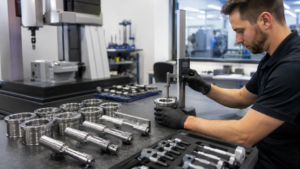
A tolerance that looks minor on a drawing can make a big difference in production. Holding a general tolerance is usually straightforward, but holding microns across several features or maintaining close geometric relationships between datums can require much more time. Inspection can also take longer than machining for some components. Lead time may increase when parts require:
- Tight dimensional tolerances
- Geometric tolerancing
- Full inspection reports
- First article inspection reports
- Certificate of conformity
- Material certification
- Batch traceability
- Specialist measuring equipment
To reduce unnecessary delays, drawings should avoid applying tight tolerances across all features by default. Tolerances should reflect the function of the part. Clear inspection requirements also help the supplier plan the correct quality checks from the start.
Surface Finishing and Treatment Lead Times
Surface finishing can add several days or weeks to CNC machining lead times, especially when the process is carried out by an approved subcontract supplier. Common finishes include anodising, plating, passivation, powder coating, bead blasting, polishing, heat treatment, black oxide and specialist coatings.
Finishing lead time is not only the time spent applying the treatment. Parts may need cleaning, masking, packing, transport to the finishing supplier, processing, return transport and final inspection. If a finish fails or needs rework, delivery can be affected further. Surface treatment can influence lead time through:
- Availability of approved finishers
- Batch processing schedules
- Masking requirements
- Colour or cosmetic specifications
- Certification requirements
- Heat treatment cycles
- Post-finish inspection
- Risk of distortion or dimensional change
Buyers should make finishing requirements clear on the drawing or purchase order. If colour, cosmetic appearance or coating thickness is important, this should be stated early. For critical components, it may also be necessary to consider how the finish affects tolerances, threads, bores and mating surfaces.
Drawing Quality and Its Impact on Lead Times
The quality of the drawing or CAD data has a direct effect on CNC machining lead times. A clear, complete drawing helps the supplier quote accurately, plan production and avoid delays. An unclear drawing can lead to questions, assumptions, revisions and potential rework.
Common issues include missing tolerances, unclear material grades, conflicting dimensions, no revision control, missing finish requirements or differences between the 3D model and 2D drawing. Even small uncertainties can pause a job until the customer confirms the correct requirement. A strong enquiry package usually includes:
- A fully dimensioned drawing
- 3D CAD model if available
- Material grade and specification
- Quantity and delivery requirement
- Revision number
- Surface finish requirements
- Inspection and certification requirements
- Any critical-to-function features
Where possible, buyers should respond quickly to technical queries. A machining supplier may be ready to start, but production cannot always proceed safely if key information is missing.
Capacity, Scheduling and Machine Availability
Even when material, drawings and tooling are ready, CNC machining lead times are still affected by workshop capacity. CNC machine shops schedule work around machine availability, operator skills, inspection resources and existing customer commitments. A supplier with a full order book may need to plan new work into the next suitable production slot.
Different machines are suited to different jobs. A large milled housing may need a specific machining centre. A long shaft may need a particular turning centre. A small, high-volume batch may be best suited to a different machine than a one-off prototype. Lead time depends on matching the right job to the right equipment. Capacity planning may involve:
- Machine availability
- Skilled operator availability
- Programming time
- Inspection department workload
- Subcontract finishing schedules
- Urgent customer priorities
- Repeat production commitments
Buyers can help by giving realistic forecasts and early visibility of upcoming projects. Even an estimated future requirement can help a supplier plan capacity and material sourcing more effectively.
Prototype Lead Times
Prototype work often has different priorities from production machining. For prototypes, speed, design feedback and manufacturability may be more important than maximum production efficiency. Lead times for rapid prototyping companies can be short when the design is clear, material is available and tolerances are realistic.
However, prototypes can also take longer than expected if the design is still changing. A supplier may quote one version of a part, only to receive a new revision before production starts. This can affect programming, material preparation and scheduling. Prototype lead times are often influenced by:
- Design maturity
- Drawing clarity
- Material choice
- Number of revisions
- Functional testing requirements
- Customer approval stages
- Whether production intent is required
For best results, buyers should explain whether the prototype is for fit, form, function, testing or pre-production validation. This helps the supplier understand where precision is critical and where a more practical approach may be acceptable.
Small Batch CNC Machining Lead Times
Small batch work is common in precision engineering, especially where customers need controlled quantities without committing to high-volume production. Lead times for small batch CNC machining depend on setup efficiency, batch size, material availability and inspection requirements.
Small batches can be efficient when parts are designed with machining in mind and repeat orders are expected. The first batch may take longer because the supplier has to prove the process. Later batches can often be delivered faster if programmes, fixtures and tooling are retained. Small batch lead time can be improved by:
- Ordering economical batch quantities
- Keeping design revisions controlled
- Using standard materials where possible
- Clarifying critical dimensions
- Planning repeat demand early
- Avoiding unnecessary cosmetic requirements
For buyers, the lowest unit price is not always achieved by ordering the smallest quantity. A slightly larger batch can sometimes reduce cost per part and improve future availability.
Repeat Orders and How They Reduce CNC Machining Lead Times
Repeat orders can help reduce CNC machining lead times because the supplier already understands the part. Programmes may be saved, tooling lists may be known, inspection methods may be established and any production issues may already have been solved.
This does not mean repeat orders are instant. Material still needs to be available, capacity still needs to be scheduled and finishing may still take time. However, repeat work usually involves less uncertainty than a new component. Repeat orders are easier to manage when buyers provide:
- Stable revision control
- Forecast demand
- Clear order schedules
- Consistent material requirements
- Agreed inspection standards
- Early warning of design changes
If a part is likely to be needed regularly, it may be worth discussing call-off orders, blanket orders or stockholding arrangements. These can help reduce delivery risk for critical components.
How Buyers Can Reduce Lead Times
Buyers can do a lot to improve CNC machining lead times before an order is placed. The key is to remove uncertainty. A supplier can respond faster when they have complete information, realistic requirements and prompt communication.
The best results usually come from treating the machining supplier as a technical partner rather than just a price source. Early supplier input can identify design features that may extend lead time, increase cost or create avoidable risk. To reduce lead time, buyers should:
- Send complete drawings and CAD files
- Confirm material grade and certification needs
- State the required quantity clearly
- Identify critical tolerances
- Confirm surface finish requirements
- Provide realistic delivery priorities
- Respond quickly to technical questions
- Avoid late design changes where possible
It is also useful to separate “must-have” requirements from “nice-to-have” preferences. If a date is critical, the supplier needs to know which aspects of the job are flexible and which are fixed.
Balancing Speed, Cost and Quality in CNC Machining
When discussing CNC machining lead times, it is important to balance speed with cost and quality. Faster delivery may be possible, but it can require overtime, material premiums, special scheduling or expedited finishing. In some cases, rushing a job can increase risk, especially when tolerances are tight or inspection is detailed.
A good machining supplier will be honest about what is achievable. They should be able to explain whether the main constraint is material, programming, machine capacity, finishing or inspection. This helps the buyer make informed decisions. In many cases, the best approach is to agree priorities clearly:
- Is the delivery date fixed?
- Is the material specification flexible?
- Are all tolerances essential?
- Is the finish required for function or appearance?
- Is partial delivery useful?
- Are repeat orders expected?
Clear priorities make it easier to find practical solutions. For example, a supplier may be able to deliver the most urgent parts first, offer an alternative material, or suggest a design adjustment that reduces machining time.
Choosing a Supplier for Reliable CNC Machining Lead Times
Choosing the right supplier is essential for reliable CNC machining lead times. A low quote is not always the best option if the supplier cannot meet the delivery date, communicate clearly or maintain quality. For precision components, reliability and technical understanding are often just as important as price.
A strong CNC machining supplier should be able to review drawings, ask sensible technical questions, identify potential risks and provide realistic timescales. They should also have suitable equipment, quality processes and experience with the type of component required. When assessing suppliers, buyers should consider:
- Experience with similar components
- CNC milling and turning capability
- Quality control and inspection capacity
- Material sourcing knowledge
- Communication during quotation
- Ability to handle repeat work
- Understanding of industry requirements
- Track record for delivery performance
Reliable lead times come from good planning, not guesswork. A supplier who asks detailed questions at the start may be more likely to deliver correctly at the end.
Assessing CNC Machining Lead Times
CNC machining lead times are affected by many connected factors, including material availability, part complexity, tolerances, finishing, inspection, capacity and communication. The machining itself is only one part of the delivery journey. For precision parts, the stages before and after machining can be just as important.
Buyers can reduce delays by providing clear drawings, realistic requirements and early visibility of upcoming work. Designers can help by applying tolerances carefully, using practical materials and considering manufacturability from the start. Suppliers can support the process by giving honest feedback, realistic schedules and clear communication.
For critical components, the best results come from early collaboration. When buyers and machining suppliers work together from the enquiry stage, it becomes much easier to control cost, protect quality and achieve reliable delivery dates for precision machined parts.