
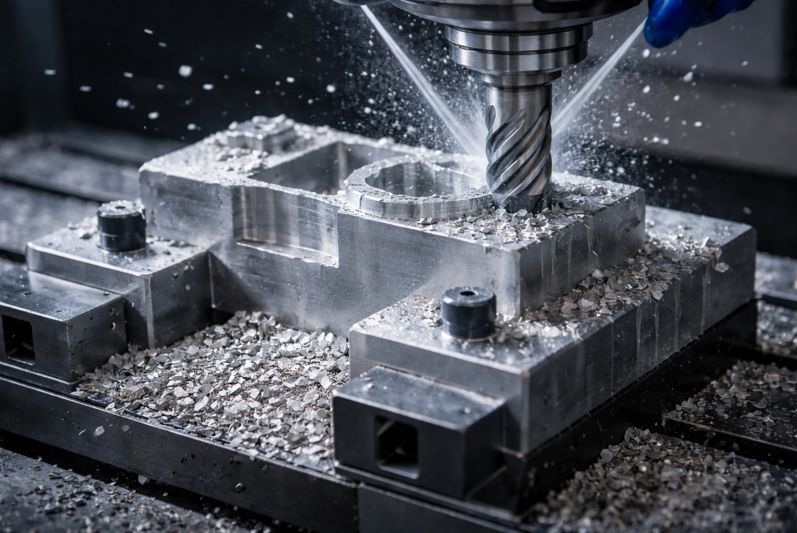
Machining magnesium can feel like a cheat code when you need lightweight parts with excellent machinability. Magnesium alloys are among the easiest structural metals to cut, often allowing high material removal rates, good surface finish, and shorter cycle times compared with many aluminium or steel grades. But machining magnesium isn’t “just like aluminium, only lighter.” The biggest difference is risk management: chips ignite more easily, dust is hazardous, and some coolants and housekeeping habits that are fine elsewhere can create real problems here.
This guide walks through the key decisions – material choice, design, tooling, parameters, chip control, and safety – so you can specify and machine magnesium parts with confidence.
Machining Magnesium: Why Engineers Choose It
Magnesium is the lightest commonly machined structural metal, and it brings a very attractive stiffness-to-weight and strength-to-weight balance in the right alloy and design. In many CNC shops, machining magnesium parts is also pleasingly efficient: chips form cleanly, tool loads are low, and finishes can be excellent with straightforward processes. Common reasons to choose magnesium include:
- Weight reduction (density ~1.7–1.9 g/cm³ for common alloys)
- High machinability (often lower cutting forces than aluminium)
- Good vibration damping (helpful in housings and frames)
- EMI/RFI shielding in electronic enclosures
- Thermal conductivity that can suit heat-spreading applications
The benefits are real, but only if you plan for alloy behaviour, corrosion protection, and safe chip handling.
CNC Machining Magnesium vs Aluminium: What’s Different in Practice
From a programming and cutting perspective, magnesium often behaves “easy.” The differences that matter most are around heat, chips, and contamination. Magnesium chips can ignite if they’re fine, dry, and exposed to an ignition source. Dust is more hazardous than chunky chips, and mixed swarf (magnesium + steel, for example) can increase risk.
In practical terms, when comparing CNC machining magnesium to aluminium, expect:
- Higher permissible cutting speeds in many cases (while still managing heat)
- Cleaner chip formation with the right rake and sharp tools
- Greater sensitivity to fine chips and dust (avoid aggressive grinding)
- More emphasis on housekeeping and segregation of swarf and tooling
- Corrosion protection becoming a design requirement, not an afterthought
If you treat magnesium as a full “process choice” (not just a material swap), it’s a very workable option.
Magnesium Alloys for Machining: Choosing the Right Grade
Not all magnesium alloys machine the same, and your choice affects strength, corrosion behaviour, and how you’ll finish the part. The most common families you’ll run into for machining magnesium alloys include AZ and AM series, plus higher-performance options. As a starting point, think in terms of what you’re optimising:
- Strength vs ductility
- Corrosion resistance
- Temperature performance
- Availability in the required form (plate, billet, extrusion, die-cast)
Key alloys you’ll see:
- AZ31: common wrought alloy (sheet/plate/extrusion), good formability, decent machinability.
- AZ91: common die-cast alloy, good strength, often used for housings; machinability is generally good.
- AM60: tougher/more ductile than AZ91, often used where impact resistance matters (frequently die-cast).
- WE43 / rare-earth alloys: higher temperature capability and strength, often in aerospace-type applications; machining is feasible but cost and finishing requirements differ.
Before locking a grade, confirm the starting stock form, any heat treatment condition, and the required finishing route – these often drive lead time and cost as much as the machining itself.
Design for Machining Magnesium Parts: DFM Rules That Prevent Surprises
Good DFM matters for any metal CNC machining, but it’s especially useful for machining magnesium because you want to avoid unnecessary dust creation, thin fragile webs, and awkward chip traps. The low density of magnesium can encourage aggressive lightweighting, which can also create chatter-prone features if you’re not careful. Start by designing for stable workholding and predictable tool engagement.
Practical DFM tips:
- Avoid ultra-thin walls unless you’ve validated stiffness and clamping strategy; thin walls invite chatter and poor finish.
- Prefer radiused internal corners to reduce tool load and improve fatigue resistance.
- Use consistent wall thicknesses where possible to reduce distortion and improve repeatability.
- Add chip relief and through-features so chips don’t pack into pockets.
- Specify realistic tolerances; magnesium can hold tight tolerances, but chasing microns everywhere increases time and risk.
If you need lightweight parts, consider leaving “machining ribs” or temporary supports that can be removed in a second operation – often faster and safer than fighting vibration from the start.
Tooling for Machining Magnesium: Cutters, Coatings and Edge Prep
Tool selection for machining magnesium is usually straightforward: sharp, positive-rake tools that shear cleanly are your friend. Because magnesium cuts with relatively low force, you can often run high feed rates without excessive spindle load – provided chip evacuation is managed well. A sensible tooling approach:
- Sharp carbide end mills with polished flutes can help prevent chip welding and improve evacuation.
- High positive rake and sharp edges reduce heat and cutting force.
- Avoid dull tools: rubbing increases heat, which increases risk.
- Coatings: many shops do well with uncoated or low-friction coatings; the key is sharpness and chip flow rather than “hardness” coatings.
Tooling best practices:
- Choose flute counts that suit evacuation (often fewer flutes for deep slotting/pocketing).
- Keep stick-out as short as possible to reduce vibration.
- Use dedicated tools for magnesium where practical to avoid cross-contamination with ferrous swarf.
Speeds and Feeds for CNC Machining Magnesium
Magnesium often allows high surface speeds, but the goal is productive cutting with controlled temperature and predictable chips. Your specific parameters depend on alloy, tool geometry, rigidity, and whether you’re using coolant or MQL.
A good process mindset is: keep tools sharp, keep chips moving, don’t create dust, and don’t let chips accumulate near ignition sources.
Typical parameter guidance (validate in your own setup):
- Prefer stable, continuous engagement strategies (adaptive clearing / trochoidal) to reduce heat spikes.
- Use sufficient feed per tooth to avoid rubbing.
- Avoid “spring passes” that simply generate fine chips and heat without meaningful material removal.
Process tuning checklist:
- If chips start turning very fine or dusty, adjust strategy (depth/stepover/tool choice).
- If the finish is tearing, check tool sharpness and reduce vibration before reducing feed to the point of rubbing.
- If you see chip packing, pause and improve evacuation rather than “pushing through.”
Coolant, MQL and Dry Cutting When Machining Magnesium
Whether to cut dry, use MQL, or use flood coolant depends on the operation and your shop’s safety procedures. Many magnesium operations are performed dry with excellent chip evacuation, but some features benefit from controlled lubrication/cooling. The big watch-outs are compatibility and housekeeping: avoid practices that create magnesium sludge, and ensure your coolant strategy doesn’t trap chips where they can dry out and become a hazard.
General approaches:
- Dry machining: common for many operations with good extraction and chip management.
- MQL: can reduce heat and improve finish without flooding chips.
- Flood coolant: can be used, but requires disciplined filtration, chip removal, and maintenance to prevent accumulation.
Whatever you choose, align it with your facility’s risk assessment and fire response plan.
Chip Control and Extraction: The “Hidden” Success Factor
Most magnesium machining problems aren’t about hitting tolerance – they’re about chips. You want chips that are coarse enough not to behave like dust, and you want them out of the cut quickly. Start each process plan by answering: “Where do the chips go?”
Good chip management practices:
- Use strong air blast only where it doesn’t spread fine particles into unsafe areas.
- Prefer vacuum extraction systems designed for combustible dust when dust could be generated.
- Keep pockets and deep cavities from becoming chip traps (design and toolpath both matter).
- Segregate magnesium swarf from other metals and store it in approved containers.
If your process generates significant fine chips, revisit strategy and tooling. Fine particles are where risk rises sharply.
Safety When Machining Magnesium: Fire Risk, Dust and Shop Rules
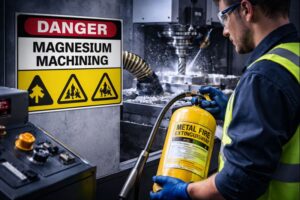
This section matters enough to treat as non-negotiable. Magnesium is safe to machine when you follow disciplined procedures, but you must respect that magnesium fires behave differently from typical shop fires. Core safety principles for machining magnesium:
- Prevent ignition (heat, sparks, friction, contaminated tools)
- Prevent accumulation (chips, dust, sludge)
- Prepare response (correct extinguishing media and training)

Practical shop controls:
- Keep magnesium machining zones clean and segregated.
- Avoid operations that generate magnesium dust unless you have appropriate extraction and controls.
- Use the correct fire extinguishing media for metal fires (Class D extinguishers) and ensure staff know when and how to use them.
- Don’t mix magnesium chips with ferrous swarf or general waste.
- Plan for chip storage and disposal as part of the job, not as an afterthought.
If you’re outsourcing, ask potential suppliers about their magnesium-specific procedures. A capable shop will have clear answers.
Surface Finish and Corrosion Protection for Machined Magnesium
Freshly cut magnesium surfaces can oxidise and corrode more readily than many aluminium alloys, especially in the presence of salts and moisture. That doesn’t mean magnesium is unusable – it means you must treat finishing and protection as a system. Common finishing routes include conversion coatings, anodising variants, paint/powder coat, and plated systems, depending on requirements. The right choice depends on environment, electrical needs, appearance, and assembly interfaces.
Ways to design for robust protection:
- Avoid crevices where moisture can sit.
- Specify masking requirements on threads and precision fits.
- Consider galvanic coupling: magnesium paired with more noble metals can corrode faster without proper isolation.
- Define acceptable cosmetic standards before production (magnesium can show handling marks differently than aluminium).
Tolerances and Inspection for Machining Magnesium Components
Magnesium can hold tight tolerances, but measurement strategy should account for part stiffness and how easily thin sections can deflect. As with any lightweight metal component, fixturing and inspection forces matter. Inspection considerations:
- Use fixtures that support thin walls without distortion.
- Control burr formation around small features; specify deburring expectations clearly.
- For critical fits, confirm whether finishing/coating thickness affects dimensions and whether post-finish inspection is required.
When tolerances are demanding, it’s often worth planning a semi-finish + finish sequence so you can control distortion and achieve stable final dimensions.
Applications: Where Machining Magnesium Makes Sense
Magnesium is most compelling where weight reduction, stiffness, and machinability align – and where the environment and finishing plan are suitable. It’s common in:
- Aerospace and motorsport (weight-critical brackets, housings)
- Robotics and automation (light frames, moving assemblies)
- Electronics enclosures (EMI shielding, lightweight housings)
- Medical and imaging equipment (where weight and stiffness matter)
- Portable equipment (durable, light structural elements)
The best candidates are parts that gain real system-level value from weight reduction – faster motion, lower inertia, easier handling, lower shipping weight, or improved ergonomics.
Cost and Lead Time: What Affects Machining Magnesium Pricing
People often assume magnesium is expensive. The truth is more nuanced: raw material can cost more than common aluminium, but machining time can be lower because the material cuts easily. The final cost depends heavily on finishing, safety requirements, and scrap handling. Cost drivers to watch:
- Material availability and stock form (plate vs billet vs cast)
- Cycle time (often favourable for magnesium)
- Finishing and corrosion protection (can dominate)
- Tooling and process controls (especially for dust/chip management)
- Packaging and handling to prevent damage/corrosion in transit
If you’re quoting, provide the supplier with clear info on environment, finish, cosmetic requirements, and any assembly interfaces. Vague finishing requirements are a classic source of late-stage cost increases.
Working With a Specialist Supplier for Machining Magnesium
Because the key risks are procedural, supplier selection matters. Whether you’re machining in-house or outsourcing, you want a process that is repeatable, documented, and built around chip control and safe handling. Questions worth asking a supplier:
- What are your magnesium-specific housekeeping and swarf segregation procedures?
- How do you control dust and chip accumulation?
- What fire response equipment and training do you have in place?
- Which alloys and finishes do you routinely run?
- How do you protect parts against corrosion during storage and shipping?
Shops that already support regulated sectors often have the discipline needed. For example, at Tarvin Precision we treat magnesium as a controlled process – tooling condition, chip evacuation, and documented handling – so you can focus on performance and supply reliability rather than worrying about shop-floor surprises.
FAQ: Common Questions About Machining Magnesium
Below are quick answers to the most common questions about machining magnesium, covering safety, speeds and feeds, finishing, corrosion protection, and best-practice machining methods.
Is machining magnesium safe?
Yes – when you have proper chip control, segregation, housekeeping, and appropriate fire response equipment. The risk increases most with fine chips and dust, so processes should be designed to minimise those.
Does magnesium machine faster than aluminium?
Often, yes. Magnesium’s machinability can allow high material removal rates and lower tool loads, but overall productivity depends on chip evacuation, part geometry, and finishing requirements.
Can magnesium parts be anodised?
Magnesium finishing is available, but it’s not the same as standard aluminium anodising. Many applications use conversion coatings, paint systems, or specialised anodic/ceramic coatings – choose based on environment and requirements.
Will magnesium corrode easily?
Unprotected magnesium can corrode, especially in salty or wet environments. With the right coating system and good design (avoiding crevices and galvanic couples), magnesium can perform well.
Best Practices for Machining Magnesium
Machining magnesium is a high-reward option for lightweight, rigid components – provided you treat it as a complete process that includes design, machining strategy, chip control, and finishing. If you remember nothing else, remember this: keep tools sharp, keep chips moving, avoid dust, segregate swarf, and plan corrosion protection from day one.