
Aerospace actuation applications rely on components that are accurate, stable and produced through a controlled manufacturing route. Parts may need to support movement, alignment, housing, mounting or mechanical interface requirements, while also meeting strict expectations for finishing, inspection and documentation. For this project, Tarvin Precision manufactured a full suite of CNC machined aluminium components for use in an aerospace actuation application.
The parts were machined from aluminium 6082 T6, SurTec 650 coated, primed and painted. They were also fully documented and inspected, giving the customer confidence not only in the finished parts, but in the manufacturing route behind them.
As always, customer confidentiality is important. The specific application, assembly details and end customer are not shared here. However, the project is a strong example of the precision machining, finishing control and inspection discipline required when producing aluminium components for aerospace actuation systems.
CNC Machined Aerospace Actuation Components
Aerospace actuation components often need to perform within larger mechanical systems where movement, positioning and repeatability are important. Even when an individual machined part looks relatively small, it may form part of a more complex assembly where alignment, clearance, mounting and interface control are critical.
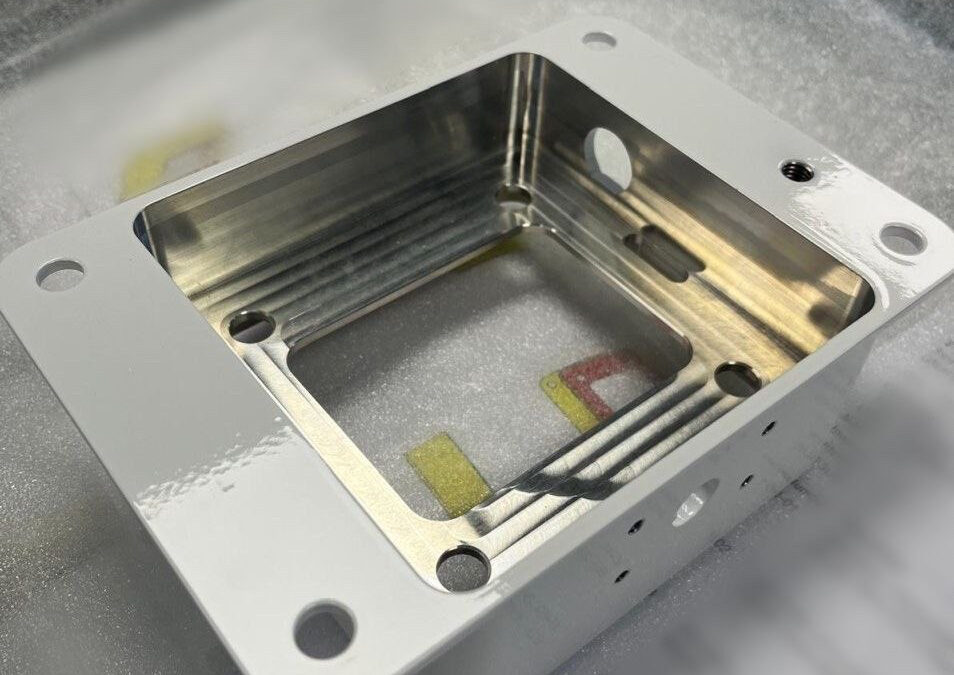
This project included a suite of aluminium parts rather than a single component. The images show machined housings and bracket-style parts with pockets, bores, mounting holes, threaded features, radiused corners, coating and painted surfaces. These details are typical of components where the relationship between features matters as much as the features themselves.
In an actuation application, a hole, pocket or mounting face may support more than simple assembly. It may help control position, allow clearance for a moving element, support a fixed component or provide a secure interface with another part of the system. This makes machining strategy, inspection and finishing control particularly important.
For buyers, this type of project highlights why aerospace machining is rarely just about producing a shape from metal. It is about delivering a controlled, documented component that can be trusted within a wider engineering system.
Aluminium 6082 T6 for Aerospace Machined Parts
The full suite of parts was machined from aluminium 6082 T6. This grade is often selected for precision engineering applications where a combination of strength, machinability and weight efficiency is required. For aerospace components, those characteristics can make aluminium a practical option when parts need to remain robust without adding unnecessary mass.
The T6 condition provides improved mechanical properties compared with softer aluminium tempers, which is useful when machining parts with threaded holes, pockets, bores and localised mounting features. Components used in actuation assemblies may also need to retain their form and support repeatable assembly over time.
Aluminium 6082 T6 machines well when the right tooling, workholding and cutting strategies are used, but the process still needs to be controlled carefully. Deep pockets, thin wall sections, large openings and changes in section thickness can all influence how the part behaves during machining. Removing material in the wrong sequence can increase the risk of movement, poor finish or dimensional variation.
For this reason, material selection is only one part of the manufacturing decision. The supplier also needs to understand how the material will respond to machining, how it will move through secondary processes and how final inspection will confirm the part against the drawing.
Machined Pockets, Bores and Interface Features
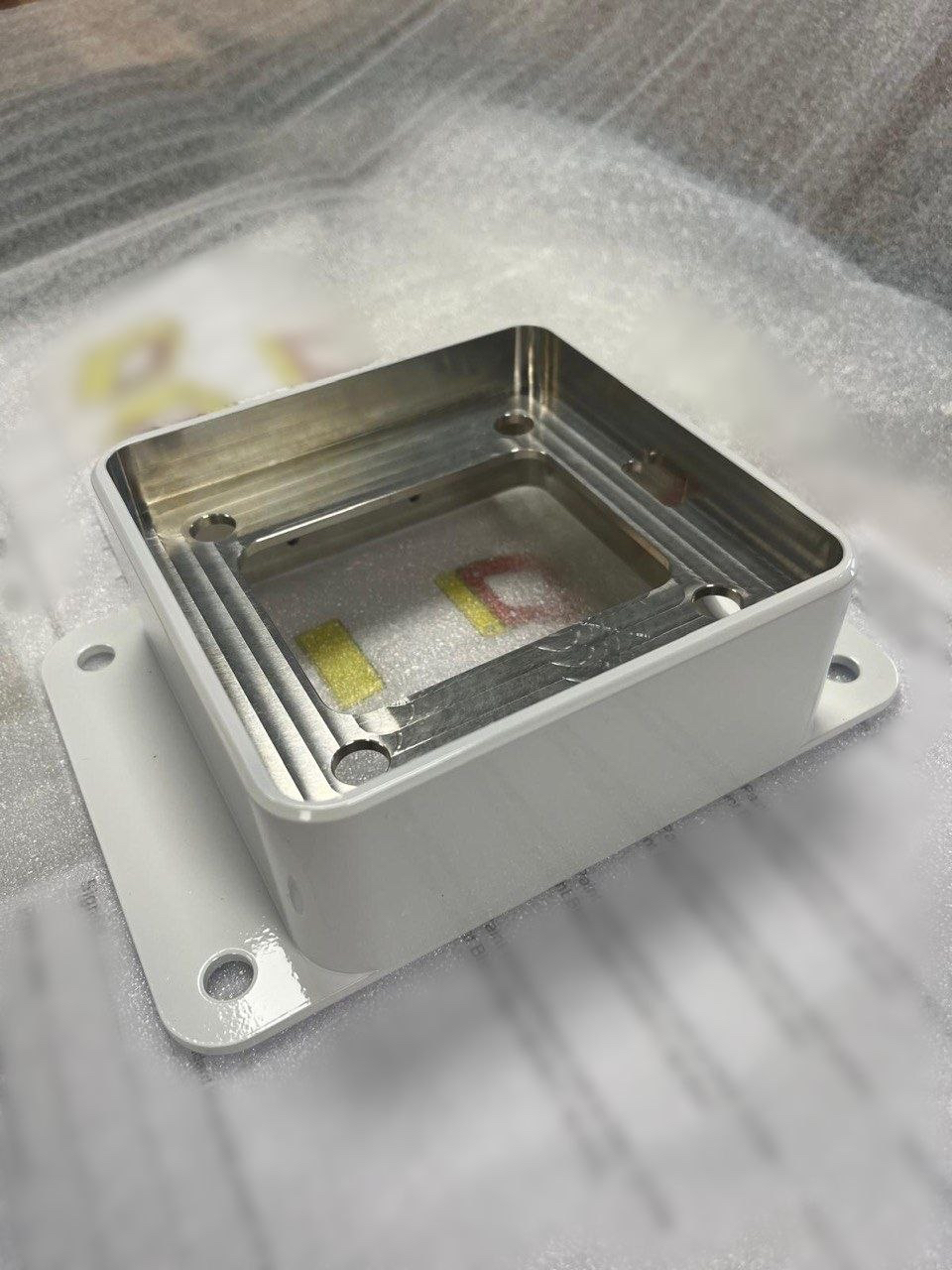
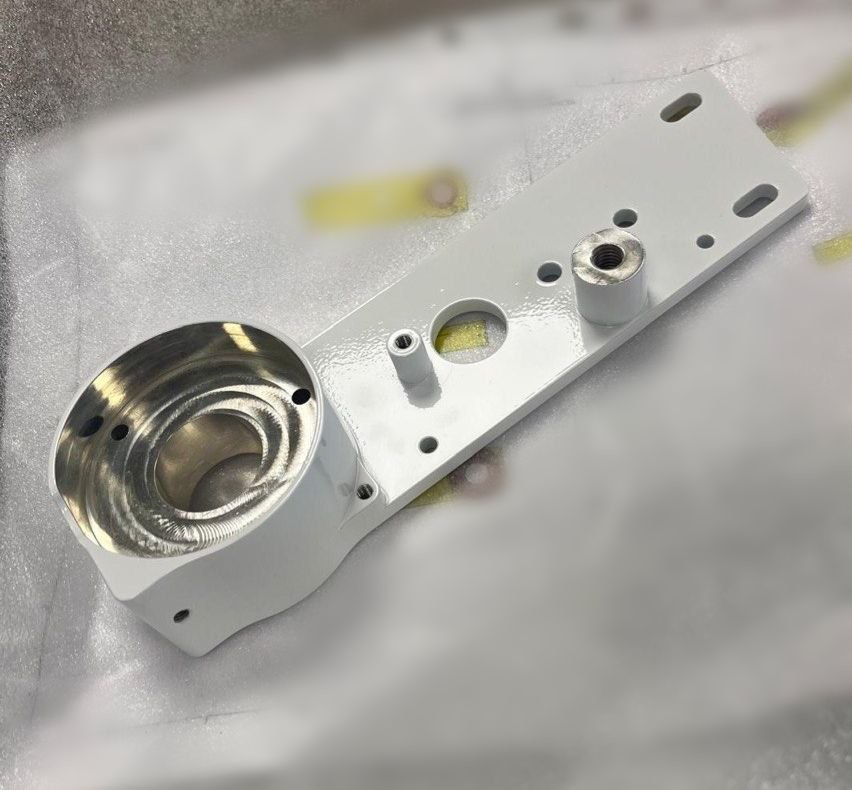
The photos show several important machined features, including open pockets, circular bores, mounting holes, slotted features and local bosses. These are the types of features that often define whether a component will assemble correctly and perform as intended.
The machined box-style part includes an internal pocket with clean side walls, corner radii, side apertures and threaded details. This kind of geometry requires a considered machining approach. Tool access, cutter length, chip evacuation and wall finish all influence the final result. The open internal area also makes the quality of the machining highly visible.
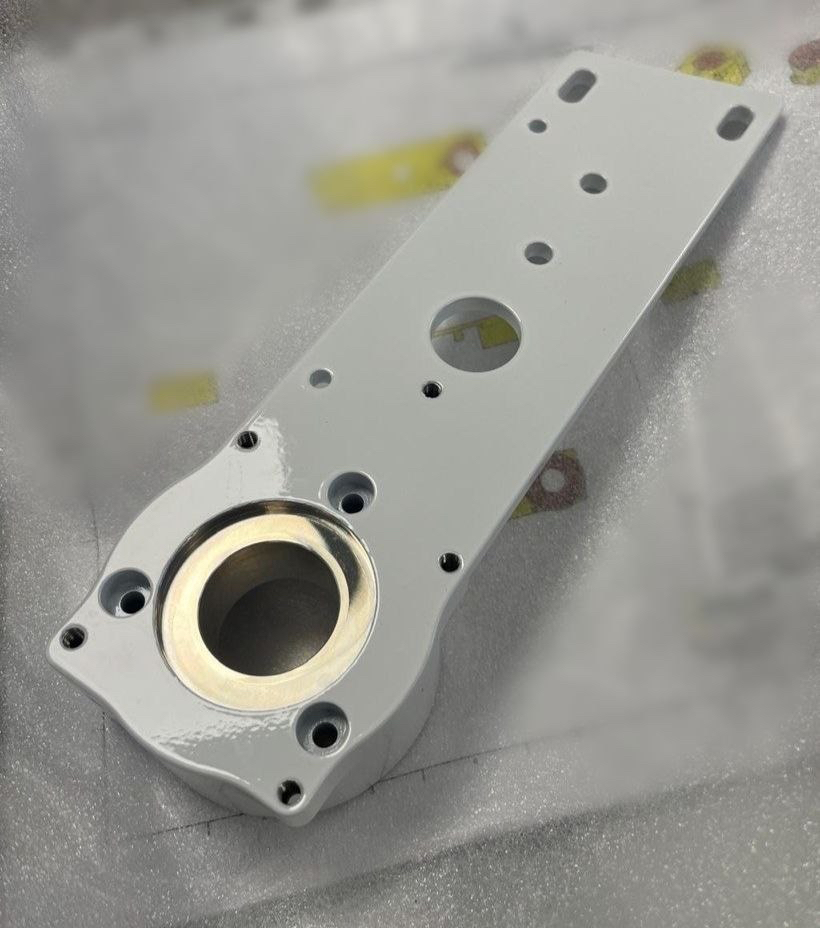
The bracket-style components show a different set of requirements. They include larger circular features, flat mounting areas, holes and elongated slots. These features may need to align with adjoining parts, fasteners or moving elements. Their position, size and finish therefore need to be controlled as part of the wider assembly requirement.
Across the full suite of parts, consistency is important. The customer is not only receiving separate machined items; they are receiving components that may work together within the same actuation application. This requires accurate programming, careful machining and reliable inspection records.
SurTec 650 Coating as Part of the Manufacturing Route
The parts were SurTec 650 coated before being primed and painted. This stage formed part of the specified finishing route and needed to be managed as part of the complete production process, not treated as a separate afterthought.
When aluminium components require conversion coating, the machining supplier needs to understand how the surface treatment fits into the overall route. Machined edges, bores, threads, pockets and faces must be prepared correctly before the parts are sent for coating. Any burrs, surface marks or handling damage can affect the quality and consistency of later finishing.
SurTec 650 coating also needs to be considered alongside masking and paint requirements. Some areas may need to remain functionally clear, while others may be prepared for primer and paint. If this is not planned early, there is a greater risk of rework, delays or finish-related issues.
For aerospace-related components, process control is especially important. The customer may need records showing that the specified treatment was completed and that the parts followed the correct manufacturing route. This is why documentation and subcontract process control are just as important as the machined finish itself.
Primed and Painted Components
After coating, the parts were primed and painted. The photos show a light-coloured painted finish, with machined metallic areas still visible in some functional regions. This combination of painted and machined surfaces requires careful control because different areas of the part may have different requirements.
Painted surfaces can provide a clean, professional finish, but they also introduce practical considerations. Paint thickness, masking, edge coverage and handling all need to be controlled so that the component remains suitable for assembly. A mounting face, bore or threaded feature may not behave as intended if coating or paint builds up where it is not required.
This is particularly important for actuation-related components. If a part forms part of a moving or aligned assembly, small changes at interface points can have an impact. The aerospace component manufacturer must therefore understand which surfaces are cosmetic, which are functional and which need special care during coating and painting.
The visible contrast between painted exterior surfaces and machined internal features helps show the importance of the finishing route. The finished part is not only judged by how it looks, but by whether the coating and paint have been applied in a way that supports the drawing and the final assembly.
Documentation and Inspection Control
The parts were fully documented and inspected. This is a key part of the project because aerospace customers often need evidence that the manufacturing process has been controlled from start to finish.
Inspection may include dimensional checks on bores, holes, pocket depths, slot positions, mounting faces and overall geometry. For parts with multiple functional features, inspection is not simply a final check. It is a way of proving that the component matches the drawing and is suitable for the next stage of the customer’s build.
Documentation also supports traceability and repeatability , especially for AS9100 machining work. If the parts are required again, the manufacturing and inspection records help maintain consistency between batches. If the customer needs to review how the parts were produced, clear documentation gives them confidence in the route followed.
For aerospace actuation components, this level of control is especially valuable. The part may be one element within a larger system, but the reliability of that system depends on every component meeting its requirements. A fully documented and inspected manufacturing route helps reduce risk for both supplier and customer.
Managing a Full Suite of Parts
This project involved a full suite of parts rather than a single isolated item. That adds another level of planning. Each component may have its own geometry, machining route and finishing requirements, but the full set still needs to be delivered as a controlled package.
Managing a suite of parts means coordinating material, programming, machining, finishing, inspection and documentation across multiple items. It also means ensuring that each part remains identifiable throughout the process. This is especially important when parts move through coating, primer and paint stages.
From a customer perspective, receiving a complete set of documented components can simplify the supply chain. Instead of coordinating separate suppliers for machining, coating, painting and inspection, the customer can rely on one manufacturing partner to control the route and deliver the finished parts.
For Tarvin Precision, this type of project demonstrates capability beyond individual component machining. It shows the ability to manage a wider package of aluminium parts through several controlled stages.
Why Finishing Requirements Should Be Considered Early
One of the main lessons from this project is that finishing requirements should be reviewed at the start of the job. Coating, primer and paint can all influence how the parts should be machined, handled and inspected.
If a part has holes, bores, threaded features or mating faces, the supplier needs to understand whether those areas will be coated, masked, painted or left as-machined. This can affect tolerances, assembly fit and final appearance. It can also affect the timing of inspection, because some features may need to be checked before and after finishing.
Early planning also helps avoid delays. Aerospace components often have several process steps, and any uncertainty around coating or paint requirements can slow down the route. Clear communication between customer, machinist, inspector and subcontract processors supports a smoother delivery.
This is particularly important when parts are used in actuation applications, where fit and function can be sensitive to small details. A controlled finishing route protects both the appearance and the engineering purpose of the component.
What Buyers Can Learn from This Type of Project
This suite of aerospace actuation components highlights several useful points for buyers and engineers.
First, aluminium 6082 T6 can be a strong choice for precision machined aerospace components where strength, weight and machinability need to be balanced.
Second, features such as pockets, bores, mounting holes and slots should be reviewed in terms of their relationship to the wider assembly, not just their individual dimensions.
Third, coating and painting requirements need to be built into the manufacturing route from the beginning. SurTec 650 coating, primer and paint all require planning, process control and careful handling.
Fourth, documentation and inspection are essential parts of aerospace supply. A finished component is only complete when the required records support the work that has been carried out.
Finally, confidentiality can be protected while still showing useful manufacturing capability. By discussing the parts as a suite of aluminium components for an aerospace actuation application, the project can demonstrate engineering quality without exposing sensitive customer details.
Precision Machining for Aerospace Actuation Applications
This project is a strong example of how precision machining, finishing and inspection come together for aerospace-related work. The suite of parts was produced from aluminium 6082 T6, SurTec 650 coated, primed, painted, fully documented and inspected.
The visible features show a combination of machined pockets, bores, slots, mounting points and painted surfaces. Behind those features is a controlled manufacturing route designed to support the customer’s aerospace actuation application.
For customers sourcing CNC machined aerospace actuation components, supplier capability should be judged on more than the ability to machine aluminium. The right partner needs to understand material behaviour, functional features, finishing requirements, inspection expectations, documentation and confidentiality.
Tarvin Precision supports customers with precision CNC machining, aluminium component manufacture, finishing coordination, inspection and documentation for demanding engineering sectors. This suite of aerospace actuation components demonstrates how those capabilities can be brought together in one controlled manufacturing route.