
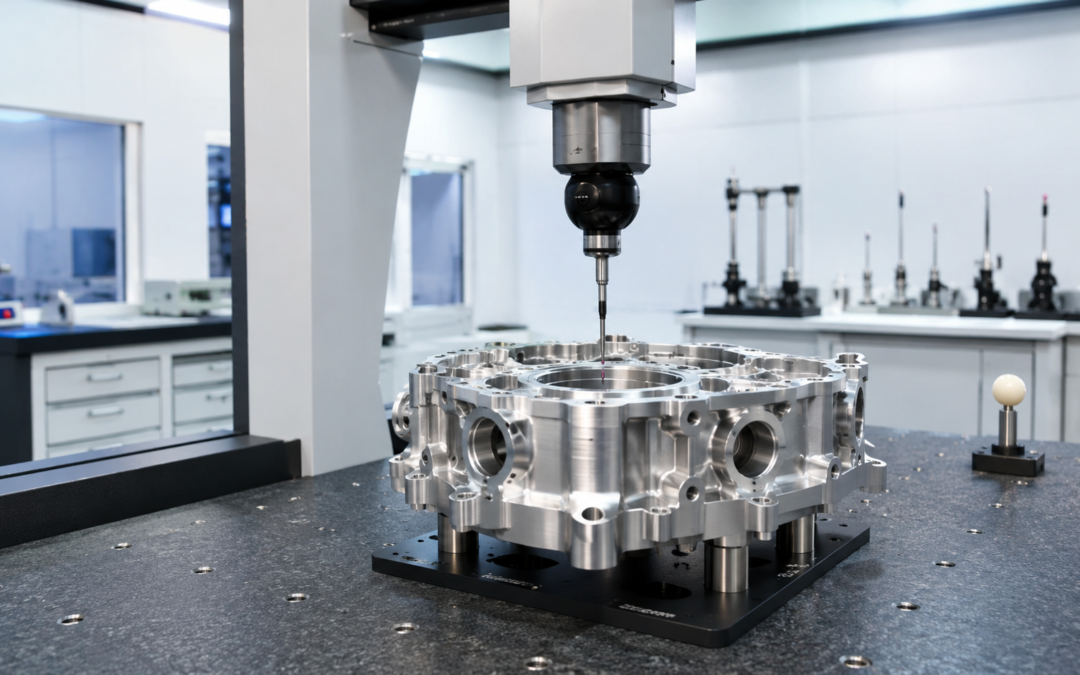
CNC machining tolerances are one of the most important factors in the performance, cost and reliability of precision machined components. Whether a part is being produced for aerospace, motorsport, scientific equipment, industrial machinery or specialist manufacturing, the tolerance applied to each feature can affect how the component fits, functions and performs in service.
For buyers, engineers and procurement teams, understanding tolerances can make it easier to issue clear drawings, compare supplier quotes and avoid unnecessary cost. A tighter tolerance is not always better. In many cases, the best result comes from applying the right tolerance to the right feature, rather than making every dimension unnecessarily restrictive.
This guide explains what CNC machining tolerances mean, what affects them, how they are inspected and what buyers should consider when sourcing precision machined components.
CNC Machining Tolerances Explained
CNC machining tolerances define the acceptable amount of variation from a specified dimension. No manufacturing process can produce a component at a perfect theoretical size every time, so tolerances set the allowable upper and lower limits for each measurement. These limits tell the manufacturer how accurate the part needs to be and help ensure that components are suitable for their intended use.
For example, a drawing may specify a diameter of 20.00 mm with a tolerance of ±0.05 mm. This means the finished diameter can measure anywhere between 19.95 mm and 20.05 mm and still be accepted. In other cases, a drawing may use a unilateral tolerance, such as +0.00 / -0.02 mm, where variation is only allowed in one direction. Common ways tolerances are shown on engineering drawings include:
- General drawing tolerances applied to unspecified dimensions
- Bilateral tolerances, such as ±0.10 mm
- Unilateral tolerances, such as +0.02 / -0.00 mm
- Limit dimensions, showing maximum and minimum sizes
- Geometric tolerances controlling form, position, orientation and runout
The purpose of tolerance control is not just to achieve an accurate measurement. It is to make sure the finished component works correctly in the final assembly.
Why Tolerances Matter for Precision Components
CNC machining tolerances matter because they directly influence fit, function, repeatability and quality assurance. A component may look correct visually, but if a bore, slot, thread, face or datum is outside tolerance, it may fail to assemble properly or perform reliably.
In precision engineering, tolerances are often linked to the way parts interact with one another. A shaft may need to fit into a bearing, a housing may need to locate another component, or a machined face may need to align with a sealing surface. In these situations, the tolerance of precision machined components is essential to the part’s function. Poorly considered tolerances can lead to issues such as:
- Components that do not fit during assembly
- Excessive movement, vibration or wear
- Sealing problems or alignment issues
- Increased scrap or rework
- Higher inspection time and documentation requirements
- Delays caused by drawing queries or manufacturing uncertainty
Well-defined tolerances help the machining supplier understand which features are critical, which dimensions are less sensitive and where inspection attention should be focused.
Tight Tolerance CNC Machining: When Is It Needed?
Tight tolerance CNC machining is required when a component has features that must be controlled very accurately to achieve the intended fit or function. This is common in high-performance industries where small variations can affect assembly, movement, sealing, balance or measurement accuracy.
However, tight tolerances should be applied carefully. The tighter the tolerance, the more control is needed throughout manufacturing. This can affect machining strategy, tooling, workholding, inspection time and production cost. In some cases, an unnecessarily tight tolerance can make a simple component more expensive without improving performance. Tight tolerances are often needed for:
- Bearing fits and precision bores
- Mating faces and location features
- Aerospace and defence components
- Scientific and measurement equipment
- Motorsport and performance engineering parts
- Hydraulic, pneumatic or sealing applications
- Components requiring high repeatability across batches
A good machining supplier can help identify whether a tight tolerance is realistic, necessary and cost-effective. Early discussion can often reduce risk before the part reaches production.
CNC Milling Tolerances for Machined Features
CNC milling tolerances apply to features produced using milling machines, including pockets, profiles, faces, slots, threaded holes and complex shapes. Milling is highly versatile and can produce accurate components from a wide range of materials, but the achievable tolerance depends on the machine, setup, cutting strategy and feature geometry. 
A milled component may include both critical and non-critical features. For example, a mounting face, dowel hole or datum surface may require tighter control than an external profile or clearance pocket. Understanding these differences helps component manufacturers to plan the job efficiently. Factors that can influence CNC milling tolerances include:
- Machine capability and condition
- Tool length, tool wear and tool deflection
- Workholding stability
- Material type and internal stress
- Feature depth and accessibility
- Number of setups required
- Thermal movement during machining
- Inspection method and datum structure
For complex milled parts, it is often best to identify the most important datums and functional features clearly on the drawing. This helps the supplier control the component in a way that supports final assembly.
Shafts, Bushes and Round Components
CNC turning tolerances are especially important for round components such as shafts, pins, bushes, spacers, sleeves, threaded parts and precision inserts. Turning is well suited to producing accurate diameters, shoulders, grooves and threads, particularly where concentricity and surface finish matter.
Turned parts often include features that interact directly with bearings, seals, housings or mating components. A small variation in diameter can change the type of fit, affecting whether the part is loose, sliding, transition or interference fit. This is why tolerance selection is critical for turned components. Important tolerance considerations for CNC turned parts include:
- Outside diameter and inside diameter control
- Concentricity between features
- Thread accuracy and fit
- Surface finish on sealing or bearing areas
- Shoulder position and overall length
- Groove width, depth and location
- Roundness and runout
For turned components, the relationship between features is often just as important as the size of each individual feature. Drawings should make this clear where function depends on alignment or concentricity.
Tolerances and Material Choice
Precision machining tolerances are affected by the material being machined. Different materials behave differently under cutting forces, heat, clamping pressure and stress relief. Aluminium, stainless steel, titanium, engineering plastics and specialist alloys can all respond in different ways during machining.
Some materials are stable and easy to machine, while others are more challenging. For example, certain plastics can move due to heat or moisture, thin aluminium machined parts can distort if too much material is removed unevenly, and harder alloys may increase tool wear. These material behaviours can affect the consistency of finished dimensions. Material-related factors that affect tolerance include:
- Hardness and machinability
- Thermal expansion
- Internal stress in the stock material
- Tool wear caused by abrasive materials
- Part distortion after roughing
- Wall thickness and component rigidity
- Heat generated during cutting
- Suitability for post-machining finishing
Choosing the right material specification, stock condition and machining route can help improve tolerance control. For demanding applications, the material choice should be considered alongside the tolerance requirements from the start.
Machined Component Tolerances and Design Intent
Machined component tolerances should always reflect design intent. A drawing should communicate what matters most about the component, not simply apply tight limits everywhere. When tolerances are too broad, parts may not perform correctly. When tolerances are too tight, manufacturing can become slower, more expensive and more difficult to inspect.
The most effective drawings usually distinguish between critical features and general features. Critical features might include datum selection, mounting locations, sealing faces, bearing fits or alignment holes. General features may only need to meet standard drawing tolerances because they do not affect the part’s core function. Good design intent can be supported by:
- Sensible general tolerances
- Specific tolerances on functional features
- Notes explaining critical requirements where useful
- Avoiding unnecessary decimal places
- Considering how the part will be manufactured
- Considering how the part will be inspected
A tolerance should answer a practical question: how accurate does this feature need to be for the part to work? When that question is answered clearly, manufacturing becomes more reliable.
Geometric Tolerances
Geometric tolerances are used when size tolerance alone is not enough to control how a feature behaves. Geometric Dimensioning and Tolerancing, often known as GD&T, can control form, orientation, position and runout. This is especially useful for complex components, thin-walled components or parts that must assemble accurately with other components.
A hole may be the correct diameter but still be in the wrong position. A face may be within a linear dimension but not flat enough. A turned diameter may be within size limits but not sufficiently concentric with another feature. Geometric tolerances help define these requirements more precisely. Common geometric controls include:
- Flatness
- Parallelism
- Perpendicularity
- True position
- Concentricity
- Circularity
- Cylindricity
- Profile tolerance
- Total runout
When used correctly, geometric tolerances can improve clarity and reduce disputes. They help the machining supplier understand not only what size a feature should be, but how it should relate to the rest of the component.
Inspection and Quality Control
Inspection is a critical part of controlling CNC machining tolerances. Producing an accurate component is only part of the process; the supplier must also be able to prove that the finished part meets the drawing requirements. This is particularly important for regulated or quality-sensitive industries.
Inspection methods vary depending on the tolerance, feature type, batch size and customer requirements. Simple dimensions may be checked with hand measuring equipment, while more complex geometry may require a coordinate measuring machine or detailed inspection report. Common inspection tools and processes include:
- Vernier calipers
- Micrometers
- Bore gauges
- Height gauges
- Thread gauges
- Surface finish measurement
- Coordinate measuring machines
- First article inspection reports
- In-process inspection
- Final inspection records
For critical parts, buyers should confirm inspection requirements before placing an order. This may include material certification, dimensional reports, surface finish checks or first article inspection documentation.
How Tolerances Affect Cost and Lead Time
CNC machining tolerances can have a significant impact on cost and lead time. A tighter tolerance often requires more careful process planning, slower machining passes, improved workholding, additional inspection and sometimes multiple operations to achieve the required result. This does not mean tight tolerances should be avoided, but they should be used where they add real value.
When tolerances are applied appropriately, the supplier can focus effort where it matters. When every dimension is tightly controlled, production can become inefficient. This may increase the quote price, extend delivery times and add avoidable complexity. Tolerances may affect cost and lead time through:
- Additional setup and programming time
- More controlled machining strategies
- Specialist tooling requirements
- Increased inspection time
- Higher risk of non-conformance
- Slower production rates
- Extra finishing or secondary operations
- More detailed quality documentation
A practical approach is to apply tight tolerances only to functional or safety-critical features, while using sensible general tolerances elsewhere.
Surface Finish and CNC Machining Tolerances
Surface finish and CNC machining tolerances are closely connected, but they are not the same thing. Tolerance controls the acceptable variation in size, position or geometry. Surface finish controls the texture of a machined surface. Both can affect how a part performs.
A component can be dimensionally correct but have an unsuitable surface finish for sealing, sliding, coating or appearance. Equally, a surface can look visually smooth but fail to meet the dimensional requirements of the drawing. For this reason, both should be specified clearly when they are important. Surface finish is often important for:
- Sealing faces
- Bearing areas
- Sliding components
- Cosmetic surfaces
- Coated or anodised parts
- Components exposed to wear
- Scientific or optical equipment
- Aerospace and high-reliability applications
Specifying surface finish only where it matters helps avoid unnecessary cost. A supplier can then choose suitable tooling, speeds, feeds and finishing processes for the required result.
Post-Machining Processes and Tolerance Control
Post-machining processes can affect final CNC machining tolerances, especially when parts are anodised, plated, painted, heat treated or coated. These processes may add thickness, alter surface characteristics or introduce distortion depending on the material and finish.
For example, anodising can change the effective size of a feature, while painting or coating may affect clearances. Heat treatment can also cause movement in some materials. If these changes are not considered during design and manufacturing, a part may meet tolerance before finishing but fall outside tolerance afterwards. Post-machining processes that may affect tolerance include:
- Anodising
- Plating
- Painting
- Powder coating
- Heat treatment
- Passivation
- Surface grinding
- Polishing
- Non-destructive testing preparation
Buyers should make it clear whether dimensions apply before or after finishing. For functional features, masking, allowance or post-finish machining may be needed.
Choosing a Supplier
Choosing the right supplier for CNC machining tolerances is about more than finding a machine shop with CNC equipment. The supplier must understand drawings, materials, inspection, production planning and the end use of the component. This is especially important for parts with tight tolerances or critical features.
A capable supplier will be able to review drawings, identify potential issues and advise on manufacturability. They should also have suitable inspection equipment and quality processes to verify the finished components. Communication is particularly important when tolerances are tight or when the drawing leaves room for interpretation. When assessing a CNC machining supplier, consider:
- Experience with similar precision components
- CNC milling and turning capability
- Quality management systems
- Inspection equipment and reporting
- Understanding of engineering drawings
- Ability to advise on tolerances and materials
- Capacity for prototypes, small batches or repeat work
- Communication during quoting and production
The best supplier is one that can help reduce risk, not simply machine to a drawing without asking questions.
Common Mistakes to Avoid
Common CNC machining tolerance mistakes often happen before manufacturing begins. A drawing may be unclear, over-specified or missing important information. These issues can cause delays, higher costs and avoidable quality concerns.
Many tolerance problems come from applying default limits without considering how the part will be made or used. Another common issue is failing to identify critical features. If everything appears equally important on the drawing, the supplier may have to treat the whole part as high risk. Mistakes to avoid include:
- Applying tight tolerances to non-critical dimensions
- Missing tolerances on functional features
- Using unclear datum references
- Ignoring the impact of surface finish
- Forgetting coating or finishing allowances
- Overlooking material movement
- Using unnecessary decimal places
- Not discussing inspection requirements early
Avoiding these mistakes can improve quote accuracy, reduce manufacturing risk and support better long-term supply.
CNC Machining Tolerances for Prototypes and Production
CNC machining tolerances may be handled differently for prototypes and production components. A prototype may be used to test form, fit or function, while production parts often require repeatable processes, inspection plans and documented quality controls. Understanding the purpose of the part helps determine the right tolerance strategy.
For early prototypes, it may be acceptable to relax some non-critical tolerances to reduce cost and speed up delivery. For production parts, tolerances chosen by rapid prototyping companies must support repeatability across multiple components and batches. If a prototype is likely to move into production, it is worth considering manufacturability from the start. Prototype and production tolerance planning should consider:
- Which features are being tested
- Whether the part will be redesigned
- Whether the same material will be used in production
- Whether finishing will be required
- How repeatability will be measured
- Whether inspection reports are needed
- How tolerances affect assembly
A good supplier can help bridge the gap between prototype machining and repeat production, ensuring that tolerance decisions made early do not create problems later.
Getting Accuracy Right Each Time
CNC machining tolerances play a central role in the quality, reliability and cost of precision machined components. They define how accurate each feature must be, how parts fit together and how finished components are inspected. For buyers, understanding tolerances helps improve drawings, supplier communication and manufacturing outcomes.
The most effective tolerance strategy is not to make every dimension as tight as possible. It is to apply the correct tolerance to each feature based on function, risk and assembly requirements. Critical bores, datums, sealing faces and mating features may need close control, while less important features can often use standard drawing tolerances.
By considering tolerance requirements early, working with an experienced CNC machining supplier and clearly defining inspection expectations, buyers can reduce risk and achieve better results. Whether sourcing prototypes, small batches or repeat production components, clear tolerance control helps ensure that machined parts are accurate, consistent and fit for purpose.