
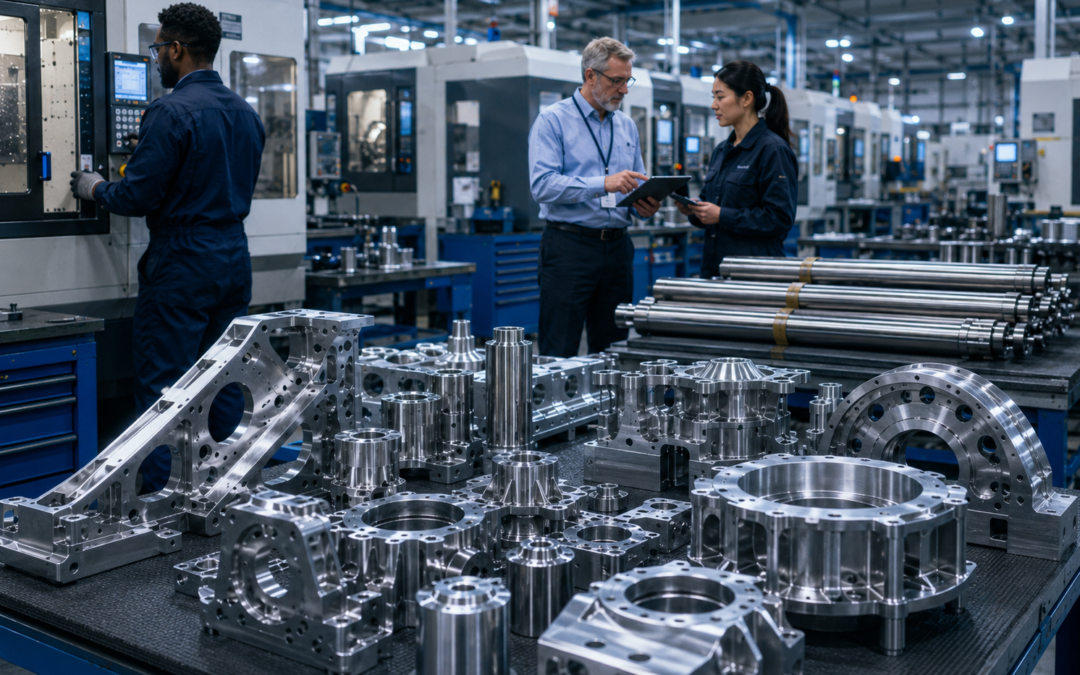
Aerospace supply chain resilience is no longer simply a matter of keeping additional stock on the shelf. For aerospace manufacturers, Tier 1 suppliers and procurement teams, resilience increasingly depends on having access to sufficient machining capacity, reliable material routes, controlled technical data and qualified manufacturing alternatives.
Many buyers already have established suppliers that understand their components, documentation requirements and delivery schedules. The problem arises when too much knowledge, capacity or responsibility becomes concentrated with one source.
A supplier may have performed reliably for years, but a production ramp-up, workforce shortage, machine failure, material delay or sudden increase in demand can quickly expose the limitations of a single-source arrangement. When that happens, qualifying an alternative manufacturer after the disruption has already begun can be difficult, expensive and time-consuming. A more controlled approach is to build resilience before it becomes urgent.
This guide explains the warning signs of supply chain vulnerability, the value of second-source manufacturing and how to qualify an additional aerospace component supplier without immediately transferring an entire package of work.
What Is Aerospace Supply Chain Resilience?
Aerospace supply chain resilience is the ability of a manufacturing supply chain to continue meeting quality, delivery and documentation requirements when disruption occurs. It is not about eliminating every risk. Instead, it involves identifying where disruption could happen and putting practical controls in place to reduce its impact. For machined aerospace components, resilience may depend on several connected factors:
- Availability of suitable manufacturing capacity
- Access to approved materials
- Control of drawings, specifications and revisions
- Availability of skilled machinists and inspectors
- Reliability of external processing suppliers
- Inspection and measurement capability
- Accurate production planning
- Effective supplier communication
- Qualified alternative manufacturing routes
A resilient supply chain should be able to respond to demand changes without losing control of quality or configuration. This requires more than choosing suppliers with the correct certifications. It also requires evidence that they can support the required materials, component types, production volumes, documentation and delivery expectations.
Why Aerospace Manufacturing Supply Chains Become Vulnerable
Aerospace manufacturing supply chains often become vulnerable gradually. A component may remain with the same supplier for many years because that supplier has built up knowledge, fixtures, tooling and inspection methods around the part. This familiarity can be valuable, but it can also create dependence.
Over time, the incumbent supplier may become the only organisation outside the customer’s business that understands how to manufacture the component efficiently. Alternative quotations may appear expensive because another aerospace component manufacturer must account for new tooling, programming, inspection planning and first-article activity. As a result, moving or duplicating the work is repeatedly postponed. Common causes of supply chain vulnerability include:
- Long-term reliance on one machining supplier
- Limited internal knowledge of the manufacturing process
- Insufficiently detailed drawing packs
- Proprietary fixtures held by one supplier
- Materials purchased through a single route
- Limited access to approved special processes
- Rapid production growth
- Ageing machinery or workforce constraints
- Poor visibility of available supplier capacity
- Delayed qualification of alternative sources
The longer these risks remain unaddressed, the more difficult it may be to respond when a genuine disruption occurs.
Warning Signs That Aerospace Supply Chain Resilience Is Weakening
Weak aerospace supply chain resilience does not always begin with a complete production stoppage. It often appears through smaller, repeated issues that indicate a supplier is under pressure or that the current sourcing model has become too dependent on one route. Buyers should review recurring patterns rather than treating each problem as an isolated event.
Lead Times Repeatedly Moving
A changing delivery date does not automatically mean a supplier is unreliable. Material availability, engineering changes and external processing delays can all affect production. However, repeated movement of promised dates may indicate that the supplier has insufficient capacity, weak planning controls or too many competing priorities. Warning signs can include:
- Delivery dates changing shortly before dispatch
- Orders remaining at the same production stage for long periods
- Expediting becoming necessary on most orders
- Partial deliveries replacing agreed delivery schedules
- Lead times increasing without a clear explanation
- Production slots being moved to accommodate other customers
If delivery performance depends on constant intervention from the buyer, the supply arrangement may not be genuinely resilient.
One Supplier Holds All Component Knowledge
A supplier may accumulate valuable practical knowledge about a component, including preferred tooling, workholding methods, datum strategies, inspection techniques and lessons learned from previous production batches. The risk arises when none of this knowledge is available elsewhere. Important questions include:
- Are the drawings complete enough for another supplier to quote?
- Does the customer own the tooling and fixtures?
- Are inspection methods documented?
- Are approved deviations clearly recorded?
- Is the current manufacturing route understood internally?
- Could another supplier reproduce the component from the available data?
A second source should not depend on informal knowledge that exists only with the incumbent supplier.
Insufficient Capacity for a Production Ramp-Up
A supplier may be able to support stable demand but struggle when production volumes rise. This is particularly important in aerospace programmes where order requirements may increase progressively over several months or years. A supplier’s current delivery performance does not necessarily prove that it has enough capacity for a ramp-up. Capacity reviews should consider:
- Available machine hours
- Shift patterns
- Skilled workforce availability
- Inspection capacity
- Programming and production engineering resources
- Tooling and fixture availability
- External treatment capacity
- Material procurement lead times
- Competing customer demand
A credible supplier should be able to explain how additional volume would be accommodated rather than simply confirming that it can be done.
Materials Are Sourced Through One Route
Material availability remains a significant source of risk for aerospace machining. Even when a component has a relatively short machining cycle, the total lead time may be dominated by the availability of the correct grade, specification, size, condition or certification. Reliance on one stockholder, mill or approved route can create unnecessary exposure. Material resilience may involve:
- Identifying multiple approved stockholders
- Reviewing standard material sizes
- Understanding minimum order quantities
- Agreeing acceptable equivalent specifications
- Reserving material against forecast demand
- Checking mill lead times before production increases
- Monitoring material certification requirements
- Separating material risk from machining capacity risk
Any alternative material route must remain fully controlled and approved. Resilience does not justify informal substitutions or changes that have not been technically authorised.
Poor Responsiveness to Engineering Changes
Aerospace components may change during development, industrialisation or ongoing production. Suppliers must be able to assess revised drawings, update programmes, review tooling and prevent obsolete revisions from reaching production. A lack of responsiveness to engineering changes can create both delivery and quality risks. Potential warning signs include:
- Slow acknowledgement of revised drawings
- Quotations not updated following design changes
- Uncertainty over which revision is in production
- Old work instructions remaining in use
- Difficulty identifying affected work in progress
- Delays in assessing manufacturability
- Poor communication between commercial and engineering teams
Strong configuration control is essential when multiple suppliers manufacture the same component.
Frequent Quality Escapes or Incomplete Documentation
A supplier may continue delivering components while gradually losing control of inspection records, certification or traceability. These weaknesses can increase incoming inspection time and create disruption further down the production process. Repeated documentation problems should be treated as an early resilience concern rather than a minor administrative inconvenience. Issues may include:
- Missing material certificates
- Incomplete inspection reports
- Incorrect drawing revisions on documentation
- Unclear batch traceability
- Missing special process certificates
- Unapproved deviations
- Inconsistent dimensional reporting
- Repeated non-conformances on the same features
Quality escapes can also consume engineering and procurement capacity, even when the components are eventually accepted or reworked.
No Contingency for Machine or Workforce Disruption
Every manufacturing business is exposed to equipment and workforce risks. A critical machine may break down, a specialist programmer may be unavailable or an inspection bottleneck may develop. The important issue is not whether disruption is possible, but whether there is a realistic contingency. Buyers may wish to ask:
- Can the component run on more than one machine?
- Are programmes backed up and controlled?
- Are multiple employees trained for the process?
- Is alternative inspection equipment available?
- Are critical fixtures duplicated?
- Can approved subcontract support be used?
- Is preventive maintenance planned around production demand?
A supplier that relies on one machine and one employee for a critical component may represent a greater risk than its overall size suggests.
The Role of a Second Source in Aerospace Supply Chain Resilience
A qualified second source gives the buyer an additional manufacturing route that has already been reviewed, tested and documented. It does not necessarily mean dividing every order equally between two suppliers. The purpose is to reduce the time required to respond if capacity, delivery or quality problems arise. A second source may be used to:
- Provide additional production capacity
- Support a temporary increase in demand
- Manufacture selected component families
- Reduce dependency on one site
- Create material sourcing alternatives
- Benchmark lead times and manufacturing methods
- Support prototypes or engineering changes
- Provide contingency for equipment failure
- Improve negotiating visibility
- Maintain continuity during supplier transition
The relationship should be approached as a controlled risk-reduction measure, not as a threat to the incumbent supplier. In many cases, the existing supplier remains the primary source while the second manufacturer receives a smaller proportion of the work or maintains qualification through scheduled orders.
How to Qualify a Second Aerospace Manufacturing Source
Qualifying a second source does not require the immediate transfer of an entire production package. A staged process allows the customer to assess capability while limiting commercial and operational risk. The following approach can be adapted to individual components, programmes and customer requirements.
1. Select a Representative Aerospace Component
The first component should be complex enough to provide meaningful evidence of capability, but not so critical that any early production issue creates significant programme risk. A representative component might include several of the processes or controls expected across the wider package. Selection factors may include:
- Typical material grade
- Relevant machining operations
- Representative tolerance requirements
- Surface finish requirements
- Inspection complexity
- External treatment requirements
- Documentation expectations
- Realistic production quantity
- Existing demand that allows time for evaluation
Choosing an unrealistically simple component may not demonstrate whether the supplier can support the more demanding work in the package.
2. Review Drawings and Technical Requirements
Before a second supplier quotes or begins production, the drawing pack should be reviewed for completeness and manufacturability. This review gives both parties an opportunity to identify uncertainty before material is purchased or machine time is committed. The review should consider:
- Drawing revision and issue status
- Material specification
- General and feature-specific tolerances
- Datum structure
- Surface finish requirements
- Special process specifications
- Inspection and reporting requirements
- Key characteristics
- First-article requirements
- Packaging and identification
- Delivery schedule
- Customer-specific quality clauses
Questions raised during this stage can also reveal where the incumbent supplier may have been relying on undocumented historical knowledge.
3. Run a Controlled First Batch
The first batch should be treated as a controlled qualification exercise. The objective is not only to produce conforming parts, but also to evaluate communication, planning, documentation and problem-solving. A clearly defined batch allows the buyer to assess the supplier without committing a large proportion of annual demand. The controlled batch should establish:
- Agreed production quantity
- Required delivery date
- Drawing and specification revisions
- Inspection reporting format
- First-article requirements
- Material traceability expectations
- Treatment and process certification
- Packaging and labelling requirements
- Escalation contacts
- Approval stages
The supplier should be encouraged to raise technical concerns early rather than attempting to interpret unclear requirements independently.
4. Compare Documentation and Inspection Results
Component price and delivery are important, but they should not be the only criteria used to evaluate a second source. The quality and completeness of the supporting documentation are equally important in aerospace manufacturing. The review should compare the new supplier’s output against both customer requirements and the performance of the existing source. Areas to assess include:
- Dimensional conformity
- Inspection report clarity
- Material certification
- Batch traceability
- Special process documentation
- First-article completeness
- Packaging quality
- Identification and labelling
- Response to queries
- Delivery performance
- Communication during production
Differences between suppliers do not automatically indicate a problem. However, the customer should establish a consistent minimum standard across both sources.
5. Increase Production Volume Progressively
After the first batch is approved, production volume can be increased in controlled stages. This gives the supplier time to stabilise tooling, machining methods, inspection routines and material planning. Progressive allocation in aerospace CNC milling services also allows the customer to assess repeatability over more than one batch. A staged volume plan may involve:
- A small qualification batch
- A repeat batch at the same quantity
- A larger scheduled order
- A defined percentage of annual demand
- Additional related components
- Support for peak production periods
- Reserved contingency capacity
The rate of increase should reflect the complexity of the component and the consequences of disruption.
6. Maintain Configuration Control Between Suppliers
Once two manufacturers are producing the same component, configuration control becomes particularly important. Both suppliers must receive the same approved technical information and be notified of changes through a controlled process. Without this discipline, the customer may unintentionally create two different versions of the manufacturing requirement. Effective controls can include:
- A single approved drawing source
- Formal revision notifications
- Confirmation of receipt and implementation
- Clear cut-off points for existing work in progress
- Shared approval status for deviations
- Consistent inspection requirements
- Controlled first-article updates
- Supplier-specific tooling records
- Traceability of material and production batches
The buyer should always be able to identify which supplier manufactured each batch and which technical revision was used.
Managing the Incumbent Supplier During Second-Source Qualification
Introducing a second source does not have to damage an established supplier relationship. The commercial approach will depend on the programme, contractual arrangements and reasons for qualification. Where appropriate, the process can be positioned as part of wider capacity and continuity planning. The customer may explain that the second source is intended to:
- Support forecast production growth
- Reduce programme-level risk
- Provide contingency capacity
- Cover selected component families
- Improve regional or site resilience
- Support new product introduction
- Avoid overloading the incumbent supplier
Transparency can reduce unnecessary concern, although commercially sensitive information should still be managed appropriately. A strong incumbent supplier may also welcome a sourcing model that prevents its own capacity from being overstretched.
Aerospace Supplier Capacity and Ramp-Up Performance
Supplier value in aerospace extends well beyond certification. During periods of increasing demand, buyers need manufacturers that can collaborate, communicate clearly and respond realistically to changing volume requirements.
For example, Airbus has recognised suppliers for attributes including ramp-up performance, agility, collaboration and customer focus. These qualities reflect the broader expectations of aerospace component lead times placed on suppliers as production requirements grow. A manufacturer supporting a ramp-up should be able to demonstrate:
- Realistic production planning
- Early identification of constraints
- Material purchasing strategies
- Workforce and shift planning
- Suitable inspection capacity
- Control of external processing
- Regular progress communication
- Clear escalation of emerging risks
- Evidence-based delivery commitments
Agreeing to an unrealistic schedule does not strengthen resilience. It simply delays the point at which the risk becomes visible.
Material Planning for Aerospace Supply Chain Resilience
Material procurement should be reviewed as a separate element of aerospace supply chain resilience. Adding a second machining supplier will not solve the problem if both manufacturers depend on the same constrained material route. Buyers and suppliers should consider the full material position before allocating additional production. Useful measures may include:
- Sharing demand forecasts
- Identifying approved alternative stockholders
- Reserving material in advance
- Purchasing common sizes for multiple components
- Reviewing non-standard dimensions
- Separating prototype and production material
- Confirming certification requirements early
- Monitoring shelf-life or storage restrictions
- Agreeing responsibility for customer-supplied material
Where material is scarce or subject to long mill lead times, early visibility can be more valuable than repeated expediting after an order has been placed.
Inspection Capacity and Supply Chain Continuity
Machining capacity alone does not determine production output. Inspection can become a major constraint, particularly for complex aerospace components with extensive reporting requirements. 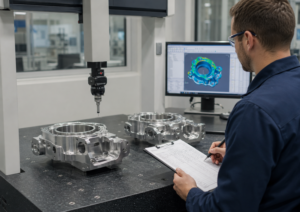
A supplier may have available machine time but insufficient coordinate measuring machine capacity, inspection personnel or suitable gauges to release the required volume. A resilience assessment should review:
- Inspection equipment availability
- CMM programming capacity
- Calibration status
- Skilled inspector availability
- First-article inspection workload
- In-process inspection methods
- Gauge and fixture availability
- Reporting software
- Customer-specific documentation
- Contingency arrangements
Inspection planning should be included at the quotation and capacity-review stages rather than left until components are ready for release.
Questions to Ask a Potential Second-Source Manufacturer
A structured supplier review can help buyers determine whether a potential second source is suitable for the component package and the expected level of risk. Before issuing a qualification order, consider asking:
- Have you machined similar aerospace components?
- What experience do you have with the specified material?
- Which machines would be used for this work?
- Is alternative machine capacity available?
- How would you support a production ramp-up?
- How do you control drawing revisions?
- What inspection equipment is available?
- Can you provide the required first-article documentation?
- How do you control external processes?
- What material routes are available?
- How are programmes and production data backed up?
- What risks have you identified from the drawing?
- What information is needed before production begins?
- How would delays or non-conformances be escalated?
- Can capacity be reserved against a forecast or scheduled order?
The quality of the supplier’s questions can be as informative as its answers. A capable manufacturer should identify uncertainty rather than offering immediate reassurance without reviewing the requirements.
Balancing Cost with Aerospace Supply Chain Resilience
Second-source manufacturing can involve additional initial costs. New programming, tooling, fixtures, first-article inspection and process development may all be required. These costs should be considered alongside the potential cost of having no alternative route when disruption occurs. A balanced commercial assessment may include:
- Qualification cost
- Unit price at different volumes
- Tooling ownership
- Material purchasing terms
- Minimum order quantities
- Scheduled-order arrangements
- Capacity reservation
- Cost of line stoppage
- Cost of emergency expediting
- Cost of late programme delivery
- Internal engineering and procurement time
The lowest immediate component price does not always produce the lowest overall supply chain risk.
Building Long-Term Aerospace Supply Chain Resilience
Aerospace supply chain resilience should be reviewed regularly rather than treated as a one-off sourcing project. Supplier capacity, workforce availability, equipment condition, material routes and production demand can all change. Once a second source has been qualified, it may be necessary to place occasional orders to maintain current manufacturing knowledge and confirm that documentation remains aligned. Long-term resilience measures can include:
- Annual supplier capacity reviews
- Periodic test or production orders
- Updated risk assessments
- Shared demand forecasts
- Review of material availability
- Confirmation of drawing revisions
- Monitoring quality and delivery trends
- Review of critical tooling
- Contingency planning for key components
- Progressive qualification of related parts
A second source that has not manufactured the component for several years may require revalidation before it can provide effective contingency support.
Strengthen Aerospace Supply Chain Resilience Before Capacity Becomes Urgent
The most effective time to qualify an additional manufacturing source is before the incumbent supplier reaches its limit. Repeatedly moving lead times, restricted material routes, incomplete documentation, limited ramp-up capacity and dependence on one supplier’s knowledge can all indicate that the current sourcing arrangement needs additional support.
A controlled second-source strategy allows buyers to test an alternative manufacturer without immediately transferring the full package. By selecting a representative component, reviewing the technical requirements, running a controlled batch and increasing volume progressively, customers can build additional capacity while maintaining quality and configuration control.
Resilience is not about replacing a good supplier unnecessarily. It is about ensuring that one disruption does not become a programme-wide problem.
Speak to us about qualifying a second manufacturing source. Send us an RFQ or a Quick Message today.