
Marine safety equipment often depends on robust, reliable and carefully controlled components. Housings, boxes and enclosures may look straightforward from the outside, but when they are used in demanding environments, the manufacturing requirements can be much more involved. Material selection, internal machining, finishing, coating control, subcontractor management and traceability all play an important role.
For this project, Tarvin Precision manufactured a machined box from aluminium 6082 T6 for use in the marine safety industry. The component was machined, SurTec 650 coated, primed and painted in matt black. The project also required full traceability, from material certificates through the manufacturing route, two subcontractor processes and final delivery.
As with all customer work, the specific product and end application remain confidential. However, this is a useful example of how a precision-machined aluminium enclosure can be managed from raw material through to finished, coated and delivered component.
CNC Machined Aluminium Box for Marine Safety
A machined aluminium box used in marine safety equipment needs to do more than provide a simple external casing. It may need to protect internal electronics, support connectors, provide mounting features, allow access for assembly, maintain gasket or sealing faces, and withstand handling in a real operating environment.
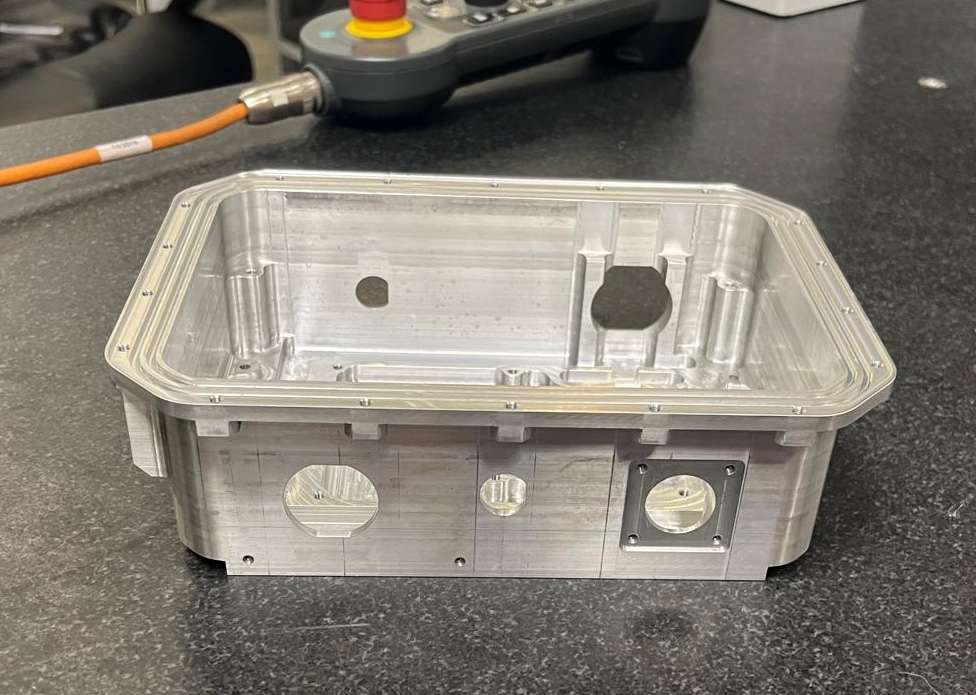
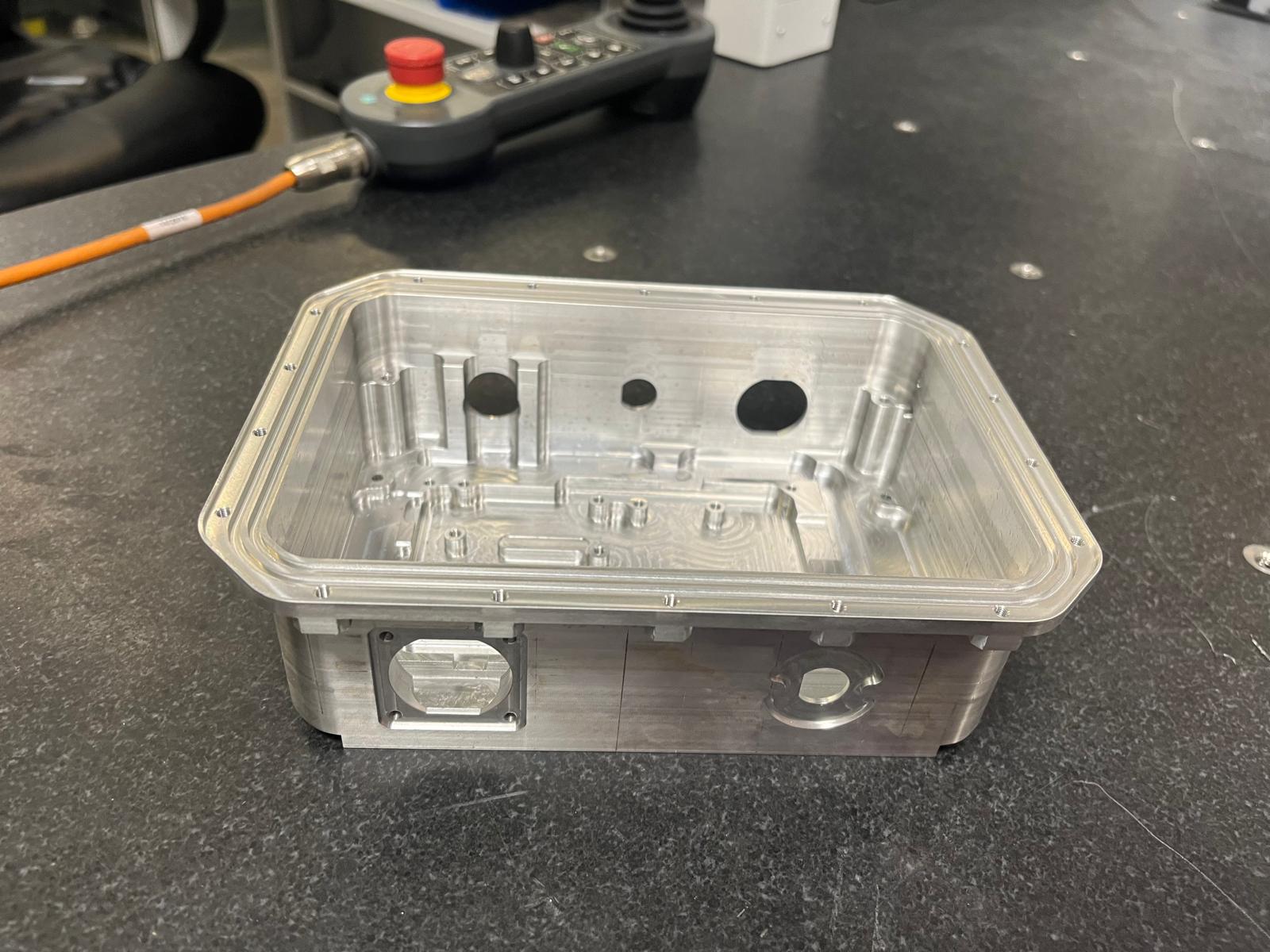
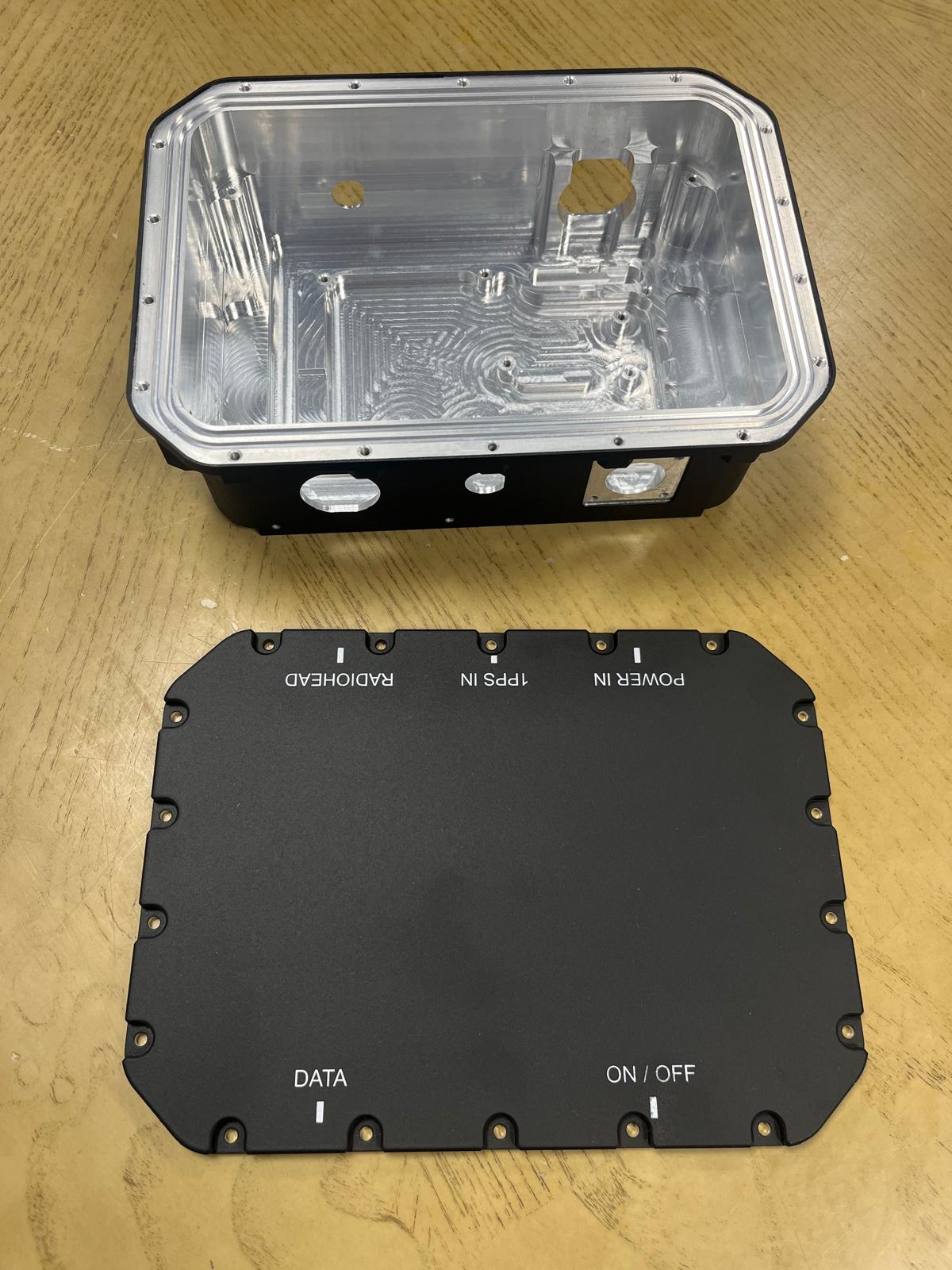
The images show a rectangular machined enclosure with internal pockets, raised features, side openings, fixing points and a separate lid. The part includes both functional interior machining and external features that must align with other parts of the assembly. This is the type of component where small details matter, because the housing is often the foundation for everything that follows.
In marine safety applications, reliability is especially important. Components may be part of equipment that needs to perform consistently when called upon. That places additional emphasis on manufacturing control, documentation and supplier reliability. A clean final finish is important, but the process behind the finish is just as important.
For buyers, this type of part highlights why a machined enclosure should not be treated as a commodity item. The right supplier needs to understand the complete route, from aluminium sourcing and CNC machining to coating, painting, inspection, traceability and delivery.
Aluminium 6082 T6 for Machined Enclosures
This box was manufactured from aluminium 6082 T6, a commonly used engineering aluminium grade for machined components. It offers a useful balance of strength, machinability and weight, making it suitable for enclosure-style parts that need to be robust without becoming unnecessarily heavy.
For a machined box, material behaviour matters throughout the process. The component includes thin walls, internal pockets, external cut-outs and multiple fixing positions. Removing material from a solid billet or block needs to be managed carefully to avoid distortion, inconsistent wall sections or unwanted movement during machining.
The T6 condition helps provide the stability and mechanical properties needed for a functional enclosure. It also supports the creation of clean threads, accurate holes, machined pockets and mounting faces. However, aluminium still needs the correct machining strategy. Tool selection, cutting parameters, workholding and operation sequence all influence the quality of the final part.
Material traceability was also part of this project. That means the aluminium used for the job could be linked back to its material certification. For a customer in a safety-focused sector, this type of documentation is valuable because it supports internal quality control and gives confidence that the specified material was used.
Internal Machining and Functional Detail
The open images of the box show the level of machining involved inside the enclosure. There are raised bosses, pocketed areas, mounting points, internal walls and precision-machined features across the base and sides. These internal details are important because they often support the next stage of the customer’s assembly.
A machined box like this may need to locate components accurately, provide clearance around assemblies, support cable routes or maintain access to specific interfaces. Even where the exact function cannot be discussed, the visible geometry shows that this is not a simple hollow container. It is a functional machined component with several controlled areas.
The top edge also includes a continuous sealing or lid interface, with a repeated pattern of small fixing holes. This type of feature requires consistency across the full perimeter. If the lid and body do not align properly, it can affect fit, appearance and potentially the performance of the finished assembly.
Side openings and machined window features add another level of complexity. These features need to be positioned accurately relative to the internal geometry and the lid. A connector opening, access port or mounting aperture may have a tight relationship with the parts fitted later by the customer.
Managing the Manufacturing Route
One of the most important parts of this project was the manufacturing route. The component was not simply machined and shipped. It moved through machining, SurTec 650 coating, priming, painting and final delivery, with traceability maintained throughout.
When a job involves multiple stages and subcontractor processes, control becomes essential. Each stage must be planned in the correct order, and the supplier needs to understand how one process affects the next. For example, machined surfaces must be prepared correctly before coating. Features that require masking or controlled finish need to be identified before the part leaves for subcontract processing. Painted parts then need to be handled carefully to avoid damage before inspection and delivery.
This is where a precision machining supplier adds value beyond the cutting process. Coordinating subcontractors, maintaining paperwork and controlling the flow of parts through each stage reduces risk for the customer. It also gives the customer a clearer route from order placement to finished component.
For safety-related sectors, this level of control is particularly useful. Delays, missing certificates or unclear process history can create problems even when the physical part has been made correctly. A complete manufacturing route helps protect both delivery and quality.
SurTec 650 Coating Before Paint
The machined aluminium box was SurTec 650 coated before being primed and painted. This stage formed part of the specified surface treatment route and helped prepare the component before the final matt black finish.
When aluminium parts are coated and painted, the surface preparation needs to be planned carefully. The machining stage must leave the component in a condition suitable for coating. Burrs, contamination, scratches or poorly prepared edges can affect the quality of later processes. Once a component moves through coating and paint, rework can become more difficult and costly.
SurTec 650 coating also introduces documentation and process-control requirements. If a subcontractor carries out the coating, the manufacturing supplier needs to maintain traceability and ensure the correct process records are retained. This is especially important when a customer needs evidence of the full route rather than only the finished appearance.
For buyers, this reinforces an important point: finishing is not separate from machining. Coating and painting requirements should be discussed early, because they can affect tolerances, masking, cosmetic expectations, handling and delivery times.
Primed and Painted in Matt Black
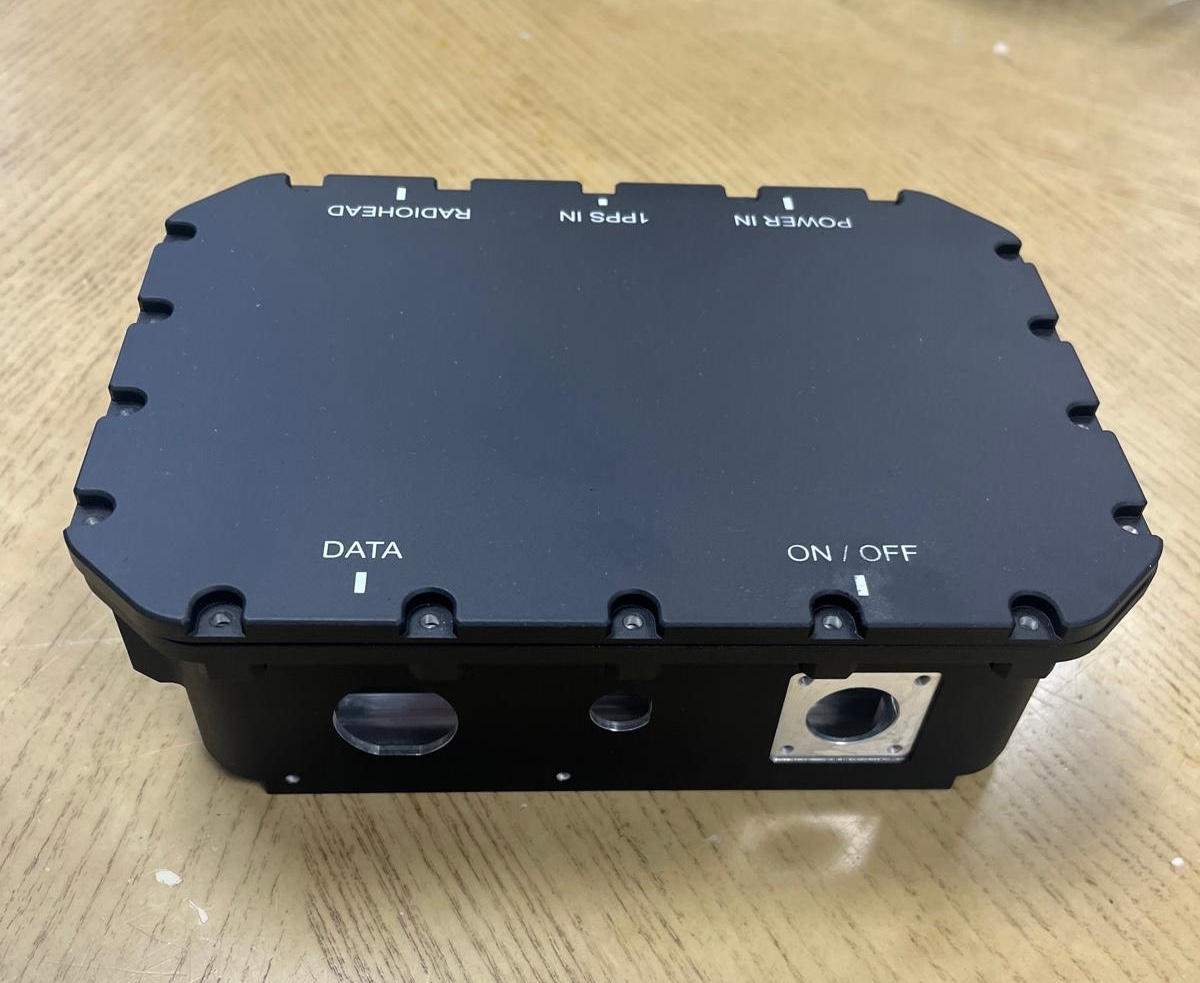
After SurTec 650 coating, the box was primed and painted in matt black. The finished images show the transformation from bright machined aluminium to a professional black enclosure with a clean technical appearance.
Painted components require careful handling because the final surface is immediately visible to the customer. Machined edges, lid recesses, apertures and fixing points all need to remain clean and controlled. If paint builds up where it should not, or if areas are poorly masked, the part may not assemble correctly. If the surface is marked after finishing, the cosmetic quality of the part is affected.
The matt black finish gives the enclosure a purposeful, finished appearance suitable for a high-value technical product. It also shows how machining and finishing work together. The underlying aluminium geometry has to be accurate, but the final impression of the part depends on the coating and paint being applied consistently.
The lid also includes markings for the customer’s final assembly. Where visible labelling is included, it should be checked carefully before publishing images externally. If the customer is comfortable with it, the images are useful because they show the finished state of the part. If not, the labels can be cropped or blurred while still showing the quality of the enclosure.
Full Traceability from Material to Delivery
Tarvin Precision provided full traceability from material certificates to the manufacturing route, through two subcontractors and on to delivery. This is one of the most important points to highlight because it shows process control rather than just machining capability.
Full traceability means the customer has a clear record of the material used, the route followed, the subcontract processes completed and the final delivery of the component. For marine safety equipment, this can support quality assurance, supplier control and customer confidence.
Managing traceability through subcontractors is particularly important. When finishing or coating processes are carried out externally, there needs to be a reliable link between the machined parts, the subcontractor paperwork and the returned components. Without that control, documentation gaps can occur.
For buyers, this is often where a supplier’s quality system makes a practical difference. It is not enough to produce a visually impressive machined part. The supplier also needs to retain the right records, manage process flow and provide confidence that the correct route has been followed.
Batch Consistency and Repeatable Manufacture
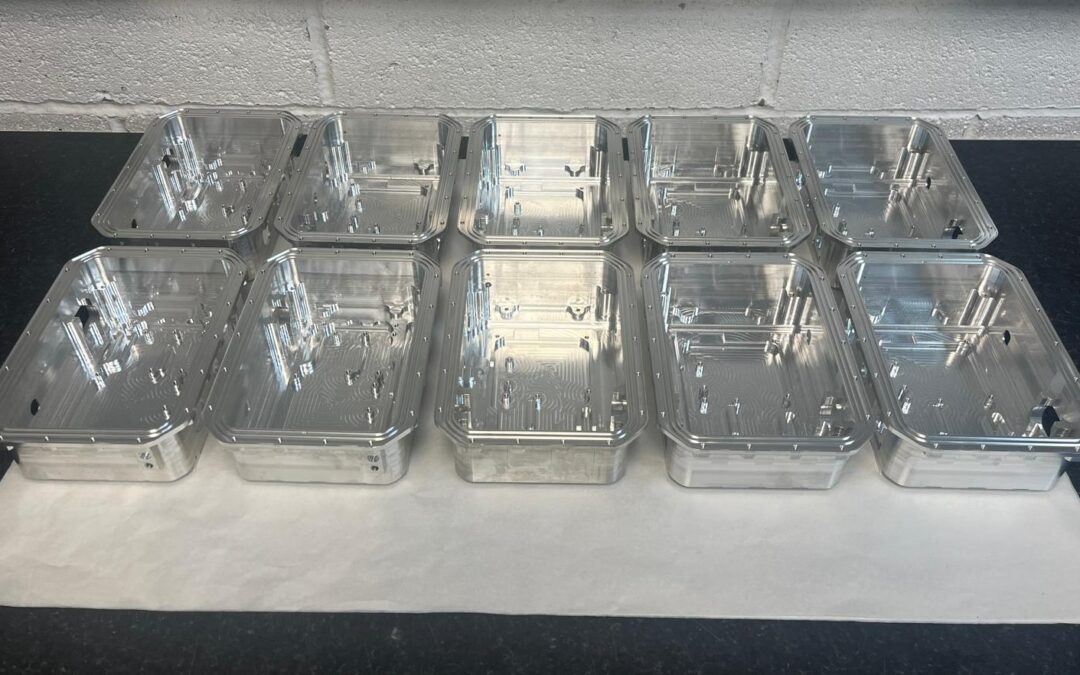
The batch image shows several machined boxes together before the final painted stage. This is useful because it demonstrates repeatability. Producing one enclosure accurately is important, but producing a batch consistently requires additional control.
Each box needs the same internal features, matching lid interfaces, repeated fixing patterns and correctly positioned access openings. If there is variation across the batch, it can create problems later during customer assembly. Parts may not fit consistently, lids may not align cleanly, or connectors may not sit correctly.
Batch work also requires careful handling between operations. When multiple parts move through machining, coating, priming and painting, each component must remain identifiable and traceable. This becomes especially important when subcontractors are involved.
For customers in the marine safety industry, repeatable manufacture supports both production efficiency and confidence in the final equipment. A consistent batch helps reduce fitting time, inspection queries and avoidable delays.
What Buyers Can Learn from This Type of Component
This machined aluminium box highlights several useful lessons for buyers sourcing precision enclosures.
First, the machining requirement should be reviewed alongside the finishing route. Features such as sealing faces, lid interfaces, apertures, bosses and internal pockets can all be affected by coating and painting decisions.
Second, traceability should be discussed before the order is placed. If material certificates, subcontractor records and route history are required, the supplier needs to plan for that from the start.
Third, subcontractor management matters. When coating and painting are outsourced, the main supplier still needs to control the route, documentation and final quality of the delivered part.
Finally, images and case studies can be useful without compromising confidentiality. By describing the component as a machined aluminium box for the marine safety industry, we are able to show capability while avoiding sensitive product details.
Precision Machining with Controlled Finishing and Traceability
This project demonstrates how a CNC machined aluminium enclosure can be managed through a complete controlled route. The part was manufactured from aluminium 6082 T6, SurTec 650 coated, primed, painted in matt black and delivered with traceability from material certification through subcontractor processing.
For customers in marine safety and other specialist engineering sectors, this kind of support can reduce risk. The buyer is not only purchasing a machined box; they are relying on a supplier to manage material, machining, process control, subcontract operations, finish quality and documentation.
Tarvin Precision supports customers with precision CNC machining, aluminium component manufacture, subcontract process coordination and traceable delivery for demanding engineering applications. This machined aluminium box is a strong example of how those capabilities come together in a finished customer component.