
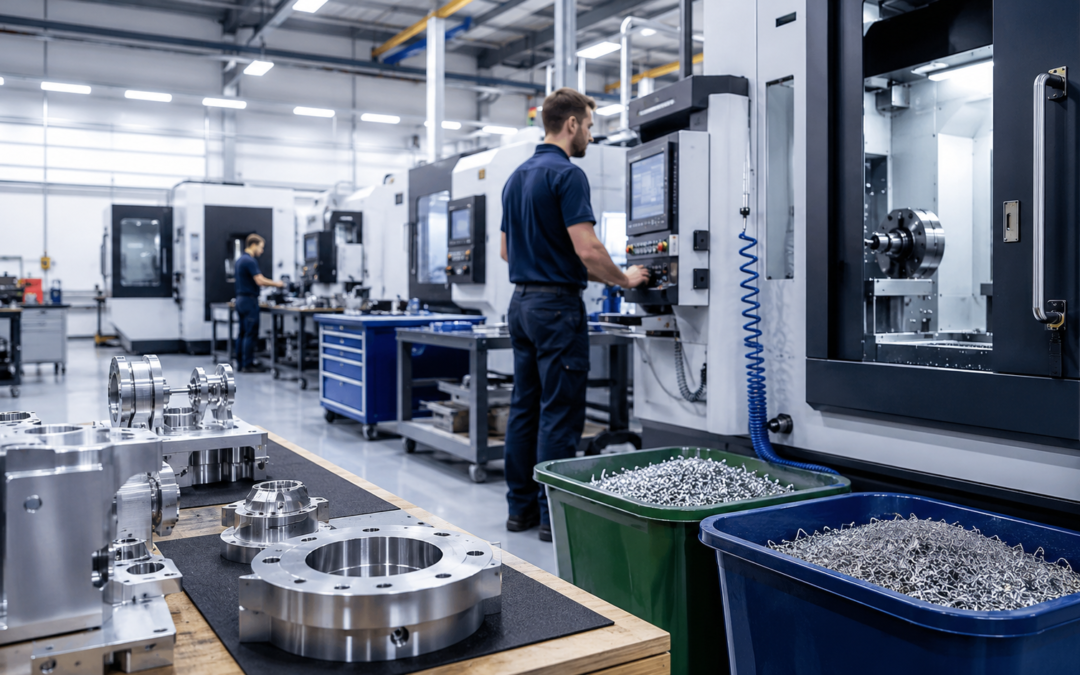
Sustainability and social value in manufacturing are becoming increasingly important for engineering buyers, procurement teams and organisations that want more from their supply chain than price and delivery alone. In precision engineering, the right manufacturing partner does not only produce accurate machined components. They also support responsible sourcing, local employment, skills development, waste reduction, ethical working practices and stronger long-term supply chain resilience.
For many buyers, this is no longer a “nice to have”. Sustainability, traceability and social value are now part of how suppliers are assessed, especially where customers operate in regulated, quality-driven or publicly accountable sectors. Whether the requirement is for CNC machined parts, precision components, sub-assemblies or repeat production, choosing a supplier with a practical commitment to people, place and planet can help reduce risk and demonstrate better value across the full supply chain.
At Tarvin Precision, sustainability and social value are part of a wider approach to responsible manufacturing. This includes supporting UK jobs and skills, working with local communities, reducing waste where possible, choosing responsible shop-floor processes and maintaining ethical supply chain standards. For customers, that means working with a precision engineering company that understands quality, accountability and wider value.
What Sustainability and Social Value Mean in Manufacturing
Sustainability and social value in manufacturing are about the wider impact created by the way products are made, sourced and supplied. In precision engineering, this includes how materials are purchased, how waste is managed, how people are trained, how local communities are supported and how environmental impact is reduced without compromising product quality.
A sustainable manufacturing partner should be able to show practical action, not just broad statements. For CNC machining companies, this might include responsible material control, recycling swarf and packaging where possible, using lower-impact consumables, maintaining safe working practices and investing in the people who operate, inspect and manage the work.
Social value adds another layer. It considers how a business contributes to its workforce, its local area and the wider economy. This can include apprenticeships, work experience, local employment, charitable support, community involvement and responsible supply chain decisions. For buyers, this matters because every supplier relationship reflects back on their own business values, procurement standards and customer commitments.
When sustainability and social value are embedded into daily operations, they become more meaningful. They are not separate from quality or delivery. They support better discipline, better accountability and stronger long-term supplier relationships.
Why Buyers Should Look Beyond Price When Choosing a Manufacturer
Price will always matter in manufacturing, but it should rarely be the only factor. A low unit cost can quickly become expensive if a supplier creates quality issues, material uncertainty, delivery disruption or reputational risk. The best manufacturing value often comes from a partner who can combine technical capability with reliable processes and responsible business practices.
For procurement teams, sustainability and social value can help identify suppliers that are more likely to think long term. A manufacturer that invests in skills, traceability, waste reduction and ethical supply chains is often better placed to support consistent production over time. This is especially important for customers in aerospace, defence, scientific, medical, automotive, industrial and specialist engineering sectors, where reliability and documentation can be as important as machining capacity.
Working with a responsible manufacturer can also support a customer’s own sustainability and procurement objectives. Many organisations now need to show that their suppliers meet higher expectations around environmental impact, modern slavery risk, local value, ethical sourcing and social responsibility. Choosing a machining partner with evidence of these commitments can make supplier approval and ongoing review more straightforward.
In short, responsible manufacturing is not separate from commercial performance. It can support better supply chain confidence, stronger relationships and better outcomes for both buyer and supplier.
The Importance of Social Value in Engineering Supply Chains
Social value in engineering supply chains is about the positive impact created beyond the finished component. In practical terms, this can include supporting skilled employment, creating opportunities for young people, contributing to the local economy and helping communities benefit from industrial activity.
Manufacturing relies on people with technical knowledge, practical experience and attention to detail. Skills do not appear overnight. They are developed through training, mentoring, apprenticeships, work experience and a working culture where people are encouraged to learn. When buyers choose manufacturers that support skills development, they are also helping protect the future capability of UK engineering.
This is particularly relevant in precision machining. CNC milling, CNC turning, inspection, CAD/CAM programming, assembly and quality control all depend on capable people. A business that supports progression and training is more likely to maintain the standards required for complex work. That has a direct benefit for customers, because skilled teams are central to repeatability, problem solving and quality assurance.
Social value also supports resilience. Local employment, local supplier relationships and community engagement help create more stable business ecosystems. For customers, that can mean working with a supplier that is rooted in its area, invested in its people and committed to long-term manufacturing capability.
Why Environmental Responsibility Matters in CNC Machining
CNC machining is a highly practical industry, and environmental responsibility needs to be practical too. It is not enough to talk about sustainability in general terms. Manufacturers need to look at the real processes that affect waste, energy, consumables, materials and day-to-day shop-floor activity.
In machining, environmental impact can be influenced by material usage, swarf management, coolant selection, packaging, transport, inspection efficiency and how non-conformance or rework is controlled. Reducing waste is not only better for the environment. It can also support better productivity and cost control.
A responsible CNC machining partner should aim to reduce avoidable waste while still protecting component quality. This includes careful planning, sensible material use, robust inspection and clear production control. When parts are made right first time, there is less scrap, less rework and less wasted resource.
At Tarvin Precision, the focus is on realistic continuous improvement. That means taking practical actions that can make a measurable difference over time, such as responsible recycling, waste segregation and selecting shop-floor processes and consumables with a lower environmental impact where feasible. This approach fits the realities of precision engineering, where sustainability must work alongside accuracy, reliability and customer specifications.
How Responsible Sourcing Supports Better Manufacturing
Responsible sourcing is an important part of sustainability and social value in manufacturing. Customers need confidence that materials, services and processes are properly controlled. This is especially important when components are used in critical assemblies, regulated sectors or demanding engineering applications.
A responsible manufacturer should understand where materials come from, how they are handled and how they are documented. Traceability, supplier management and material control all support better accountability. These systems help customers evidence what has been used in production and provide confidence that the work has been managed correctly.
Ethical sourcing also matters. Manufacturers are expected to take modern slavery risk seriously, work with suitable suppliers and make decisions that support responsible business conduct. For buyers, this can reduce procurement risk and strengthen their own supplier due diligence.
Local sourcing can also create added value where practical. Working with UK-based suppliers and local businesses can help support the regional economy, reduce complexity and build stronger supplier relationships. While not every item can or should be sourced locally, a manufacturer that considers ethical and local supply chains is showing a wider commitment to responsible procurement.
Sustainability and Social Value as Part of Supplier Selection
When selecting a CNC machining supplier, buyers often focus on capability, tolerances, lead times, accreditations, inspection and price. These are all important. However, sustainability and social value should also form part of the decision-making process, especially for customers with wider procurement, ESG or public sector requirements.
A supplier’s approach to sustainability can reveal a lot about how they operate. Do they have clear processes? Do they manage waste responsibly? Do they invest in their team? Do they understand traceability? Do they support local skills? Do they take ethical sourcing seriously? These questions help buyers assess whether a supplier is a good long-term fit.
For precision engineering work, the best suppliers are often those that combine technical discipline with broader responsibility. A company that takes care over its people, processes and community is more likely to take care over the work it delivers. That does not replace technical assessment, but it adds useful context to the supplier selection process.
Buyers may also need evidence. This is where certificates, policies, documented processes and clear website information can help. They make it easier for procurement teams to understand a supplier’s values and demonstrate why that supplier is a responsible choice.
The Role of ESV Certification in Responsible Manufacturing
Environmental and Social Value certification helps manufacturers communicate the positive contribution they make beyond the products they supply. For buyers, this can provide a clearer picture of a company’s approach to people, planet and place.
Tarvin Precision has been awarded Environmental & Social Value certification through Made in Britain and MAP UK & International. This reflects a commitment to areas such as UK employment, skills development, community engagement, responsible sourcing, recycling and ethical supply chain practices.
For customers, ESV certification can support supplier evaluation by making these commitments more visible. It helps show that social value and environmental responsibility are not just marketing claims, but recognised areas of focus within the business. In sectors where procurement teams need to demonstrate responsible supplier selection, this can be particularly useful.
The value of certification is not simply the certificate itself. The real value comes from the behaviours behind it: investing in people, supporting the local community, improving environmental practices and operating with accountability. In manufacturing, those behaviours help build stronger, more reliable supply chains.
Why People and Skills Matter to Precision Engineering Quality
People are central to precision engineering quality. Machines, software and inspection equipment are important, but skilled people make the decisions that turn drawings, materials and processes into reliable finished components.
In CNC machining, experience matters at every stage. It affects how work is planned, how parts are held, how tools are selected, how inspection is approached and how issues are resolved. A manufacturer that develops its team is investing directly in the quality and consistency its customers receive. 
Apprenticeships, work experience and ongoing training help strengthen the future of UK manufacturing. They give people routes into engineering and help businesses build the skills needed for increasingly complex work. For customers, this matters because supplier capability depends on the people behind the machines.
A strong skills culture can also support continuous improvement. When people understand the work and are encouraged to develop, they are more likely to identify better methods, prevent repeat issues and contribute to quality across the business. That is why social value and technical performance are closely connected in manufacturing.
Community Engagement and Local Value
Manufacturing businesses are part of the communities around them. They provide employment, support local suppliers, create skills pathways and can contribute to causes that matter locally. This is an important part of social value.
Community engagement does not have to be complicated to be meaningful. Supporting local schools, charities, grassroots sport and fundraising initiatives can all make a positive difference. For a manufacturing company, these activities help strengthen local relationships and show that the business is invested in more than commercial output.
Tarvin Precision’s approach includes support for local community initiatives in Deeside, North Wales and the surrounding area. This reflects a wider belief that responsible businesses should contribute to the places they operate in.
For buyers, community engagement may seem less directly connected to component supply than machining capacity or inspection equipment. However, it still matters. It shows that a supplier is stable, locally rooted and committed to creating wider value. In many procurement environments, that wider contribution is becoming increasingly important.
How Sustainability Supports Long-Term Supply Chain Resilience
Supply chain resilience is about more than having enough capacity. It also depends on stable people, reliable suppliers, ethical sourcing, waste control, responsible processes and good communication. Sustainability and social value support all of these areas.
A manufacturer that invests in its workforce is better placed to retain knowledge and maintain quality. A company that manages materials and suppliers responsibly is better placed to support traceability and reduce risk. A business that takes waste and process improvement seriously is often more efficient and more disciplined.
These factors can make a meaningful difference for customers. When a machining supplier is reliable, accountable and committed to improvement, buyers can plan with greater confidence. This is particularly valuable for repeat production, project-based engineering work and components that need careful control.
Responsible manufacturing also supports reputation. Customers increasingly need to show that they work with suppliers who reflect their own values and standards. A sustainable and socially responsible manufacturer can become a stronger partner, not just a transactional supplier.
What to Ask a Manufacturer About Sustainability and Social Value
When assessing a manufacturing partner, buyers can ask practical questions to understand how seriously sustainability and social value are taken. The aim is not to create unnecessary complexity, but to check whether the supplier can demonstrate responsible business practices.
Useful questions include asking how the company manages waste, how it supports staff development, whether it offers apprenticeships or work experience, how it approaches responsible sourcing, how it manages traceability and whether it supports local community initiatives.
Buyers can also ask whether the supplier has relevant certifications, policies or documented commitments. This can help provide evidence for supplier approval, tender responses, ESG reporting or internal procurement reviews.
The strongest answers are usually specific and practical. A manufacturer should be able to explain what it does, why it matters and how it fits into everyday operations. General statements are less useful than clear examples of action.
Choosing a CNC Machining Partner With Responsible Values
Choosing a CNC machining partner is not only about finding a company that can make the part. It is about choosing a supplier that can support quality, delivery, accountability and wider business values.
A responsible manufacturing partner should understand technical requirements, but also the importance of sustainability, social value and ethical supply chains. This is especially important when customers are looking for long-term supply, repeat production or support for regulated and quality-driven sectors.
Tarvin Precision combines CNC machining expertise with a practical approach to sustainability and social value. Through investment in people, support for local communities, responsible sourcing, recycling, ethical supply chain awareness and continuous improvement, the business aims to deliver value beyond the component itself.
For customers, this means working with a precision engineering company that recognises the bigger picture. Accurate components matter. Reliable delivery matters. But the way those components are made matters too.
Importance in Supplier Selection
Sustainability and social value in manufacturing are now important parts of responsible supplier selection. They help buyers understand how a manufacturer supports people, communities, the environment and ethical supply chains alongside technical delivery.
For CNC machining and precision engineering customers, this can support better procurement decisions, stronger supplier relationships and improved confidence across the supply chain. A manufacturer that invests in people, reduces waste where possible, supports local value and manages sourcing responsibly is better placed to deliver long-term value.
At Tarvin Precision, sustainability and social value are part of a practical commitment to people, place and planet. For customers looking for precision machined components, sub-assemblies or specialist engineering support, that means choosing a manufacturing partner focused on quality, responsibility and long-term value.
To learn more, visit Tarvin Precision’s Sustainability & Social Value page or contact the team to discuss your next precision engineering requirement.