
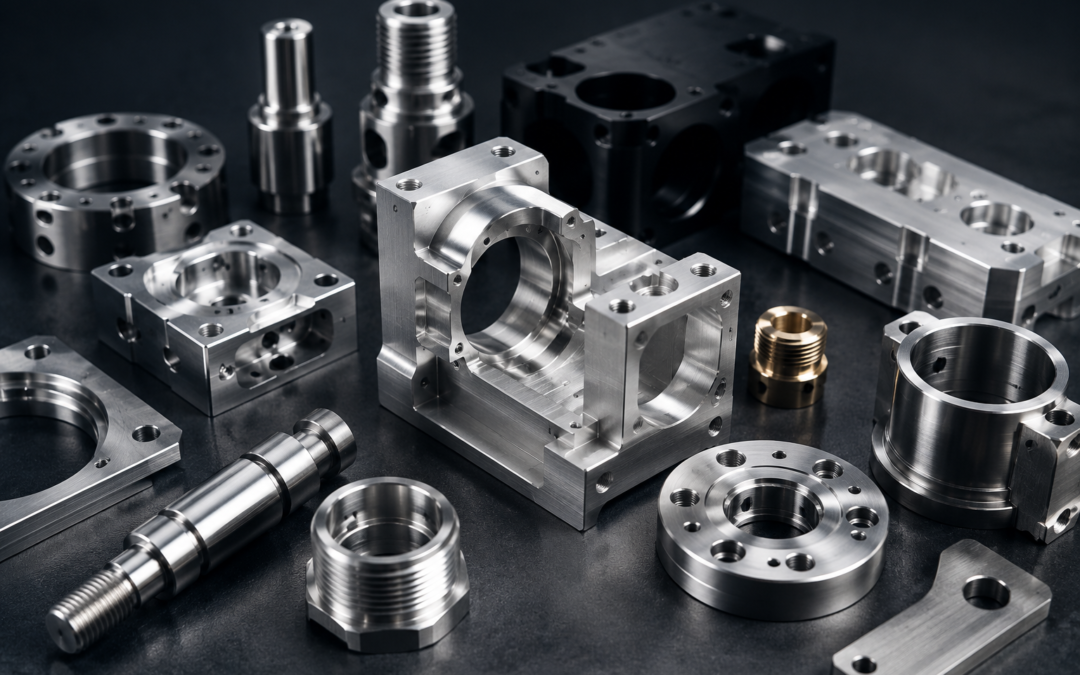
Precision machined components are used across industries where accuracy, repeatability and dependable performance matter. Buyers are often looking for more than a basic part-making service. They need reliable engineering support, consistent tolerances, dependable delivery and a supplier who understands how small details affect performance in real-world assemblies. Whether the requirement is for aerospace parts, industrial equipment, motorsport components, scientific instruments or general manufacturing, the right machining partner can help reduce risk from the first drawing review through to final inspection.
This guide explains what to look for when sourcing precision machined components, including materials, tolerances, CNC processes, quality controls and supplier selection. It is written for engineers, buyers and project managers who need practical guidance before placing an order.
What Are Precision Machined Components?
Precision machined components are parts manufactured by removing material from a solid billet, bar, casting or extrusion to achieve a specific shape, size and finish. These components are commonly produced using CNC milling, CNC turning, sliding head turning, multi-axis machining and secondary finishing processes.
They are used where accuracy, repeatability and material performance matter. A precision machined part may be simple in appearance, but it often has critical features such as tight bores, threads, shoulders, faces, pockets, slots, radii or datums that must align correctly with other parts in an assembly. Typical examples include:
- CNC turned shafts, bushes, spacers and inserts
- CNC milled brackets, housings, plates and manifolds
- Aerospace and defence components
- Motorsport and performance engineering parts
- Medical, scientific and laboratory equipment parts
- Industrial automation components
- Prototype and small batch engineering parts
- Replacement components for legacy equipment
The main benefit of precision machining is control. A good machining supplier can manufacture parts repeatedly to drawing, advise on manufacturability and help prevent issues that may otherwise appear during assembly or inspection.
Why Quality Matters When Sourcing Precision Machined Components
Choosing the right supplier for precision machined components can offer significant advantages, especially when quality, communication and lead times are important. While low-cost sourcing may look attractive at first glance, the total cost can increase when delivery delays, minimum order quantities, quality concerns or communication problems are considered.
Machining companies with strong technical capability are often well placed to support projects where engineering discussion is needed before production begins. A responsive supplier can help resolve drawing queries, discuss tolerances and respond quickly when a project changes. Key benefits of choosing a capable precision machining supplier include:
- Faster communication with engineers and production teams
- Better support for urgent or repeat work
- Stronger control over quality and traceability
- Reduced risk when designs are still developing
- Practical support for prototypes, small batches and production runs
- Improved consistency across repeat orders
- Clearer feedback on manufacturability and cost drivers
For many buyers, the decision is not simply about unit price. It is about confidence. When components are business-critical, a dependable precision machining supplier can help keep production schedules moving and reduce the risk of costly rework.
Precision Machined Components: CNC Milling, CNC Turning and Multi-Axis Machining
Most precision machined components are produced using CNC milling, CNC turning or a combination of both. The best process depends on the part geometry, material, tolerances, batch size and surface finish requirements.
CNC milling is typically used for prismatic components with flat faces, pockets, drilled holes, slots and complex profiles. CNC turning is generally used for round or cylindrical parts, such as shafts, pins, bushes, collars and threaded components. Multi-axis machining allows more features to be produced in fewer setups, which can improve accuracy and reduce handling. Common machining processes include:
- 3-axis CNC milling for plates, brackets, housings and general components
- 4-axis CNC milling for parts requiring indexed features around a central axis
- 5-axis CNC machining for complex geometry and reduced setup operations
- CNC turning for round components and rotational features
- Mill-turn machining for parts requiring both turning and milled details
- Drilling, tapping and boring for accurate holes and threads
- Finishing operations such as deburring, polishing, anodising or plating
A capable supplier will not simply quote the drawing. They should consider the best manufacturing route and highlight any areas that could affect cost, lead time or inspection.
Choosing Materials for Precision Machined Components
Material choice has a direct impact on machining time, tool wear, dimensional stability, surface finish and final component performance. Buyers often specify a material based on strength, corrosion resistance, weight, conductivity, temperature resistance or compatibility with other parts.
Aluminium is widely used for precision machined components because it is lightweight, versatile and relatively easy to machine. Stainless steel is preferred where corrosion resistance and strength are required. Engineering plastics can be useful for low-friction, lightweight or electrically insulating applications. More demanding sectors may require titanium, Inconel, tool steels or specialist alloys. Common materials include:
- Aluminium alloys such as 6082, 7075 and 2014
- Stainless steels such as 303, 304 and 316
- Mild steel and engineering steels
- Brass, copper and bronze
- Titanium alloys
- Acetal, nylon, PEEK and other engineering plastics
- High-performance alloys for demanding environments
Material availability should be considered early. Some grades may have longer lead times or higher minimum purchase quantities. A good precision machining company can advise whether an alternative grade may meet the requirement while improving cost or delivery.
Tolerances and Accuracy in Precision Engineering Components
Tolerance is one of the most important topics when ordering precision machined components. A tolerance defines the acceptable variation from the nominal dimension on the drawing. Tight tolerances are sometimes essential, but they can also increase machining time, inspection time and cost. 
Not every dimension on a component needs to be held to the same level of accuracy. Critical features, such as bearing fits, sealing faces, alignment holes and mating datums, may need tight control. Non-critical external profiles or clearance features may allow wider tolerances. Before issuing a drawing, it is useful to consider:
- Which features are function-critical
- Which dimensions affect assembly
- Which surfaces require specific finishes
- Whether geometric tolerances are needed
- Whether tolerances are realistic for the material and process
- How the supplier will inspect and verify the component
Over-tolerancing is a common cause of unnecessary cost. If every dimension is tightly controlled, the supplier may need more setup time, slower cutting strategies and more detailed inspection. Clear drawings help the machining company focus attention where it really matters.
Surface Finish Requirements for CNC Machined Components
Surface finish affects appearance, function and performance. Some precision machined components only need a standard machined finish, while others require a controlled roughness value, polished surface, protective coating or cosmetic finish.
Surface finish may be important for sealing faces, sliding surfaces, bearing seats, fluid flow paths or parts that will be visible in the final product. It can also influence corrosion resistance, friction, fatigue performance and cleanliness. Typical surface finish considerations include:
- Standard machined finish
- Fine machined or polished surfaces
- Ra values for functional surfaces
- Deburring and edge breaking
- Anodising, plating, passivation or coating
- Cosmetic requirements for visible components
- Cleaning and packaging requirements
It is helpful to mark surface finish requirements clearly on the drawing rather than relying on assumptions. If a component only needs a cosmetic finish in one area, that should be specified separately from functional requirements.
Design for Manufacture: How to Reduce Cost Without Losing Quality
Design for manufacture is the process of making a component easier, faster and more reliable to produce without compromising its function. This is especially useful when ordering precision machined components because small design choices can have a large impact on machining time and cost.
A supplier with strong engineering experience can often identify opportunities to simplify production. For example, changing a sharp internal corner to a practical radius may reduce tooling problems. Standardising hole sizes can reduce tool changes. Allowing a slightly wider tolerance on a non-critical feature can reduce inspection time. Useful design for manufacture checks include:
- Avoid unnecessary tight tolerances
- Use standard material sizes where possible
- Add realistic internal radii
- Avoid deep, narrow pockets unless essential
- Standardise thread and hole sizes
- Identify critical features clearly
- Consider how the part will be held during machining
- Allow suitable access for cutting tools
Early supplier input is valuable. It is much easier to make small improvements before production starts than to correct problems after components have already been manufactured.
Prototypes, Small Batches and Production Runs
Precision machined components may be required as one-off prototypes, small batches, repeat orders or larger production runs. The right approach depends on the stage of the project. A prototype may prioritise speed and design learning, while production parts may require tighter process control, repeatability and formal inspection records.
For prototypes, buyers often need quick turnaround and practical feedback. The first machined part can reveal whether a design is easy to manufacture, whether tolerances are realistic and whether the material behaves as expected. For repeat production, the focus shifts towards stable processes, consistent quality and reliable delivery. Different order types may require different priorities:
- Prototype machining for design validation and early testing
- Small batch CNC machining for specialist projects or low-volume assemblies
- Repeat production for established components
- Legacy part manufacture where old drawings or samples are used
- Pre-production batches before scaling up to larger volumes
A good supplier should be able to explain how they will manage each stage. This includes material ordering, programming, setup, inspection, packaging and delivery planning.
Quality Control for Precision Machined Components
Quality control is central to precision machining. Buyers should expect more than a visual check. Depending on the component and sector, inspection may include first-off inspection, dimensional checks, thread verification, surface finish checks, material certification and full inspection reports.
Quality requirements should be agreed before production begins. For critical components, the buyer may need certificates of conformity, material traceability, FAIR documentation, batch records or inspection data. For less critical parts, a simpler inspection approach may be suitable. Quality control may include:
- Drawing review before manufacture
- First-off inspection
- In-process inspection
- Final dimensional inspection
- Thread gauges, micrometers, verniers and bore gauges
- CMM inspection where required
- Material certificates
- Certificates of conformity
- Batch traceability and controlled documentation
The level of quality control should match the risk of the component. A low-risk spacer does not need the same inspection burden as an aerospace bracket or safety-critical assembly part. However, even simple parts should be manufactured consistently and checked against the drawing.
Working With Drawings, CAD Files and Technical Specifications
Clear information helps suppliers quote accurately and manufacture correctly. A 3D CAD model can show the component geometry, but a 2D drawing is still important because it defines tolerances, material, finish, threads, notes and inspection requirements.
When requesting a quotation for precision machined components, buyers should provide as much relevant information as possible. This reduces assumptions and prevents delays during technical review. Useful information includes:
- 2D engineering drawing in PDF format
- 3D CAD file, such as STEP or IGES
- Material grade and specification
- Quantity and expected repeat demand
- Required lead time
- Surface finish or coating requirements
- Inspection and certification requirements
- Any assembly or functional information
- Target price or budget constraints, if appropriate
Where drawings are incomplete, a capable supplier may still be able to help. However, the buyer should expect additional clarification before manufacture begins. Good communication at this stage protects both sides.
How to Choose a Precision Machining Supplier
Selecting the right supplier is about more than machine capacity. The best choice is usually a company that understands the technical requirement, communicates clearly and has suitable quality systems for the work involved.
A strong supplier should be willing to review the drawing, ask sensible questions and explain any concerns before production. They should also be realistic about lead times and transparent about what they can manufacture in-house. When comparing suppliers, consider:
- Experience with similar components and sectors
- CNC milling and turning capability
- Material knowledge
- Quality systems and inspection equipment
- Ability to support prototypes and repeat work
- Communication and technical responsiveness
- Capacity for urgent or scheduled requirements
- Documentation, traceability and certification support
- Delivery reliability
For buyers in sectors such as aerospace, defence, energy, medical, motorsport or industrial equipment, supplier capability should be assessed carefully. The lowest quote is not always the best value if it increases risk.
Precision Machined Components for Aerospace, Motorsport and Industrial Applications
Different industries place different demands on precision machined components. Aerospace parts may require formal documentation, traceability and strict process control. Motorsport components often demand fast turnaround, lightweight materials and high performance. Industrial parts may prioritise durability, repeatability and cost-effective batch production.
Understanding the end use helps the supplier make better manufacturing decisions. A bracket used in a test fixture may have different requirements from a flight-critical aerospace component, even if the geometry looks similar. A part used in a harsh environment may need corrosion-resistant material or a protective finish. Sector-specific considerations include:
- Aerospace documentation and traceability
- Motorsport lightweighting and fast lead times
- Industrial reliability and repeatability
- Scientific equipment accuracy and cleanliness
- Automation component consistency
- Legacy equipment reverse engineering and replacement parts
Machining companies such as Tarvin Precision often support buyers who need practical manufacturing input as well as accurate parts. That combination of engineering knowledge and production capability can be especially valuable when drawings are complex or timescales are tight.
Cost Factors When Buying Precision Machined Components
The cost of precision machined components depends on more than the size of the part. Machining time, material, tolerances, setup complexity, finishing, inspection and batch quantity all affect the final price.
A simple-looking part can be expensive if it requires multiple setups, tight tolerances or difficult-to-machine material. Equally, a larger component may be cost-effective if it is straightforward to hold, machine and inspect. Common cost drivers include:
- Material type and availability
- Component size and complexity
- Number of machining setups
- Tight or unusual tolerances
- Deep holes, thin walls or difficult features
- Surface finish requirements
- Coatings and secondary processes
- Inspection and documentation requirements
- Batch size and repeat order potential
Buyers can often reduce cost by discussing the requirement with the supplier before finalising the drawing. Small design adjustments may simplify machining while preserving the part’s function.
Lead Times and Delivery Planning
Lead time is an important consideration when ordering precision machined components. The total timescale includes technical review, material procurement, CNC programming, machine setup, production, inspection, finishing and delivery.
Urgent work may be possible, but it depends on machine capacity, material availability and the complexity of the part. Repeat components can often be produced more efficiently because the supplier may already have programmes, fixtures and inspection plans in place. To improve delivery performance, buyers should:
- Provide complete drawings and CAD files
- Confirm material requirements early
- Avoid late design changes where possible
- Agree inspection requirements before manufacture
- Share forecast demand for repeat parts
- Allow time for coatings or special processes
- Communicate any fixed project deadlines clearly
A reliable machining supplier will be honest about achievable timescales. Clear planning reduces pressure and helps avoid quality problems caused by rushed production.
Final Checklist for Ordering Precision Machined Components
Before placing an order, it is worth checking that the technical and commercial requirements are clear. This helps avoid misunderstandings and supports a smoother route from quotation to delivery. A practical pre-order checklist should include the following points:
- Is the latest drawing revision clearly identified?
- Has the material grade been confirmed?
- Are tolerances realistic and necessary?
- Are critical features clearly marked?
- Is the required quantity confirmed?
- Are surface finish and coating requirements defined?
- Are inspection reports or certificates required?
- Is the delivery date realistic?
- Has the supplier reviewed any manufacturability concerns?
- Are packaging and delivery instructions clear?
Good preparation helps the supplier deliver accurate parts on time. It also makes quotations more reliable because fewer assumptions are needed.
Finding the Right Precision Machined Components Partner
Precision machined components require suppliers who can combine accurate manufacturing with practical engineering support. The right partner will understand drawings, materials, tolerances, inspection and delivery requirements, while also helping identify ways to improve manufacturability and reduce unnecessary cost.
Whether the requirement is for prototypes, small batches or repeat production, choosing a capable machining supplier can improve quality, communication and project confidence. By providing clear drawings, realistic tolerances and early technical information, buyers can get the best from their supplier and reduce risk throughout the manufacturing process.
For companies that depend on accurate, reliable components, precision machining is not just a production service. It is a critical part of product performance, assembly success and long-term supply chain reliability.