
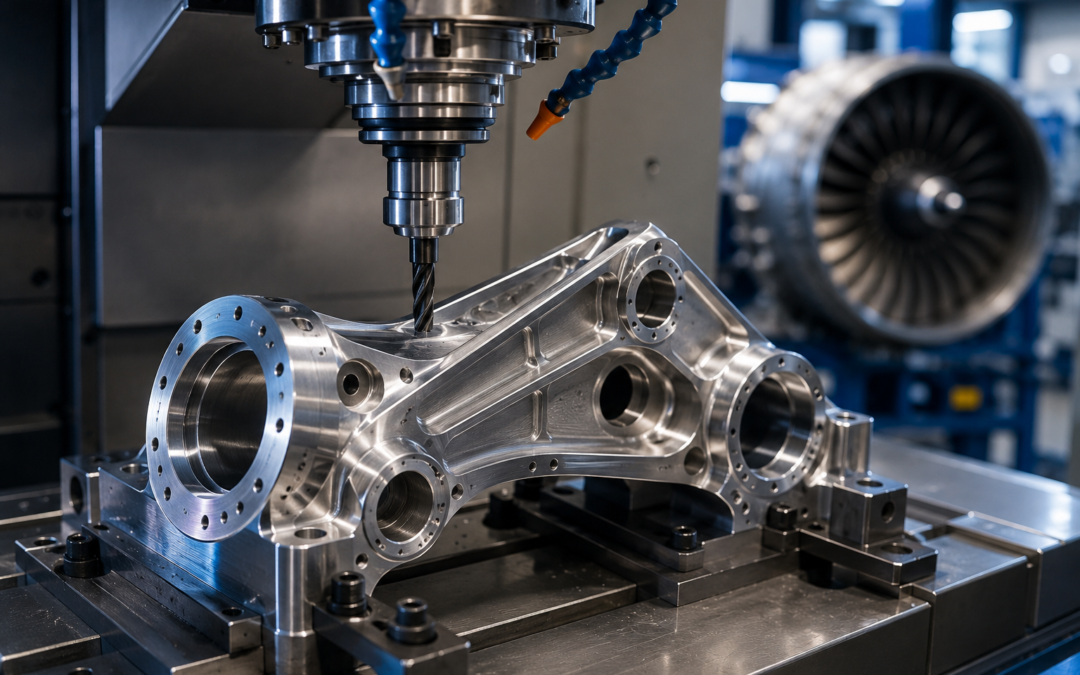
Aerospace component machining UK buyers are usually looking for more than a capable machine shop. They need a precision engineering partner that understands tight tolerances, certified materials, documentation, repeatability, and the commercial pressures of aerospace supply chains. Whether you are sourcing prototype parts, low-volume specialist components, or repeat production runs, the right machining supplier should help reduce risk at every stage of the project.
This guide explains what buyers should expect from a UK aerospace machining company, including quality standards, materials, inspection, lead times, communication, and supplier selection. It is designed for procurement teams, engineers, project managers, and manufacturing buyers who need dependable aerospace CNC machining services in the UK.
Why Supplier Capability Matters
Aerospace component machining UK projects often involve complex geometries, difficult materials, and extremely demanding specifications. Unlike general subcontract machining, aerospace work usually carries higher consequences if a component is late, inaccurate, undocumented, or inconsistent across batches. A capable aerospace parts machining supplier should be able to demonstrate technical depth, process control, and an understanding of the wider aerospace manufacturing environment. Buyers should expect evidence of previous experience, not just claims of precision. Key capabilities to look for include:
- CNC milling and CNC turning for high-precision parts
- Multi-axis machining for complex aerospace geometries
- Experience with aerospace-grade aluminium, titanium, stainless steel, and engineering plastics
- Inspection equipment suitable for tight tolerances
- Robust material traceability and batch control
- Clear communication from enquiry through delivery
The best suppliers do not simply manufacture to a drawing. They review the design, identify possible manufacturing risks, and help the buyer avoid unnecessary delays or cost increases.
UK Aerospace CNC Machining and Precision Engineering Standards
UK aerospace CNC machining is built around accuracy, repeatability, and process discipline. Buyers should expect a supplier to understand that a component must be correct not only once, but consistently across every order, batch, and revision. Precision engineering standards in aerospace usually require careful planning before any material is cut. This includes reviewing drawings, checking tolerances, confirming datum structures, selecting the right tooling, and planning inspection methods in advance. A strong aerospace machining process should include:
- Drawing and specification review before quotation
- Manufacturing feasibility checks
- Controlled programming and setup procedures
- In-process inspection where required
- Final inspection against agreed criteria
- Secure packaging and delivery controls
For buyers, the key question is not just whether a supplier can make the part. It is whether they can make it reliably, document it properly, and repeat the result when the order returns six months later.
What Buyers Should Expect From an Aerospace Machining Supplier
A professional aerospace machining supplier should provide clarity from the start. When a buyer submits a drawing or model, the supplier should respond with informed questions, realistic lead times, and a quotation that reflects the actual complexity of the work. Good suppliers are proactive. They do not wait until production to raise concerns about tolerances, material availability, surface finish, or CMM inspection requirements. Instead, they use the enquiry stage to clarify the full scope of the job. Buyers should expect their supplier to confirm:
- Material grade and source requirements
- Drawing issue or revision status
- Quantity, batch size, and delivery schedule
- Required certifications and inspection reports
- Surface finish, coating, or post-machining requirements
- Packaging, labelling, and traceability needs
This level of detail protects both buyer and supplier. It reduces the chance of misunderstandings and helps ensure that the delivered components match the intended specification.
Aerospace Precision Machining UK: Materials and Machinability
Aerospace precision machining UK suppliers are often required to work with demanding materials. These materials are selected because they offer strength, weight savings, corrosion resistance, heat resistance, or specialist performance characteristics. Common aerospace materials include aluminium alloys, titanium, stainless steels, nickel alloys, copper alloys, and high-performance plastics. Each material behaves differently when CNC machining aerospace parts, and each requires the right combination of tooling, feeds, speeds, coolant strategy, and workholding. Typical aerospace materials may include:
- Aluminium 7075 and 6082 for lightweight structural parts
- Titanium alloys for high strength-to-weight applications
- Stainless steels for corrosion resistance and durability
- Inconel or nickel alloys for high-temperature environments
- Acetal, PEEK, and other engineering plastics for specialist uses
Buyers should expect their machining supplier to understand the practical challenges of these materials. Titanium, for example, can generate heat and tool wear quickly if handled incorrectly. Aluminium may be easier to machine, but aerospace-grade finishes and tight tolerances still require careful process control.
CNC Milling for Aerospace Components
CNC milling is central to aerospace component machining in the UK because many aerospace parts involve pockets, profiles, slots, bores, mounting faces, and complex 3D forms. A well-equipped AS9100 machine shop should be able to machine both simple prismatic parts and more complex multi-sided components. For buyers, the milling capability of a supplier affects cost, accuracy, and lead time. Multi-axis CNC milling can reduce the need for multiple setups, which can improve accuracy and reduce handling risk. However, the supplier must still have the programming knowledge and inspection process to support it. Aerospace CNC milling is commonly used for:
- Brackets and mounting plates
- Housings and enclosures
- Structural components
- Test and development parts
- Lightweight machined assemblies
- Complex prototype components
Buyers should ask whether the supplier can manage both one-off development work and repeat production. Prototype machining and production machining require different strengths, and the most useful suppliers can support both.
CNC Turning for Aerospace Component Machining UK Projects
CNC turning is equally important in aerospace component machining UK supply chains, especially where parts are cylindrical, threaded, sleeved, bushed, or shaft-like. Turned aerospace components often require excellent concentricity, surface finish, and dimensional stability. A supplier with strong CNC turning capability should be able to produce accurate components from a wide range of aerospace materials. Depending on the part, live tooling or mill-turn capability may also reduce secondary operations and improve consistency. CNC turning may be used for:
- Bushes and spacers
- Pins and shafts
- Sleeves and collars
- Threaded components
- Connectors and fittings
- Precision inserts
The buyer should provide clear details on threads, surface finishes, bore tolerances, and any mating features. These details are especially important when turned components form part of a larger assembly.
Quality Control in Aerospace Machining Services UK
Quality control is one of the most important parts of aerospace machining services UK buyers should assess. A supplier’s inspection process should match the complexity and risk level of the component being produced. Inspection should not be treated as a final hurdle after machining is complete. 
For critical work, quality should be built into the process through careful setup, in-process checks, and controlled measurement. This helps prevent non-conforming parts from reaching the end of production. Buyers may require:
- First article inspection reports
- Dimensional inspection reports
- Material certificates
- Certificates of conformity
- Batch traceability records
- Surface finish verification
- CMM inspection where appropriate
A reliable supplier will be comfortable discussing inspection requirements before production begins. They should also advise where tolerances may increase cost or require additional inspection time.
Traceability and Documentation for Aerospace Machined Parts
Traceability is a major expectation in aerospace machined parts supply. Buyers often need to know where the material came from, which batch it belonged to, which drawing issue was used, and what inspection evidence supports the delivered components. Aerospace buyers should expect AS9100 machining documentation to be organised, accurate, and delivered with the parts when required. Missing paperwork can delay production just as seriously as a missing component. Important documentation may include:
- Material certificates
- Purchase order references
- Drawing revision references
- Inspection records
- Certificates of conformity
- Special process certificates
- Batch numbers and delivery notes
The level of documentation needed should be agreed at quotation stage. This ensures the supplier prices the work correctly and plans the necessary inspection and administration time.
Tolerances, Surface Finishes and Repeatability
Aerospace components often include tight tolerances and controlled surface finishes. Buyers should expect their machining supplier to review these requirements carefully rather than accepting every drawing without comment. Not every dimension on a component needs to be extremely tight. In some cases, unnecessary tolerances can increase cost, extend lead time, and complicate inspection. A good supplier will identify where tolerances may be difficult, costly, or unclear. Important considerations include:
- Critical-to-function dimensions
- Datum structures and measurement methods
- Flatness, parallelism, and perpendicularity
- Bore size and positional tolerances
- Thread requirements
- Surface finish requirements
- Deburring and edge break expectations
Repeatability is just as important as first-time accuracy. Buyers should expect a supplier to control the process so that future batches match the approved standard.
Prototype Aerospace Machining and Development Support
Prototype aerospace machining is often needed during design validation, testing, and early-stage development. At this stage, buyers may need quick feedback, flexible quantities, and engineering support as the design evolves. A strong UK aerospace machining supplier should understand that prototypes are not always simple. They may require the same precision and documentation as production parts, but with shorter timelines and more design uncertainty. Prototype support can include:
- Machining from early-stage drawings or CAD models
- Design for manufacture feedback
- Small batch production
- Rapid iteration between design revisions
- Advice on material selection
- Practical feedback on tolerance and finish requirements
The most valuable suppliers help buyers move from concept to production more smoothly. They identify manufacturing risks early and help refine the component before larger quantities are ordered.
Low-volume and Batch Aerospace Component Machining
Many aerospace component machining UK projects involve low-volume or repeat batch production rather than mass manufacturing. This makes setup efficiency, planning, and communication especially important. Low-volume machining requires a balance between flexibility and control. The supplier must be able to produce small quantities cost-effectively while still maintaining aerospace-level accuracy and documentation. Buyers should consider:
- Whether the supplier is suited to the required batch size
- How repeat orders are controlled
- Whether fixtures or programmes are retained
- How drawing revisions are managed
- Whether lead times improve on repeat batches
- How inspection is scaled for batch production
A supplier that understands repeat batch aerospace work can often reduce long-term cost by improving setups, refining processes, and retaining knowledge between orders.
Lead Times for Aerospace Machining in the UK
Lead times for aerospace machining in the UK can vary depending on material availability, complexity, quantity, inspection requirements, and current capacity. Buyers should expect honest lead time discussions rather than unrealistic promises. A supplier should explain what drives the delivery schedule. For example, a simple aluminium component may move quickly if material is available, while a titanium part with tight tolerances and full inspection reporting may require longer planning. Lead time factors include:
- Material procurement
- Programming and process planning
- Tooling and fixturing
- Machine capacity
- Inspection requirements
- External finishing or treatment
- Packaging and delivery
Buyers can help reduce lead times by supplying complete information at enquiry stage. Accurate drawings, models, specifications, and certification requirements allow the supplier to quote and plan more efficiently.
Choosing an Aerospace Component Machining UK Partner
Choosing an aerospace component machining UK partner should involve more than comparing prices. The lowest quotation may not represent the lowest risk, especially when quality, delivery, documentation, and communication are critical. Buyers should look for evidence that a supplier understands aerospace expectations and has the systems to support them. This includes technical capability, quality culture, inspection resources, and a track record of dependable delivery. Questions to ask include:
- Have they machined similar aerospace components before?
- Can they work with the required material?
- Do they understand the inspection requirements?
- Can they provide the required documentation?
- How do they manage drawing revisions?
- What happens if a quality concern is identified?
- Can they support both prototypes and repeat batches?
A good supplier will welcome these questions. Their answers should give buyers confidence that the company is organised, transparent, and technically capable.
Cost Considerations for UK Aerospace Machining Services
Cost is always important, but aerospace machining should be assessed in terms of value and risk as well as price. A cheaper part that arrives late, lacks documentation, or fails inspection can become far more expensive than a correctly managed order. The price of aerospace machining is influenced by many factors. Material type, tolerance level, complexity, quantity, setup time, inspection, and documentation all affect the final quotation. Cost drivers may include:
- Expensive or difficult-to-machine materials
- Tight tolerances
- Complex multi-axis geometry
- Low batch quantities
- Long cycle times
- Specialist tooling
- Inspection and reporting requirements
- External finishing processes
Buyers can often improve cost efficiency by involving the machining supplier early. Design for manufacture feedback may identify small changes that reduce machining time without compromising performance.
Design for Manufacture in Aerospace CNC Machining
Design for manufacture is a valuable part of aerospace CNC machining because small design decisions can have a major impact on cost, lead time, and quality risk. A supplier that offers practical feedback can help buyers create parts that are easier to manufacture consistently. This does not mean compromising the design intent. Instead, it means aligning the component’s functional requirements with efficient machining methods. For example, adjusting a radius, relaxing a non-critical tolerance, or improving tool access may reduce cost significantly. Useful design for manufacture topics include:
- Tool access and cutter selection
- Internal corner radii
- Deep pockets and thin walls
- Thread depth and type
- Datum selection
- Tolerance stack-up
- Surface finish requirements
- Material choice
The earlier these topics are discussed, the easier it is to make improvements. Once a design is released and purchasing has begun, changes become more difficult and expensive.
Why UK-based Aerospace Machining Can Benefit Buyers
Working with a UK-based aerospace machining supplier can offer practical advantages for buyers who value communication, responsiveness, and supply chain control. Proximity can make it easier to discuss technical details, resolve issues, and manage urgent requirements. UK suppliers can be particularly useful for prototype development, low-volume batches, urgent replacements, and projects where close collaboration is required. Shorter logistics routes may also reduce delivery risk and simplify communication across time zones. Potential benefits include:
- Easier technical communication
- Faster response to design changes
- Reduced shipping complexity
- Better support for urgent projects
- Easier supplier visits or audits
- Stronger collaboration between engineers and machinists
For buyers in aerospace, these benefits can be important. The ability to speak directly with the people planning and machining the work can help prevent errors and keep projects moving.
Common Mistakes Buyers Should Avoid
Buyers can improve project outcomes by avoiding common sourcing mistakes. Many issues in aerospace machining begin before production, often because requirements are unclear or assumptions are made too early. A good supplier will help identify missing information, but buyers should still aim to provide a complete and controlled enquiry package. This helps the supplier quote accurately and manufacture correctly. Common mistakes include:
- Sending drawings without revision control
- Omitting certification requirements
- Failing to identify critical dimensions
- Assuming material is readily available
- Requesting tight tolerances where they are not needed
- Leaving surface finish requirements unclear
- Not allowing enough time for inspection
- Choosing only on the lowest price
Avoiding these mistakes can reduce delays, rework, and commercial disputes. It also helps create a better long-term supplier relationship.
What to Expect from Aerospace Component Machining UK Suppliers
Aerospace component machining UK buyers should expect precision, consistency, traceability, and clear communication. The right supplier will understand that aerospace machining is not just about producing metal or plastic parts. It is about controlling risk and delivering components that meet technical, quality, and commercial requirements.
A strong machining partner should review drawings carefully, machine accurately, inspect thoroughly, and provide the documentation needed to support the supply chain. They should also be honest about lead times, material challenges, and cost drivers. For buyers, the best results come from early supplier involvement, complete technical information, and a focus on long-term value rather than price alone. When the right aerospace machining partner is chosen, the result is a smoother procurement process, fewer quality issues, and greater confidence in every component delivered.