
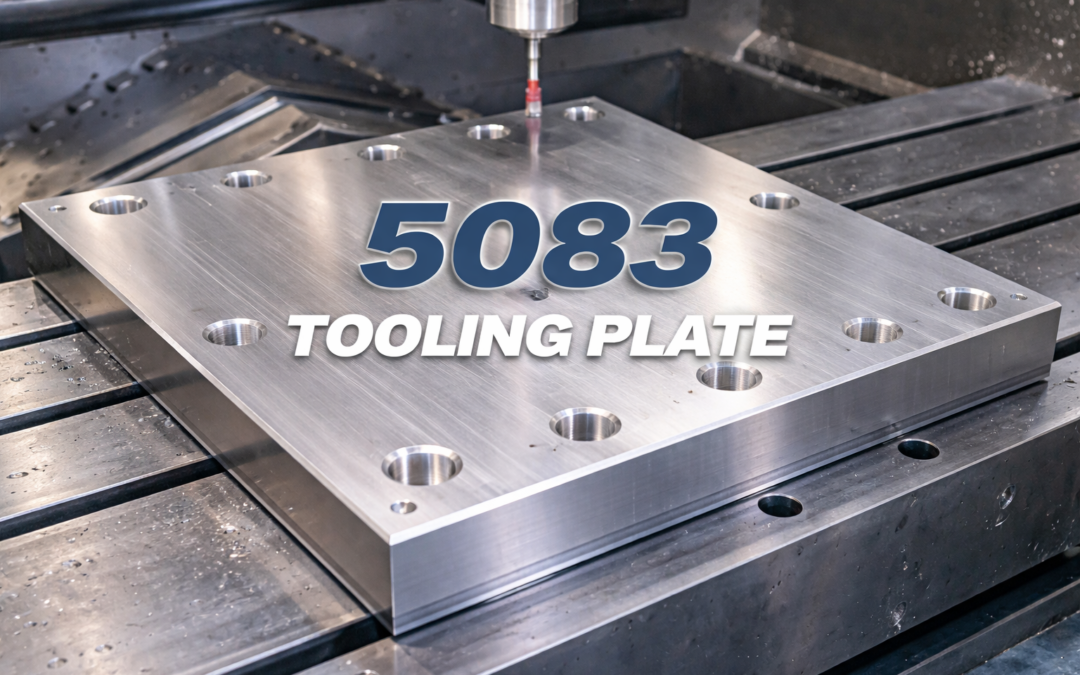
5083 tooling plate is a specific requirement when engineers and buyers are searching for more than a generic piece of aluminium. They are normally looking for a material that gives them more confidence in the finished part: better flatness, better stability during machining and a more reliable starting point for base plates, fixture plates and precision assemblies. That makes 5083 tooling plate a high-intent search term, because it often comes from someone already close to specifying material or placing an order.
The reason this matters is simple. In precision manufacturing, the cost of a plate is only one part of the overall picture. The more important question is often how the material behaves once it reaches the machine shop. If a plate needs a lot of preparation machining, moves when pockets are opened up, or struggles to hold a consistent flatness, it can create more cost and risk than its initial purchase price suggests. That is why 5083 tooling plate is frequently chosen for demanding work where the finished result matters more than just buying standard stock.
At Tarvin Precision, this kind of requirement often comes up where a machined plate is not just a component in isolation, but the base for a wider assembly. In those cases, material choice is closely tied to how the part will be machined, how stable it needs to remain, and how accurately it must support the rest of the build. This guide explains what 5083 tooling plate is, why it is used, how it differs from general aluminium plate, and what buyers and machinists should consider before selecting it for a job.
What is 5083 Tooling Plate?
At its most practical level, 5083 tooling plate is a plate product based on 5083 aluminium, supplied in a form intended for precision machining applications where flatness, stability and consistency are important. It is typically chosen for applications such as base plates, mounting structures, jigs, fixtures and support plates rather than for purely general fabrication work.
The key point is that tooling plate is not just about the alloy number. The word “tooling” suggests a product that has been prepared or processed with precision use in mind. In other words, a buyer searching for 5083 tooling plate is usually interested in more than just raw material chemistry. They want a plate that offers a better starting condition for machining, often with improved flatness and more predictable behaviour than standard plate. In everyday manufacturing, 5083 tooling plate is commonly considered for:
- machine base plates
- mounting plates
- jigs and fixtures
- support plates for scientific equipment
- vacuum or reference plates
- assembly sub-plates
- inspection tooling
- precision carriers and structures
For many applications, that makes it a strong middle ground between general stock material and a more specialised branded tooling plate product.
Why 5083 Plate is Popular in Precision Engineering
There are plenty of aluminium grades in use across engineering, but 5083 tooling plate remains popular because it offers a useful blend of properties for machined plate applications. It is widely recognised, often readily specified, and well suited to jobs where a plate needs to provide both structural support and a stable machined surface.
One reason it is so often considered is that it feels familiar to design and procurement teams. Many engineers already know 5083 as a robust grade for aluminium plates, so when they need a tooling plate for a machined base or support part, it is a logical place to start. It is especially attractive where corrosion resistance, good all-round performance and reliable machining all matter. The reasons buyers often choose 5083 tooling plate include:
- good all-round engineering performance
- suitability for precision base and fixture work
- a familiar and widely accepted alloy family
- good corrosion resistance for many environments
- compatibility with demanding machined applications
- availability in tooling plate formats from specialist suppliers
That combination helps explain why it appears so often on enquiries for technical assemblies, fixtures and instrumentation-related components.
Comparison to Standard 5083 Aluminium Plate
A common mistake is to assume that 5083 tooling plate is exactly the same as any other 5083 aluminium plate. In reality, the term usually implies that the material has been supplied in a form more suitable for precision machining and flat plate applications.
Standard 5083 plate may be perfectly adequate for many engineering uses, especially structural or less demanding components. However, when a part needs to begin flatter, require less preparation work and behave more predictably during machining, 5083 tooling plate can be a much better option. That difference can affect not only quality, but also production efficiency. In practical terms, 5083 tooling plate is often preferred over standard plate because it may offer:
- better starting flatness
- more consistent thickness across the plate
- less preparation machining
- greater confidence for precision mounting surfaces
- improved suitability for machined bases and supports
- reduced risk of excessive waste removal just to get usable faces
That is why buyers should always look beyond the alloy number alone and understand the exact form of material being supplied.
Where 5083 Plate is Commonly Used
The applications for 5083 tooling plate are usually driven by function rather than by appearance. In most cases, the material is selected because it will become a stable platform or reference element within a larger machined part or assembly. It is often less about decoration and more about repeatability, flatness and confidence in the final geometry.
A plate like this is especially useful when the finished component needs to support other parts. That could mean fixture CNC plates for manufacturing, a machine base for automation, or a precision support plate inside a scientific instrument. In all of those situations, the performance of the plate influences the rest of the build. Typical uses for 5083 tooling plate include:
- fixture and jig plates
- machine mounting bases
- instrument support plates
- electronics mounting structures
- laboratory and scientific base plates
- inspection and checking fixtures
- bespoke assembly frames
- precision support structures for multi-part builds
This is one reason 5083 tooling plate is so valuable in subcontract machining. It often becomes the part that everything else depends on.
Why Flatness Matters with 5083 Aluminium
One of the main reasons for choosing 5083 tooling plate is flatness. In some jobs, a plate only needs to be approximately flat because it will be heavily machined anyway. In others, the plate forms the foundation for hole patterns, mounting features or alignment faces that all depend on a stable surface.
Flatness matters because it affects both the machining process and the final assembly. A plate that begins in a better condition can reduce the amount of stock removal needed just to create a usable datum. That can save cycle time, reduce waste and make it easier to hold the geometry of the finished part. When flatness is important, 5083 tooling plate is often chosen for jobs involving:
- mounting surfaces for other components
- large plate formats with multiple fixing points
- assemblies that require even support across the face
- cosmetic or functional top surfaces
- reference plates used in inspection or setup
- support structures where misalignment causes downstream issues
For those parts, material quality at the start of the job can make a major difference to manufacturing confidence.
Applications for Jigs, Fixtures and Base Plates
A particularly strong use case for 5083 tooling plate is in jigs, fixtures and base plates. These parts need to combine enough strength and rigidity with good flatness, good machinability and sensible long-term stability. That makes 5083-based tooling plate a natural candidate.
In jig and fixture work, the plate often carries multiple holes, dowel positions, machined pads and threaded features. Any variation in flatness or movement after machining can affect how reliably the fixture performs. The same applies to base plates in automation, testing and technical equipment, where other parts depend on the plate being true and stable. That is why 5083 tooling plate is regularly used for:
- fixture plates for repeat production work
- jig bases with datum features and mounting points
- machine sub-plates
- custom workholding plates
- support bases for inspection setups
- mounting platforms within technical assemblies
For this sort of work, the material is doing more than filling space. It is playing a direct role in the accuracy and usability of the finished system.
Machining 5083 Tooling Plate Successfully
Even the best 5083 tooling plate still needs to be machined properly. Good material can improve the starting point, but flat finished parts still depend on sensible workholding, balanced machining strategy and realistic stock planning. A poorly planned process can still create distortion, particularly on large or heavily pocketed parts.
In practice, machining success often comes from understanding how the part geometry interacts with the material. Thin ribs, asymmetrical pockets, large open areas and aggressive clamping can all introduce problems. That is why experienced machinists do not rely on the material alone; they adapt the method to the part. Good practice when machining 5083 tooling plate often includes:
- selecting the correct stock thickness and allowance
- machining both faces in a balanced way where needed
- avoiding excessive clamp pressure that bends the plate
- sequencing operations to minimise movement
- using sharp tooling for consistent finish quality
- supporting large plates appropriately throughout the job
- checking flatness during machining rather than only at final inspection
For precision parts, these decisions can have a major impact on the final result and on whether the plate remains stable through the full machining cycle.
Uses in Scientific and Technical Assemblies
One area where 5083 tooling plate often proves particularly useful is in scientific and technical equipment. Many of these applications rely on machined base structures that support other components, whether those are sensors, brackets, housings, electronics or alignment-critical features. In these assemblies, the base plate is often fundamental to the performance of the whole system.
A plate used in this way has to do several jobs at once. It may need to provide flatness, positional repeatability, tapped features, good surface finish and overall dimensional confidence. It may also have to remain stable after significant material removal, especially where pockets, windows or relief areas are machined into it. Typical technical uses for 5083 tooling plate include:
- instrument base plates
- precision support plates for test systems
- laboratory equipment frames
- electronics carrier plates
- optical or sensor support platforms
- technical mounting structures in specialist machinery
- sub-assemblies where multiple machined parts interface to one base
At Tarvin Precision, this is often the kind of application where tooling plate becomes especially relevant, because the part is not simply being machined to shape. It is forming the platform onto which other precision components will later be mounted.
5083 Tooling Plate vs 6082 Tooling Plate
When engineers are deciding between material options, one common comparison is 5083 tooling plate versus 6082 tooling plate. Both are familiar in precision machining, and both can be suitable in the right circumstances. The real decision usually comes down to application needs rather than a simple ranking of one as “better.”
In broad terms, 5083 tooling plate is often attractive where plate performance, corrosion resistance and practical machining reliability are key priorities. 6082 tooling plate, on the other hand, may be selected where designers are working from a specification that already favours 6xxx series material or where its broader general engineering familiarity is preferred.
When comparing 5083 tooling plate with 6082 tooling plate, buyers should think about:
- the functional role of the finished part
- flatness and stability expectations
- the machining strategy and amount of stock removal
- the operating environment of the component
- any customer or drawing-led material preferences
- whether the part is primarily a base plate, support structure or more general machined component
In many cases, either can work. The right answer depends on the part, not on the popularity of the alloy name alone.
How to Choose the Right Tooling Plate Supplier
Because 5083 tooling plate is a specific and application-led product, the supplier matters. A good supplier or manufacturing partner should do more than simply confirm that they can provide 5083 plate. They should be able to discuss the type of tooling plate required, the likely end use and whether the material choice is appropriate for the geometry and tolerances involved.
This matters because not every enquiry is really asking for exactly the same thing. One customer may genuinely need a tooling plate with very good starting flatness. Another may simply need a stable 5083-based plate for machining and assembly use. A supplier who understands those differences can help avoid both over-specification and under-specification. When choosing a source for 5083 tooling plate, it helps to look for:
- knowledge of tooling plate products, not just raw alloy codes
- understanding of flatness-sensitive machined parts
- willingness to discuss the finished application
- realistic advice on stock range and availability
- the ability to suggest equivalent or alternative options where needed
- familiarity with the machining issues that affect finished plate performance
That sort of support is valuable because it reduces the risk of choosing a material that looks correct on paper but is less suitable in practice.
Common Mistakes When Specifying 5083 Plate
Because the term sounds straightforward, 5083 tooling plate is sometimes specified too loosely. That can lead to confusion between standard plate and tooling plate, or between what the designer thinks they need and what the manufacturing process actually requires.
One of the most common issues is treating the material callout as if it alone will solve the machining challenge. In reality, tooling plate selection and machining strategy need to work together. Another issue is not being clear enough about what the finished part really needs in terms of flatness, surface finish or stability after pocketing. Common specification mistakes with 5083 tooling plate include:
- assuming all 5083 plate behaves the same way
- not defining the real flatness requirement of the finished part
- over-specifying a branded or niche product where it is not necessary
- underestimating how much material removal affects stability
- choosing material without considering workholding and machining approach
- focusing only on price instead of total manufacturing efficiency
Avoiding those mistakes usually leads to a better result, both technically and commercially.
Is 5083 Aluminium the Right Choice for Your Job?
For many precision plate applications, 5083 tooling plate is a very sensible choice. It is familiar, practical and well aligned with the needs of machined bases, fixtures and support structures. Where a part needs good starting flatness, reliable performance and a material that suits precision engineering work, it is often one of the first options worth considering.
That said, no material is automatically correct just because it is popular. The best choice depends on what the finished part must do, how it will be machined, what tolerances really matter and how the plate fits into the wider assembly. In some cases, another tooling plate option or a branded product recommended by an aluminium milling service may be more suitable. In others, 5083 tooling plate will be exactly the right level of specification. The most useful questions to ask are usually these:
- Does the part act as a base or reference surface?
- How important is starting flatness?
- How much material will be removed during machining?
- Does the finished component support other precision parts?
- Is corrosion resistance relevant to the final application?
- Would a standard plate create extra preparation work or risk?
Answering those questions normally makes the material decision much clearer.
Choosing 5083 Tooling Plate
For engineers, buyers and subcontract manufacturers, 5083 tooling plate is a highly practical material category because it addresses real production problems. It is not just about choosing aluminium by grade number. It is about selecting a plate that gives the finished part the best chance of being flat, stable and efficient to machine.
That is why the keyword 5083 tooling plate carries such strong intent. People searching for it are usually not at the very start of their research. They are often already thinking about a specific application: a machined base plate, a fixture plate, a support structure or a technical assembly that needs reliable material performance from the outset.
For those jobs, the most successful outcome usually comes from combining sensible material selection with real machining knowledge. Companies such as Tarvin Precision tend to see that clearly in projects where a plate supports a larger build, because the finished performance depends on both the stock choice and the way the part is manufactured.
In the end, the best way to think about 5083 tooling plate is not just as a piece of metal, but as the foundation of a precision component. When that foundation is chosen well, the rest of the job usually becomes easier, more predictable and more reliable.